
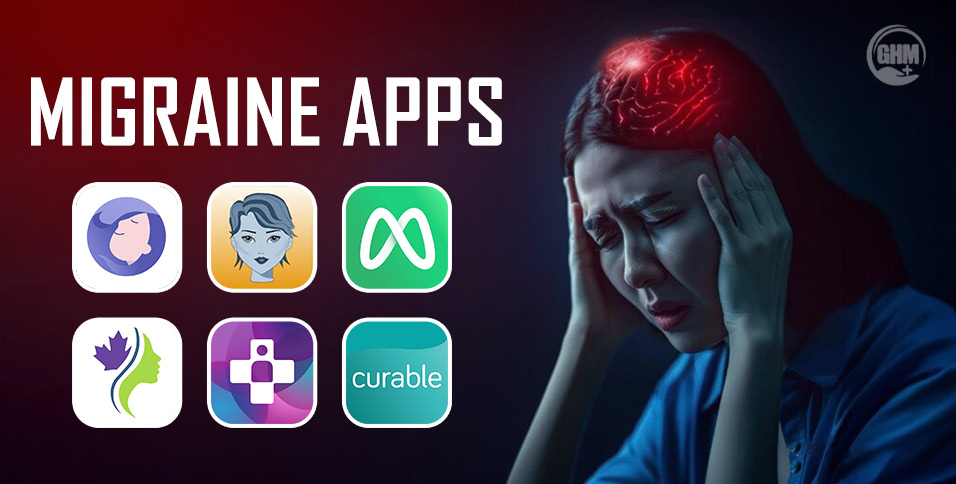
If you are suffering from migraine, you might understand that migraine is more than “just a headache.” These recurrent migraine attacks could be disrupting your work, family life, and overall well-being. You are not alone. It affects over a billion people worldwide, which is roughly 14% of the global population, each year. That’s where migraine apps come in. These digital tools will help you in these hard times. They will record headache attacks, spot patterns or triggers, and support ongoing migraine relief, often at your fingertips.
Whether you have occasional headaches or chronic migraine, a migraine app can be a helpful companion in prevention and treatment.
In this article, we list some of the most useful migraine apps, explain what they offer, and guide you on choosing the right one for your needs.
Top Migraine Apps For You to Consider
Here is a selection of widely used and trusted migraine apps, chosen for their popularity, features, and usefulness for migraine patients and headache-tracker users:
1. Migraine Buddy
One of the most popular migraine-tracking apps available on both Google Play and App Store, Migraine Buddy helps users log symptoms, triggers, medication, sleep patterns, and more.
- Best for: People seeking a comprehensive headache diary and pattern analysis.
- Key features: Symptom tracking, treatment tracking, trigger logs, sleep tracking, and the ability to share reports ideally with a physician.
2. HeadApp! Headache Diary
This app focuses on headache and migraine diary functions. It allows you to record headache occurrence, intensity, possible triggers, and other details to help you map patterns over time.
- Best for: Users who prefer a simple, straightforward headache tracker without many extra features.
- Key features: Headache history log, trigger identification, useful for sharing with your health provider.
3. M‑sense Migräne
This is an example of a more clinically oriented migraine app created for patients with episodic or chronic migraine. A recent randomised clinical trial evaluated its effect on reducing migraine days.
- Best for: Those open to a structured, health-app approach and willing to combine app use with medical care.
- Key features: Headache documentation, possibly tailored guidance, but not a replacement for medical diagnosis and treatment.
4. Canadian Migraine Tracker App
Designed in collaboration with neurologists, primary-care providers, patients, and advocates. This free app aims to help users log symptoms, triggers, and medications, giving both patients and doctors clearer insight into migraine patterns.
- Best for: Users who want a free, no-ads, minimalist yet effective migraine tracker.
- Key features: Records symptoms, triggers, medications; easy to use on mobile devices; ideal for sharing with healthcare providers.
5. The Migraine App
This app, developed by headache specialists and associations, offers more than just tracking. It supports self-management through suggested behavioural measures (e.g., relaxation techniques) and enables users to export reports for sharing with their doctor.
- Best for: Patients seeking a supportive, guided approach to managing migraine rather than just tracking.
- Key features: Pain documentation, medication logs, behavioural-management tools (relaxation), optional export to doctors, and offline data storage for privacy.
6. N1-Headache
If you want a migraine app that uses scientific analysis and personalisation, N1-Headache is a strong choice. Instead of just collecting data, it analyses your daily inputs to help you identify patterns and triggers with more accuracy.
- Best for: Advanced analytics to help you find your personal triggers, a simple interface that encourages daily tracking. It is helpful for chronic migraine patients who want deeper pattern recognition.
- Key Features: Personalised reports that highlight patterns in sleep, food, stress, and hormones and easy-to-read trend visualisations.
7. Curable
While not exclusively a migraine app, Curable is highly beneficial for people who experience frequent or chronic migraines triggered by stress, tension, anxiety, or long-term pain dysregulation. Curable focuses on the mind-body connection, offering science-backed strategies to reduce pain intensity and frequency.
- Best for: migraine patients whose attacks are linked to stress or anxiety, and helpful for reducing pain-related fear and improving coping skills.
- Key Features: Guided pain-science education, Stress-relief tools tailored for chronic migraine and chronic pain, Stress-relief tools tailored for chronic migraine.
Why You Should Use Migraine Apps
- Track symptoms and triggers: Logging headache frequency, intensity, duration, and associated symptoms (like nausea or sensitivity to light) can help you and your doctor spot triggers and patterns.
- Support migraine prevention and relief: For many chronic migraine patients, consistent tracking may help detect warning signs and adjust lifestyle or treatment accordingly.
- Share structured data with healthcare providers: A headache diary helps doctors understand how your migraines evolve over time rather than relying on memory.
- Empower self-management: Some apps offer lifestyle tips, stress-management tools, and behavioural strategies such as relaxation and sleep hygiene that may help reduce migraine frequency.
Given that migraines remain one of the most disabling neurological conditions globally, with growing numbers over recent decades, digital tools add a practical, accessible layer of support.
What Science Says: Promise and Caution
- A recent clinical trial found that a prescribable migraine app (like M-sense) did not show a significant advantage over a basic headache diary control in reducing monthly migraine days.
- Still, digital headache diaries have been evaluated as useful tools, especially for tracking symptoms, identifying triggers, and supporting discussions between patients and doctors.
- Given that migraine affects over 1 billion people globally and constitutes a major portion of the worldwide burden of neurological disorders, the role of accessible tools like migraine apps remains promising.
In the end, Migraine apps are not a cure, but they can be a helpful part of a broader migraine prevention and treatment plan.
Conclusion
Migraine remains a global health challenge, affecting a large number of the population every day and often disrupting their daily life. While there is no perfect cure, migraine apps offer a practical, low-cost, and accessible way to track headaches, identify triggers, and support migraine relief.
Whether you have occasional headaches or chronic migraine, using one of the migraine apps above, in consultation with your healthcare provider, who can help you better understand and manage your condition.
If you found this article helpful, please share it so others around you experiencing migraines can also benefit.
Sanskruti Jadhav
Frequently Asked Questions (FAQ)
Q1. Can migraine apps replace a doctor’s diagnosis?
No, migraine apps are designed for tracking and self-management. They cannot diagnose migraine or replace a medical assessment. Always consult a healthcare professional for diagnosis and treatment.
Q2. Are migraine apps useful for chronic migraine patients?
Yes. For many living with chronic migraine, tracking frequency, triggers, sleep, medications, and lifestyle can help better understand patterns and support long-term management.
Q3. Do I need to pay to get benefits from a migraine app?
Not always. Several effective apps, like Canadian Migraine Tracker or free versions of apps such as Migraine Buddy, offer essential tracking and diary functions for free.
Q4. Can migraine apps reduce the number of migraine attacks I have?
It depends. While apps help with awareness and self-management, evidence from clinical trials shows that at least some apps do not significantly reduce migraine days compared with simple diary use. Still, long-term tracking may help patients and doctors find effective treatment strategies.
Q5. Is my data safe in migraine apps?
That depends on the app. Some apps store data locally on your device (enhancing privacy), while others may sync with cloud servers. Before using, check the app’s privacy and data-sharing policy.