There is a specific kind of silence that every inner city teacher knows. It is not the silence of quiet contemplation. It is the silence of a bright mind disengaged, the quiet of a student who has been systematically convinced that the world of gleaming laboratories, of data, of science, and of possibility, is not meant for them. It is the sound of a gap, a vast and quiet canyon between potential and opportunity. For seventeen years, Dr. Francisca Harding lived in that silence. As a bilingual science educator, she stood at the front of classrooms and witnessed, day after day, how the system was failing her students. She saw the inequity in the curriculum, the invisible barriers for students of color, and the frustrating, one-size-fits-all approach for students with learning differences.
Many people see this gap and learn to live with it. They build a career on its edges. Dr. Harding decided to build a bridge. She saw the students who were being left behind, and she recognized that her life’s work was not just to teach them, but to serve them by fundamentally re-architecting the very tools of education itself.
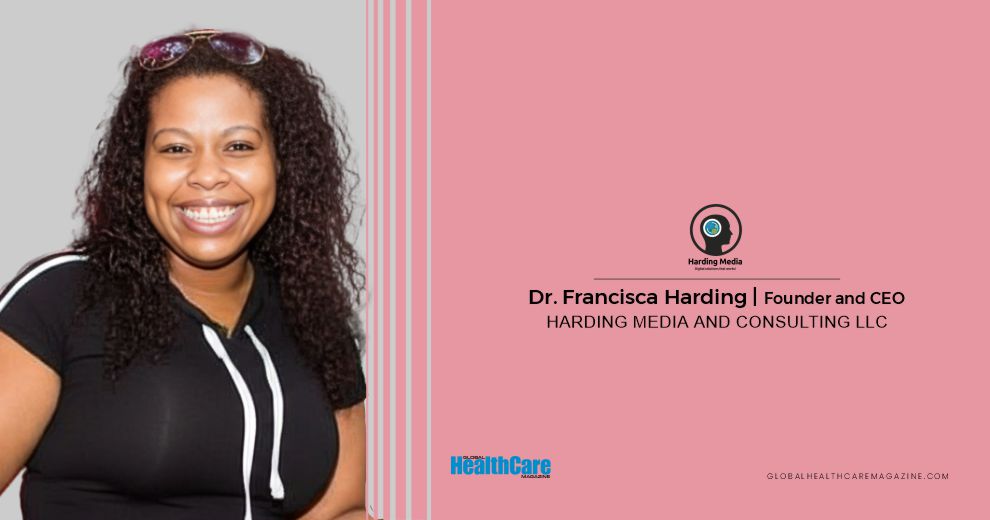
Dr. Harding did not leave education. She simply expanded its borders. Today, as the founder and CEO of Harding Media and Consulting LLC, she is a revolutionary in the EdTech space. But she is not a tech person who discovered education. She is a profoundly gifted educator who has harnessed the power of technology, from artificial intelligence to augmented reality, to do one thing: to make learning equitable. She is a leader who measures success not in user acquisition, but in access, and who believes that the future of learning will be built not just on data, but on a foundation of unshakeable empathy.
The 17 Year Observation
To understand Harding Media, you must first understand the seventeen years that preceded it. Dr. Harding’s career was forged in the classroom, where she served as a bilingual science educator before rising to district curriculum leadership. This was not a passing phase; it was her life. It was here she saw the front lines of a systemic failure. She saw students with IEPs (Individualized Education Programs) struggling with lessons that were not designed for their minds. She saw bilingual students trying to grasp complex STEM concepts from culturally sterile, monolithic curricula.
Dr. Harding did not just see a problem; she felt it. She saw the “why.” She saw that the educational divide was not a passive gap, but an active, systemic barrier. The inspiration for her life’s work was not a flash of insight about a market opportunity. It was a slow-burning, 17-year observation that the students who needed the most support were getting the least. She realized that to truly serve them, she could not just deliver the curriculum she was given. She would have to write a new one.
A Studio Built on Disruption
Harding Media and Consulting LLC was born from this “creative disruption.” Dr. Harding founded the company on a simple, radical premise: what if the tools of education were designed, from the ground up, for the very students the current system was failing? The company’s mission became to bridge the canyon between innovation and access.
This is not another company building generic learning software. Dr. Harding’s team develops culturally responsive curricula, tools that reflect the students who use them. They are building immersive augmented and virtual reality (AR/VR) tools that are not just gimmicks, but gateways. And they are integrating artificial intelligence in a way that is profoundly human. The goal is to create tools that make learning equitable, engaging, and impactful for every single learner, “especially those often left behind.”
At the heart of this technical innovation is a tool named C.indy Bot. It is an AI-driven lesson planner, but its true genius lies in its purpose: it is designed specifically for IEPs. It takes the crushing administrative burden off teachers and helps them create truly individualized, data-informed plans for students with learning differences. It is the tool Dr. Harding wishes she had for all those years.
BRAiNS Academy, the training arm of her organization, is the other half of the equation. Dr. Harding knows that even the best technology is useless if the human element is flawed. BRAiNS Academy delivers professional development in the very things systems often ignore: emotional intelligence, unconscious bias, and inclusive leadership. She is not just building better tools; she is building better, more aware, and more compassionate educators.
Technology as a Doorway
In Dr. Harding’s hands, technology becomes an instrument of empathy. The integration of AR and VR is a perfect example. For most of the EdTech world, it is a “wow” factor. For her, it is an accessibility tool. “Students with autism or IEPs can now experience interactive labs in safe, immersive settings,” she explains.
Think about that. A student who might be overwhelmed by the noise and chaos of a physical chemistry lab can now conduct an experiment in a controlled, immersive, and safe virtual space. A student in an underfunded urban district can take a field trip to the surface of Mars or the inside of a human cell. It is not edutainment; it is equity.
Her approach ensures that these tools are not just available to underserved communities, but that those communities “see themselves represented within them.” It is a fundamental breaking of the barriers in STEM education, a way of looking at a student of color and saying, through the code itself, “You belong here. This world is for you.”
The Twin Pillars: Data and Heart
As a leader, Dr. Harding embodies the two pillars of her company: data and empathy. She is a CEO who balances the big picture vision with hands-on execution, from designing AI frameworks to personally mentoring teachers. She leverages analytics to measure what matters, tracking learning outcomes and student engagement to guide curriculum redesign. Her work is a showcase of “how education data can humanize learning rather than depersonalize it.” The data is not a weapon for judgment; it is a flashlight for finding the students who are lost in the dark.
This philosophy of service extends beyond her for-profit venture. It is, quite literally, a matter of the heart. Dr. Harding founded Harding’s Heart Foundation, a sister nonprofit, to address the other side of the educational divide. She knows that a student cannot focus on a virtual lab if their life outside of school is in chaos.
The foundation is an act of community uplift, focusing on education, philanthropy, and youth empowerment. It provides scholarships and family workshops. But its most poignant mission is a reflection of her servant leadership: it provides crucial support services and life skills education for young men, “enabling them to thrive independently and contribute positively to society.”
And the vision is global. The foundation is currently working to build an IB boarding school in La Romana, Dominican Republic. Dr. Harding is not just building software; she is building sanctuaries.
Leadership in the Fire
The true test of this dual-pillar leadership came, as it did for so many, during the pandemic. As districts shattered overnight, shifting to remote learning, the very inequities Dr. Harding had been fighting were thrown into stark, painful relief. Her resilience was tested.
She did not just pivot; she attacked the problem. She launched a digital equity initiative through BRAiNS Academy, training hundreds of teachers, for free, on how to conduct culturally responsive virtual instruction. She did not just teach them how to use the software. She taught them how to see the child on the other side of the screen, how to keep the human connection alive through a pixelated barrier. The crisis did not break her mission; it amplified it. It expanded her reach to communities that had been “previously underserved by technology.”
Dr. Harding’s impact is no longer theoretical. Her programs have reached over 10,000 students and educators across the United States and the Caribbean. Her AI platform, C.indy Bot, is being piloted in multiple school districts. Her immersive science curricula have become models for what inclusive, engaging STEM teaching looks like.
The Future is Humane
When Dr. Harding looks to the future, she envisions a global learning ecosystem. But her vision is not the sterile, automated future that many in tech imagine. She sees a future that “personalizes education while preserving humanity.” She is scaling her AI and AR products to reach schools worldwide, but her goal remains the same as it was in her first classroom: to make learning transformative, accessible, and equitable for all.
When she is not leading her companies or her foundation, she finds joy in her family, in writing, and in her community. She mentors young women in STEM, produces creative media projects, and spends time with her children, “whose curiosity,” she says, “continues to inspire her mission.”
It is a mission that comes back to a single, human truth. “True innovation begins with empathy. When we listen to learners, we reimagine education from the inside out. The future of learning is inclusive, intelligent, and infinite,” Dr. Harding concludes.
This is the core of her story. This is the “why” that has driven her from the classroom to the boardroom. She is a leader who has never forgotten the silence, the quiet, the disengagement of the students she served for seventeen years. And she has dedicated her life to replacing it, not just with noise or technology, but with the sound of a human voice, a spark of connection, and the thrill of a mind that has finally been given the tools to explore its own infinite, inclusive future.
Quotes
Also Read: The 10 Most Visionary Education & EdTech Leaders of 2025