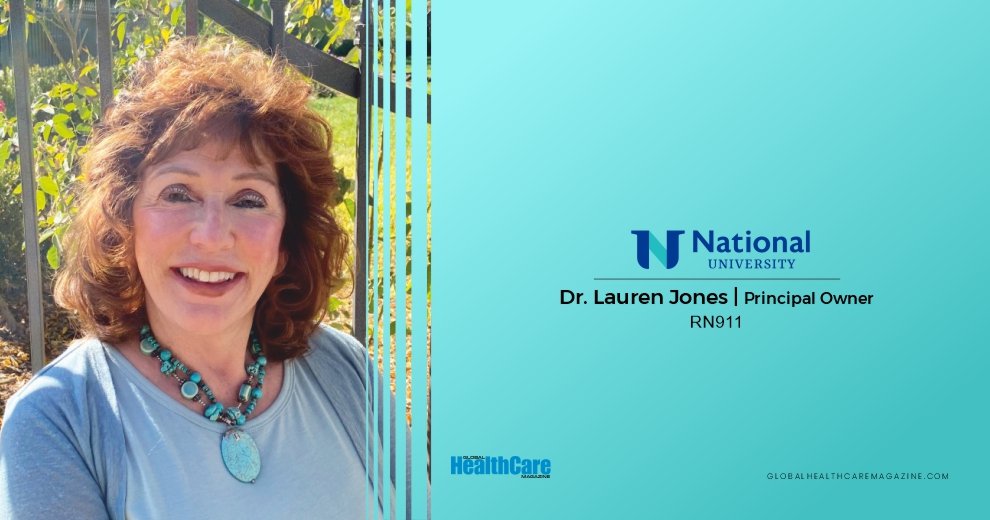
There is a quiet crisis unfolding in the corridors of modern healthcare, a silent epidemic of burnout, fatigue, and lost purpose that affects the very people tasked with saving our lives. It is a crisis that cannot be solved with a pizza party or a generic wellness seminar. It requires a deeper kind of intervention, one that understands the unique pressure of holding a life in your hands and the profound isolation that can come when that weight becomes too much. Dr. Lauren Jones has spent more than three decades standing in this gap. She is a visionary nursing leader, an educator, and a consultant who has dedicated her life not just to teaching the mechanics of care, but to nurturing the souls of the caregivers.
As the Principal Owner of RN911 and a seasoned organizational consultant, Dr. Jones operates at the intersection of education, administration, and deep human empathy. She is a woman who has taught thousands of students, managed complex nursing programs, and consulted for giants like Ernst and Young and The Joint Commission. But her true expertise lies in a simple, radical act: listening. She listens to the nurses who are too afraid to go to HR. She listens to the organizations that are failing their staff. And she listens to the data that tells a story of systemic dysfunction. In a world obsessed with metrics and efficiency, she is a champion for the unquantifiable: dignity, trust, and the transformative power of a good question.
The First Dressing
Dr. Jones’s journey into nursing began in a quiet space in her grandmother’s room. As an only child, she found herself in the role of caregiver when her grandmother was battling breast cancer. It was there, helping with her dressings, that a young Lauren discovered something profound about herself. She realized that this act of service, this tangible way of helping, was a positive force. It wasn’t just a chore; it was a calling.
“I decided that was a positive way to help people,” Dr. Jones recalls simply. That decision led her to apply to Ohio State’s BSN Program in her senior year of high school. She was accepted, setting her on a path that would span over 50 years and touch countless lives.
This early experience shaped her philosophy in ways that would only become clear later. It taught her that care is not just a clinical transaction. It is a human connection. Over the years, as she moved through diverse leadership and teaching roles, she honed this understanding. “I learned how to use my empathy and humor to communicate and teach,” Dr. Jones says. It is a leadership style that disarms, connects, and ultimately, transforms.
The Birth of RN911
The origin story of RN911 is a testament to Dr. Jones’s ability to see the gaps that others miss. After consulting with major firms like Ernst and Young and The Joint Commission, she realized she had the expertise to strike out on her own. But more importantly, she saw a desperate need that was going unmet.
Nurses were overwhelmed, depressed, and concerned about their effectiveness. They needed support, but they often felt they had nowhere to turn. “Originally, it was to provide support that many HR Divisions are unable to provide,” she explains. She understood the toxic politics that can plague healthcare institutions. “When a Nurse is seen in HR, the rumors start and at the end, there was one small part that was accurate which fuels the next rumor.”
RN911 became a sanctuary, a virtual space where nurses could find support without fear of judgment or reprisal. It also became a strategic partner for Schools of Nursing, providing organizational assessments and strategies to improve programs with direct input from faculty and students. It was a dual mission: heal the individual nurse, and heal the system that educates them.
The Consultant as Catalyst
Dr. Jones’s work as an organizational consultant is driven by a deep belief in the power of questions. Her approach to assessments is not a top-down audit. She conducts what she calls a “quasi force-field analysis,” meeting with all staff, managers, and supervisors. She asks them simple, powerful questions: What is going well? What could be changed?
The anonymity of this process is crucial. The results, stripped of names, are shared with the hiring executive along with her plan. It is a method that honors the truth of the people on the ground while providing leadership with the clear, unvarnished data they need to make real change.
Dr. Jones’s impact is tangible. She has increased NCLEX results in several colleges, a critical metric for any nursing program. She secured a $500,000 Grant from Robert Wood Johnson, a prestigious achievement that speaks to the caliber of her work. She has created several National Honor Society Chapters, fostering a culture of excellence and recognition. And on the global stage, she was asked by the World Health Organization (WHO) to teach Continuous Quality Improvement strategies to MDs in Kazakhstan.
These are not just bullet points on a resume. They are proof of a philosophy that works. “A coach ‘values your dignity as a human being and your growth as a spiritual being’,” Dr. Jones wrote in 1995. It is a definition that guides her every interaction, whether she is helping a struggling student or advising a hospital executive.
The Test of Integrity
Leadership is easy when things are going well. It is tested in the moments of conflict and crisis. Dr. Jones shares a story that reveals the steel spine beneath her empathetic exterior. She was responsible for several nursing programs when one of the Deans called her, confused and upset, asking why she had been terminated.
Dr. Jones had not been told. The Dean was a forceful leader who had been instrumental in obtaining the campus years before. She trusted Dr. Jones. “She said she trusted me and I agreed and told her I would find out and get back to her, which I did,” she recalls.
When she sought answers, she found a wall of silence. The person to whom she reported refused to communicate with her. For a leader who values transparency and human dignity above all else, this was intolerable. She reported the incident to HR and resigned. It was a costly decision, but it was the only one her conscience would allow. It was a masterclass in integrity, a demonstration that for Dr. Jones, people always come before politics.
The Future of Nursing Education
As an educator who has been teaching online since 2006 at the University of Phoenix and National University, Dr. Jones has a unique perspective on the evolution of nursing education. She currently teaches online courses in National’s MBA programs, covering topics from Leadership to Conflict Resolution.
She sees the potential of online education but is also clear about its limitations. “Online Education and the content is dependent upon the level of the Learner,” Dr. Jones asserts. She believes that foundational nursing content for ADN students should not be taught initially online. It requires a hands-on, in-person approach. This nuanced view reflects her commitment to quality over convenience, to ensuring that the next generation of nurses is truly prepared for the realities of the job.
A Vision for the Future
Looking ahead, Dr. Jones sees a shifting landscape in healthcare consulting. Many corporations have purchased hospitals and created their own internal consulting groups. While efficient, this creates a danger. “They are part of the Org culture which separates their distance and objectivity,” she warns.
Dr. Jones believes there is a vital role for independent organizational consulting, for an outside voice that can speak truth to power. “I believe that Org Consulting is where I belong,” she says. Her mission now includes a new challenge: telling Nursing Executives that “it is OK to ask for help.” In a profession that prides itself on stoicism and self-reliance, this is a radical and necessary message.
The Learning Cycle
Outside of her work, Dr. Jones finds balance in movement and dreams of travel. She walks 2 miles daily, a ritual that allows her to think without distractions. She dreams of a small cottage in Nice, a place of beauty and rest.
Her final message to readers is a distillation of her life’s work. It is a call to curiosity. “Probably to ASK questions about your health,” she advises. She references Charles Handy’s Learning Cycle, a model that begins with QUESTIONS, leads to HYPOTHESES, then TRIAL/ERROR/EXPERIMENTATION, and finally REFLECTION back to Questions.
“You can see that Questions initiate Learning,” she says.
It is a simple, profound truth. Dr. Lauren Jones is a woman who has spent a lifetime asking questions. She has asked them about her students, her clients, and the healthcare system itself. And in doing so, she has not only found answers; she has found a way to make the world of nursing a little more human, a little more dignified, and a lot more effective. She serves the nurses, the students, and the patients, but ultimately, she serves the truth that keeps them all safe.
Quote
“It is OK to ask for help.”

Also Read: Women Nursing Leadership Visionaries: Architects of Pediatric Surgical Access 2026