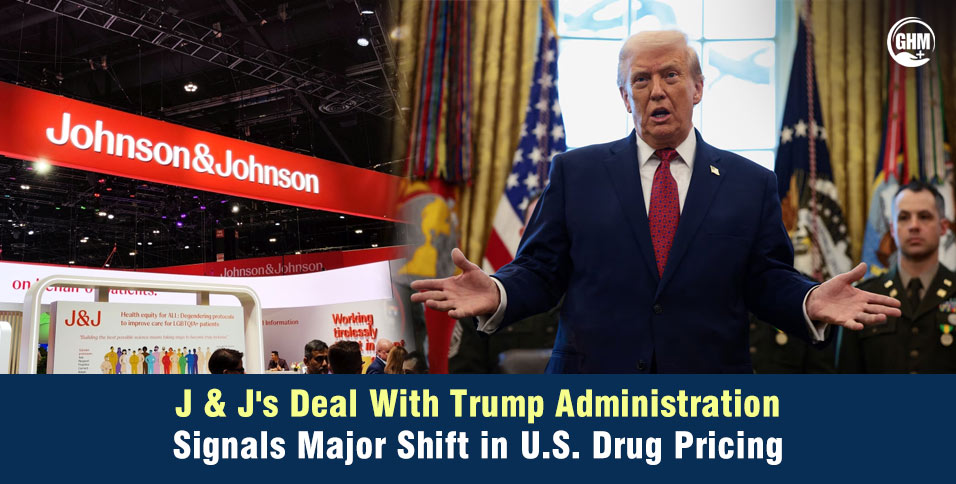
J & J’s deal with Trump Administration marks a significant turning point in US healthcare policy. The Pharma giant Johnson & Johnson agreed to lower drug prices for American patients under a new arrangement with the US government.
The deal aligns with President Donald Trump’s renewed push to reduce prescription drug costs and bring US prices closer to those paid in other developed countries.
This Johnson & Johnson’s Deal With the US Government places one of the world’s largest pharmaceutical companies at the center of US drug price reforms, with potential ripple effects across the global healthcare industry.
What Is the Johnson & Johnson Drug Deal
At its core, J & J’s deal with Trump Administration is a voluntary pricing agreement between Johnson & Johnson and the US government. Under the deal, the company committed to offering discounts on certain medicines and improving affordability for millions of Americans.
The prices will be reduced on selected drugs supplied to government health programs and direct-purchase platforms, which will give regulatory certainty to the company in return.
This agreement supports the Trump administration’s broader effort to reshape US healthcare pricing without imposing strict price controls.
What’s Inside the Johnson & Johnson & Trump Agreement
1. Drug Discounts for American Patients
Under J & J’s deal with Trump Administration, Johnson & Johnson will lower the drug prices through government-linked purchasing channels, including platforms promoted by the Trump administration.
The goal is to reduce out-of-pocket costs for patients, especially those relying on public healthcare programs.
2. Alignment With Global Prices
A major feature of this deal with the US government is price alignment with other developed nations. The US has long paid more for prescription medicines than Europe or Japan.
President Donald Trump has repeatedly criticized this imbalance, arguing that Americans should not “subsidize” global drug prices.
3. Medicaid Pricing Adjustments
The Johnson & Johnson deal includes commitments to improve pricing for Medicaid programs, which serve low-income Americans. This step directly affects US healthcare access and affordability.
How the Deal Gives A Tariff Exception
One of the most closely watched aspects of J & J’s deal with Trump Administration is the tariff exception granted to the company.
In exchange for lowering drug prices, Johnson & Johnson received a temporary exemption from proposed US tariffs on pharmaceutical imports. These tariffs were part of President Trump’s broader trade strategy to encourage domestic manufacturing.
Analysts have noted that this tariff exception provides Johnson & Johnson with supply-chain stability while supporting the administration’s pricing goals.
How the Pharma Deal Impacts US Manufacturing and Jobs
Beyond pricing, J & J’s deal with Trump Administration reinforces Johnson & Johnson’s long-term US investment plans.
The company reaffirmed its commitment to domestic manufacturing, including new and expanded facilities in states such as North Carolina and Pennsylvania. These investments align with President Trump’s economic agenda to strengthen US industrial capacity.
According to the company, these projects support innovation, job creation, and supply security.
Why This Matters for Patients and Healthcare
For patients, J & J’s deal with Trump Administration could mean:
- Lower drug costs
- Improved access to essential medicines
- Reduced financial strain on families
For the US Government, he deal offers a model for US drug price reforms that rely on negotiation rather than legislation. It also signals that major pharmaceutical firms may be willing to cooperate under political and public pressure.
What The Future Holds For This Price Drop Deal
While J & J’s deal with Trump Administration sets a strong precedent, many details remain under review, including which drugs qualify for discounts and how pricing will be monitored.
Still, the agreement signals a clear policy direction under President Donald Trump with aggressive action on drug prices through direct engagement with pharmaceutical leaders.
As US healthcare costs continue to dominate public debate, this deal may become a defining moment in how America reshapes its relationship with the global pharmaceutical industry.