As global populations age, interest in the recent discoveries in dementia disease is growing rapidly. With more than 55 million people worldwide living with Alzheimer’s disease or many other neurocognitive disorders, scientists are racing to uncover new ways to slow, prevent, or understand this condition.
In the past year, several breakthroughs have emerged, offering new hope for dementia prevention, especially for women, older adults, and people with high obesity rates or chronic health risks.
This article explains the latest discoveries in dementia disease, with each new finding revealing how lifestyle, biology, and prevention strategies might reshape the future of Alzheimer’s disease.
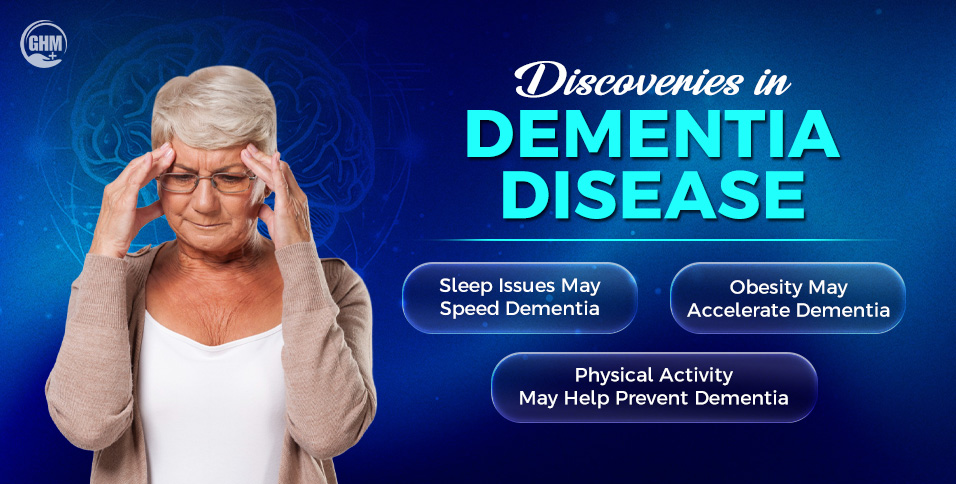
Explore these 5 Recent Discoveries in Dementia Disease
1. Sleep Issues May Speed Dementia, Especially in Women
One of the newest discoveries in dementia disease shows that chronic sleep disruption may significantly increase dementia risk. Researchers found that women who regularly struggle with insomnia, fragmented sleep, or short sleep may develop memory problems earlier.
Poor sleep affects short-term memory, hormone balance, and brain detoxification, which is critical for removing amyloid proteins. Amyloid proteins are the proteins strongly linked to Alzheimer’s disease.
Because women face higher rates of sleep problems due to hormonal shifts, this finding highlights the need for better sleep care during perimenopause and menopause. Improving sleep may become a major part of dementia prevention strategies in the coming years.
2. Obesity May Accelerate the Development of Dementia
Another major breakthrough found that obesity can be a cause of faster progression of dementia. New research shows that excess body fat triggers inflammation throughout the body, which can extend to the brain, increasing the risk of Alzheimer’s disease and other neurocognitive disorders.
Obesity especially affects areas of the brain responsible for planning, short-term memory, and emotional regulation. This discovery reinforces the need for early weight-management strategies, with the global rise in obesity rates. It is not only significant in improving heart health but also in reducing dementia risk.
3. A Newly Identified Dementia-Linked Protein May Affect DNA Stability
In one of the most technical yet exciting discoveries in dementia disease, scientists have identified a protein that interferes with how DNA repairs itself. When this protein becomes overactive, it damages nerve cells and speeds up the progression of Alzheimer’s disease.
This finding helps explain how dementia may develop at the genetic level, even when a person does not have a known genetic disorder. Understanding this protein opens new opportunities for medications that can protect brain cells and delay cognitive decline.
4. Estrogen May Offer Protection for Dementia in Women
A recent breakthrough for dementia in women reveals that estrogen, especially during perimenopause, may protect the brain from decline. As women age, estrogen levels drop sharply, which can affect brain energy use, mood, and short-term memory.
Recent findings show that women using hormone replacement therapy (HRT) at the right time may lower their long-term dementia risk. However, timing is important: starting too late may not offer brain benefits. This discovery highlights how sex hormones shape Alzheimer’s disease differently for women than for men.
5. Physical Activity May Be the Prime Time for Dementia Prevention
Researchers looking at lifestyle factors found that staying physically, mentally, and socially active in your 40s, 50s, and 60s may offer the greatest protection against dementia. Activities such as regular exercise, volunteering, reading, and community engagement in your mid-life appear to reduce the risk of neurocognitive disorder.
These findings support the idea that dementia prevention is not only a medical issue but also a lifestyle and community issue. Early intervention may be more powerful than late-life changes.
6. The Shingles Vaccine May Slow Dementia Progression
One of the most surprising discoveries in dementia disease this year is that the shingles vaccine may slow the worsening of dementia in older adults. The vaccine helps reduce inflammation in the nervous system, which may protect the brain from further damage.
While this does not act as a cure for dementia patients, it may become an important part of long-term care, helping older adults maintain independence longer. More research is underway, but the early signs look very promising.
Conclusion
The latest discoveries in dementia disease are transforming what we know about Alzheimer’s disease and offering new ways to protect the brain. From sleep and obesity to hormones, vaccines, and lifestyle habits, these findings show that many factors influence the risk of dementia, and so many of them are in our control.
As research grows, the world gets closer to earlier detection, better prevention, and perhaps one day, a real cure.
If you found this article helpful, please share it with others so they can take necessary precautions as soon as possible.
Sanskruti Jadhav
Frequently Asked Questions
- Can dementia be prevented completely with lifestyle changes?
Currently, dementia cannot be completely prevented. However, research shows that lifestyle changes can significantly reduce the risk or delay the onset of Alzheimer’s disease and other neurocognitive disorders.
- At what age should people start focusing on dementia prevention?
Dementia prevention should ideally begin in mid-life, typically between the ages of 40 and 60.
- Are men and women affected by dementia differently?
Yes. Women are more likely to develop Alzheimer’s disease than men, partly due to longer life expectancy and hormonal changes associated with menopause.
- Does family history guarantee someone will develop dementia?
No. While family history and genetics can increase risk, they do not guarantee that a person will develop dementia.
- Are there early warning signs of dementia that people often ignore?
Yes. Early signs can include subtle memory lapses, difficulty concentrating, changes in mood or personality, trouble finding words, and challenges with planning or decision-making. These symptoms are often dismissed as normal aging, but should be evaluated if they persist or worsen.