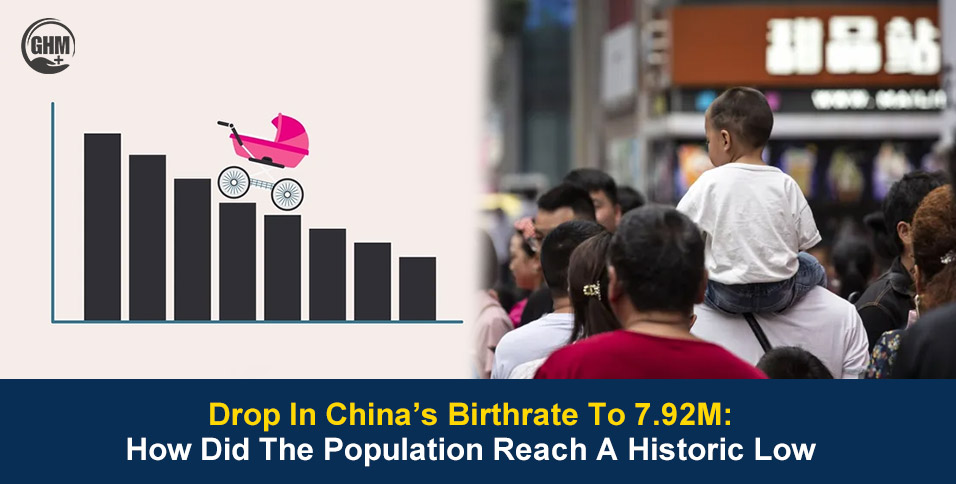
With a dramatic drop in China’s birthrate in 2025, the country is marking the lowest level since records began. This decline is signaling a far-reaching demographic shift with broad implications for healthcare, economic stability, and social policy.
Official statistics reveal that an ongoing decline in births is due to an aging society and slow economic growth. The results are intensifying concerns about the future of the Chinese population and how it will impact China’s economy as well as the global demographic trends.
What Does the Drop In China’s Birthrate Show
- In 2025, China recorded 7.92 million births, a sharp fall from 9.54 million births in 2024, highlighting the continued drop in China’s birthrate.
- The national birthrate in 2025 declined to 5.63 births per 1,000 people, the lowest level since 1949, according to official government data.
- During the same year, 11.31 million deaths were reported, meaning China’s death rate exceeded its birthrate for the fourth consecutive year.
- As a result, the total Chinese population shrank by approximately 3.39 million people, bringing the population down to around 1.405 billion.
Demographers note that this ongoing population decline reflects long-term structural changes, including an aging society, fewer women of childbearing age, and lasting effects of the One Child Policy.
Analysts warn that without significant social and economic reforms, the drop in China’s birthrate could accelerate further, placing sustained pressure on healthcare systems, labor markets, and the broader Chinese economy.
How China’s Population Reached This Point
Legacy of the One Child Policy
For decades, China’s stringent One Child Policy (in effect from 1980 to 2015) restricted most families to a single child. While the policy was relaxed (first to two children in 2016 and then to three in 2021), the demographic impact has been profound.
The number of women of childbearing age has declined sharply, and deep social and economic factors continue to limit fertility.
Urbanisation and Economic Pressures
Rapid urbanisation, with more than two-thirds of the population now living in urban areas, has increased the cost of living and raised housing, education, and childcare expenses, making family-building less affordable for many young adults.
Meanwhile, falling marriage rates, which are often closely linked to birth numbers in China, have contributed to delayed childbearing. In 2024, marriage registrations dropped to the lowest level in decades, further reducing birth prospects.
Why the Drop In China’s Birthrate Impacts the Economy
Rising Healthcare and Social Support Needs
A rapidly aging Chinese population places increasing demand on healthcare services and social support systems. With growing numbers of older adults and fewer young people entering the workforce, government and private healthcare providers face mounting pressure to deliver long-term care and chronic disease management.
Healthcare planners view the drop in birthrates as an early warning signal for shifting care priorities, including investments in geriatric medicine, rehabilitation services, and community health programs.
Economic Consequences
The Chinese economy is already feeling the effects of demographic change. A shrinking labor force slows economic growth potential and can reduce domestic consumption, critical drivers of the national economy. Public pension systems are also under strain as fewer workers support a growing retired population.
How Is The Government Responding To Birthrate Drop
China has introduced a range of incentives to encourage childbirth and support families, including:
- Cash subsidies for newborns and childcare allowances.
- Extended maternity and paternity leave provisions.
- Reimbursements for pregnancy-related medical expenses, including IVF treatments.
Despite these efforts, experts remain cautious about their effectiveness.
Many analysts highlight that financial incentives alone will not be able to reverse the broader trend unless accompanied by deeper social reforms.
The affordable housing, accessible childcare, equitable employment policies, and cultural shifts around family life can contribute to the growth in births.
What Comes Next For China’s Population
The drop in China’s birthrate raises fundamental questions about the future of the nation’s workforce, the sustainability of social safety nets, and how global population patterns are evolving in the 21st century.
China’s experience reflects wider patterns seen in several other nations experiencing low fertility rates, particularly in East Asia, where social and economic pressures have similarly contributed to declining birthrates.
However, China’s sheer scale, home to nearly one-fifth of the world’s population, amplifies the global significance of its demographic transition. For now, it will be significant to see how China adapts to one of its most pressing demographic challenges in decades.