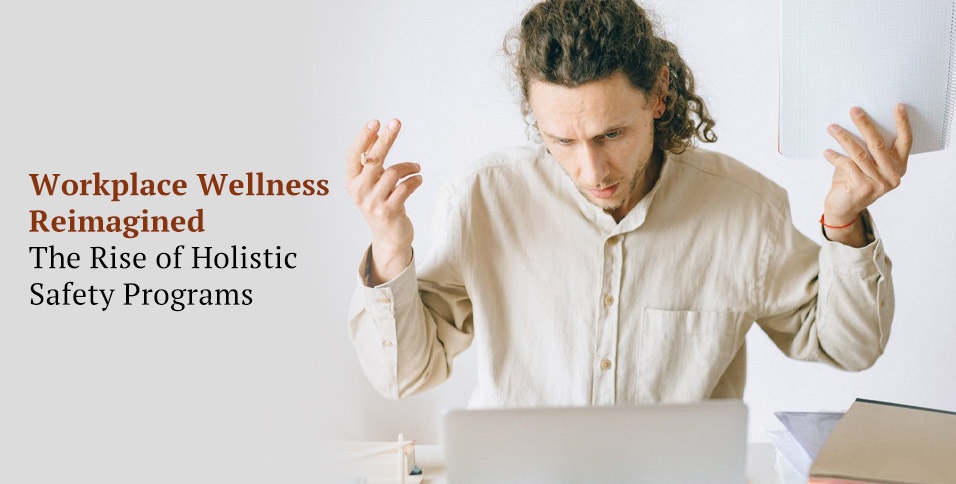
A workplace can meet all safety rules and still feel draining. While past efforts focused on physical risks, today’s wellness concerns include stress, burnout, and mental fatigue—issues brought to light by remote work, staffing gaps, and shifting worker expectations.
In this blog, we will share how holistic safety programs are redefining workplace wellness and reshaping how companies protect their people.
Safety Has Expanded Beyond Helmets and Checklists
Traditional safety programs were built to prevent visible harm. They did that job well. Injury rates dropped across many industries. But something else crept in quietly. Stress-related illnesses rose. Burnout became common. Turnover spiked.
The pandemic sped this up. Employees began working from couches and kitchen tables. Workdays stretched longer. The line between personal life and job duties blurred. Leaders realized that safety policies written for factory floors did not cover emotional overload or isolation.
Holistic safety programs respond to this shift. They treat safety as a system. Physical conditions, mental health, workload design, and leadership behavior all matter. A loud workspace affects focus. Poor scheduling affects sleep. Unclear expectations create anxiety. These issues are not soft concerns. They affect productivity and retention.
Companies that ignore this reality pay for it later. Missed deadlines, high turnover, and disengaged teams cost far more than prevention ever will.
Education Is Shaping the Next Generation of Safety Leaders
To run these programs well, organizations need professionals who understand both compliance and human behavior. This is where education plays a quiet but powerful role. A bachelor’s degree in occupational health and safety online gives students the tools to identify hazards, manage risk, and design safer systems that include people, not just policies.
Programs like the one at Southeastern Oklahoma State University prepare students for this expanded view of safety. Coursework covers regulatory standards, hazard analysis, training methods, and corrective actions. It also builds skills in communication and evaluation. The online format matters here. Many students already work in safety, manufacturing, or operations. Online learning lets them apply new ideas immediately without stepping away from their careers. That flexibility reflects how safety work actually happens in the real world.
This kind of education creates professionals who can move beyond rule enforcement and toward prevention and culture-building.
Mental Health Is Now a Safety Metric
Here is a simple truth. Tired people make mistakes. Stressed people miss signals. Burned-out teams cut corners.
That is why mental health is now part of serious safety planning. Some organizations track fatigue the same way they track equipment wear. Others rotate high-stress roles to reduce overload. Many offer counseling access or mental health days without stigma.
This is not about comfort perks. It is about reducing risk. In healthcare, transportation, and manufacturing, mental strain can lead to serious incidents. Even in office settings, chronic stress drives errors and disengagement.
Culture Is the Hidden Safety System
Policies alone do not create safety. Culture does.
If employees fear retaliation for speaking up, hazards go unreported. If leaders ignore workload concerns, stress becomes invisible. If rest is seen as weakness, burnout spreads.
Strong safety cultures encourage honesty. They reward reporting. They treat feedback as data. This requires leadership commitment, not slogans. Leaders must model behavior. They must leave on time sometimes. They must use safety protocols themselves. People notice.
Training plays a role here too. Safety professionals trained to communicate clearly and build trust can shift culture faster than any memo. They know how to align policy with practice.
Wellness Is Also a Business Strategy
Some executives still see wellness as optional. The numbers say otherwise.
Injury claims, absenteeism, and turnover drain budgets. Recruiting and retraining cost time and money. On the other hand, organizations with strong safety and wellness programs see higher engagement and lower disruption.
Investing in wellness also protects reputation. Workers talk. Job candidates research. Companies known for caring attract stronger talent. In tight labor markets, that matters.
Holistic safety programs turn wellness into infrastructure. They make it part of scheduling, design, and planning. This creates stability during change.
What Holistic Safety Looks Like on the Ground
In practice, holistic safety is practical, not abstract.
A warehouse might redesign shift lengths to reduce fatigue. A hospital might add quiet recovery rooms for staff. An office might offer ergonomic reviews and flexible schedules. A manufacturing plant might rotate tasks to prevent strain.
The common thread is intention. Safety is planned, reviewed, and adjusted. It evolves with the workforce.
The future of workplace wellness is not about removing all stress. That is impossible. It is about managing risk with realism and respect. When organizations see safety as a living system, not a static rulebook, people feel it. Productivity improves. Trust grows.
Holistic safety programs do not just keep people from getting hurt. They help them stay well enough to do their best work.