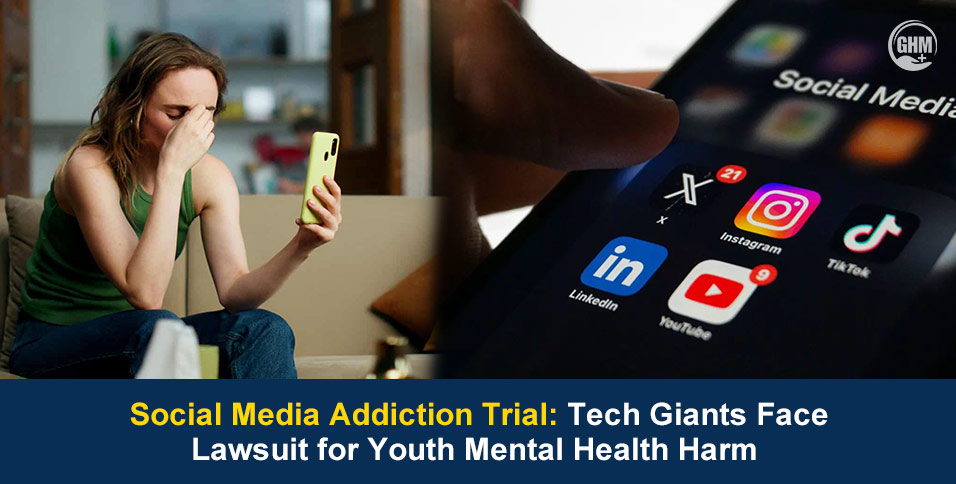
The social media addiction trial has begun in California with two tech giants, Meta and YouTube, facing a jury over claims that their products are addictive and harmful to children’s mental health. The case comes after TikTok agreed to a settlement just before the trial started.
This is the first time major tech companies like Meta, parent company of Instagram & Facebook, and YouTube are facing a jury over claims that their platforms are addictive and dangerous for children and teens, questioning tech design choices on their young audience and their mental health.
The outcome of this trial has the potential to shape how digital platforms protect mental health for years to come.
Why the Social Media Addiction Trial Matters For Youth Health
The social media addiction trial is not just a legal battle, but a public health moment. Mental health professionals have long warned about the social media effects on kids.
The trial in California is intended to test whether social platforms deliberately designed their products to hook young users and contribute to significant harm to mental health.
At its core, the lawsuit claims:
- Platforms use design features like infinite scroll, autoplay, and constant notifications to keep users engaged.
- This engagement isn’t accidental but a deliberate business strategy to increase time spent on apps.
- The result is a host of issues for children, including anxiety, depression, body image problems, and addiction-like behavior.
These claims echo growing concerns from parents. Health experts describe this pattern as compulsive use, meaning the behavior becomes hard to stop, even when it causes distress.
What Is The Social Media Addiction Trial In the USA
The social media addiction trial in California is led by a 19-year-old woman who says she became addicted to social media platforms as a child. According to ABC News, her lawsuit claims prolonged use led to:
- Depression
- Anxiety
- Disordered eating
- Suicidal thoughts
Her legal team argues that these harms were not accidental but linked to platform design choices aimed at maximizing user engagement.
This is a bellwether trial, meaning it serves as a test case for thousands of similar lawsuits across the U.S. The verdict could influence how future cases about social media and mental health are handled and whether companies choose to settle or fight.
What Does The TikTok Lawsuit Settlement Signals
One of the most closely watched developments in the social media addiction trial was the TikTok lawsuit settlement.
Before the trial began, two major companies chose to settle:
- TikTok reached a confidential settlement with the lead plaintiff on the day the trial was to start.
- Snap, the parent company of Snapchat, settled a week earlier.
Public health advocates see this as significant. While settlement details were not disclosed, experts say it suggests companies may want to avoid public scrutiny of internal research related to youth social media addiction.
Meta and YouTube, however, chose to proceed to trial and are now on track for the first full social media addiction trial. Jury selection has begun in the Los Angeles County Superior Court.
How Meta and YouTube Are Defending Themselves
In the social media addiction trial, the Tech companies argue that:
- There is no clear scientific agreement proving that social media directly causes mental illness.
- Many factors contribute to youth mental health, including family, school, and genetics.
- They provide safety tools such as screen-time limits and parental controls.
However, public health researchers counter that children’s brains are still developing, making them more vulnerable to addictive digital patterns.
What Science Says About Youth Social Media Addiction
While the social media addiction trial is not a medical study, it draws heavily on health research. According to reports, Mental health specialists explain that frequent social media use can overstimulate the brain’s reward system.
In simple terms, each “like” or notification triggers dopamine. Over time, young users may crave more screen time to feel the same effect.
Studies referenced in multiple reports link heavy use to:
- Increased anxiety and depression
- Lower self-esteem
- Poor sleep quality
- Higher risk of self-harm in teens
However, researchers also note that these links are complicated and can vary widely by individual and context.
Still, the trial serves as a turning point in recognizing social media harm to mental health as a legitimate health concern.
What Changes The Trial Could Bring
The social media addiction trial in California could influence future health policy. If companies are found liable, it could lead to:
- Stronger regulations on youth-targeted features
- Mandatory health warnings or design limits
- Greater transparency around algorithmic impact
The lawmakers are already using this case to support calls for stronger child online safety laws.
This is not about banning technology but about designing it responsibly.
To Conclude
The social media addiction trial marks a turning point in how digital wellbeing and platform accountability are discussed in law, health, and society. The case represents more than a courtroom battle. It’s a test of how society responds to concerns about technology’s role in youth development and mental health.
Regardless of the verdict, the trial has already changed the conversation, bringing youth social media addiction and mental health into the global spotlight.
For health professionals and families alike, this case may shape a healthier digital future.