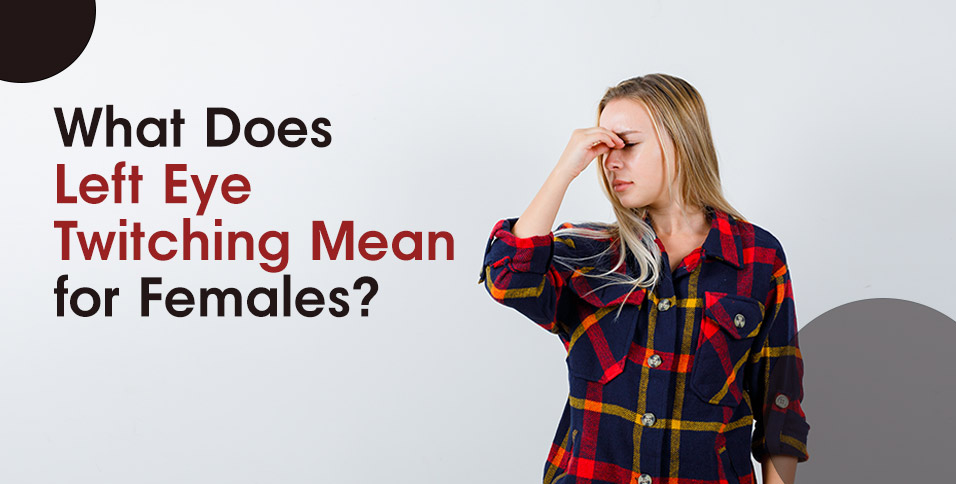
You notice a small jump in your left eyelid, and the thought sticks with you. The moment feels odd; therefore, you wonder if it points to luck, a warning, or a health issue. Curiosity grows because many cultures attach meaning to this simple body signal.
Left eye twitching for females often points to good luck in some traditions; however, stress, fatigue, caffeine, or eye strain cause it most of the time. Cultural beliefs add interest, yet science offers clear answers that help you judge what matters.
This topic moves from cultural views to clear medical facts, for example, common causes, ways to reduce twitches, and signs that call for a doctor visit. As a result, you gain clarity and calm instead of worry.
What Does Left Eye Twitching Mean for Females?
Many people ask “what does left eye twitching mean for females?” Cultural beliefs, astrology, and eyelid location shape how people read this sign, even though medical causes often explain it. The sections below explain how different traditions view a left eye twitch and how the meaning changes by place, belief, and eyelid area.
Cultural and Superstitious Interpretations
Many cultures link a left eye twitch to signs or messages rather than health. In parts of Asia, people often view a left eye twitch in women as a sign of good news or a positive event. Some families tie this belief to luck in money or family matters.
In contrast, parts of Africa and the Caribbean often treat a left eye twitch as a warning. People may expect conflict, stress, or bad news. European folklore sometimes links the twitch to emotional upset.
These views differ, yet they share one idea. Culture shapes how you read the meaning, not biology.
Astrological and Geographic Differences
Astrology also plays a role in how people interpret a left eye twitch. In Indian astrology, many believe a left eye twitch brings good luck for women but bad luck for men. Chinese astrology sometimes reverses this belief by region or tradition.
Geography matters as well. Rural areas often hold stronger beliefs than cities. Local customs pass these ideas from one generation to the next, which keeps them alive.
Astrology bases its meaning on timing, direction, and gender. However, these systems rely on belief rather than evidence. As a result, two people may read the same twitch in opposite ways based on where they live or what they follow.
Interpretation by Eyelid Area
Some traditions focus on the exact eyelid area that twitches. An upper left eyelid twitch often links to visitors, messages, or news. A lower left eyelid twitch may signal tears, worry, or emotional stress in certain cultures.
This type of detail adds structure to the belief system. People feel more control by narrowing the meaning to a specific spot. However, anatomy explains these twitches through small muscle spasms.
The eyelid area does not change the physical cause. Still, cultural rules give each area a different meaning. You may notice how these ideas influence your reaction more than the twitch itself.
When Left Eye Twitching Is Considered Positive or Negative
Positive or negative meaning depends on belief, mood, and context. A calm period in your life may lead you to view the twitch as good luck. Stress or conflict may push your thoughts toward a bad sign.
Some people also judge meaning by duration. A brief twitch may feel harmless or lucky. A longer twitch may raise concern or fear.
These interpretations reflect emotion more than fact. Physical triggers such as stress, fatigue, or screen use often explain the twitch. Belief adds meaning, yet your body usually sends a simple signal that asks for rest or balance.
Medical Causes, Prevention, and When to Seek Help
Left eye twitching often links to simple muscle spasms, but health and daily habits also play a role. Clear steps can reduce eyelid twitch and help you spot signs that need medical care.
Common Medical Triggers
Left eye twitch, also called myokymia, starts with small muscle spasms in the eyelid muscle. Fatigue, inadequate sleep, and eye strain rank among the most common causes of eye twitching. Dry eyes, allergies, and eye redness can irritate nerves and trigger an eyelid spasm.
Caffeine overload and alcohol consumption raise nerve activity, which can worsen eye twitching. Dehydration also affects muscle control and may lead to frequent spasms. In rare cases, persistent eye twitching is linked to blepharospasm or hemifacial spasm. These conditions cause stronger or spreading muscle spasms and need medical review.
Role of Stress and Lifestyle
Stress places constant pressure on your nervous system, which increases the risk of eye twitching. Anxiety, long work hours, and poor rest habits all contribute. As a result, eyelid twitching may appear during busy or emotional periods.
You can reduce symptoms with simple stress management techniques. Deep breathing and other relaxation techniques calm nerve signals. Regular sleep helps your muscles recover and limits fatigue. Digital eye strain also matters, especially with heavy screen use. Follow the 20-20-20 rule to rest your eyes. Many people also find that using progressive reading glasses helps reduce strain during prolonged close-up tasks. In addition, a warm compress can relax tight eyelid muscle fibers.
Nutrition and Eye Health
Nutrition affects muscle control and eye health more than many people expect. Magnesium deficiency is often linked to muscle spasm, including eye twitching. Low potassium or calcium may also disrupt nerve signals.
You support healthy muscles with balanced meals and steady hydration. Nuts, seeds, leafy greens, and dairy products supply helpful minerals. Water intake helps prevent dehydration, which reduces twitch frequency. Artificial tears can ease dryness and limit irritation that triggers eyelid twitch. These small steps support eye health and lower the chance of repeat spasms. Dark eye circle treatment for nutrients.
When to See a Doctor
Most eye twitch cases resolve within days or weeks. However, medical care matters if the twitch lasts longer than two weeks or disrupts daily life. Spreading muscle spasms across the face raise concern for hemifacial spasm or another neurological issue.
Seek help if you notice vision changes, pain, strong eye redness, or drooping of the eyelid. Forceful eyelid closure points toward blepharospasm. Muscle weakness on one side of the face also needs prompt care. A doctor can rule out serious causes and guide proper treatment.
Conclusion
Left eye twitching in females usually points to mild causes such as stress, poor sleep, caffeine, or eye strain.
However, hormone shifts, makeup irritation, and dry eyes can also affect how often you notice it.
As a result, simple habits like rest, screen breaks, and eye moisture often stop the twitch within days.
Therefore, if the spasm lasts over two weeks, spreads to your face, or brings pain or vision changes, you should seek medical care.