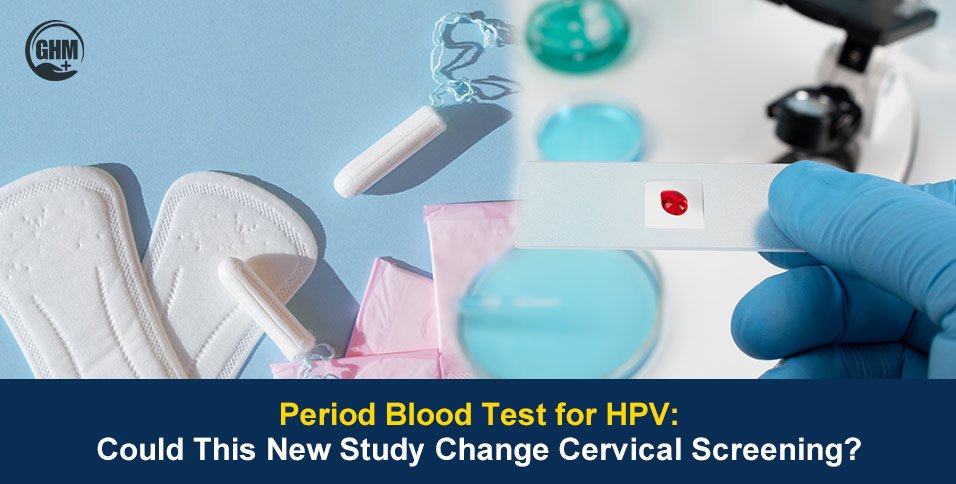
In a recent breakthrough, during cervical cancer screening, scientists in China found that using a period blood test for HPV can be effective for the detection of the human papillomavirus (HPV) — the infection responsible for almost all cases of cervical cancer.
This test for cervical cancer using menstrual blood is emerging as a promising alternative to traditional cervical screening and the familiar smear test.
The new research suggests a less invasive testing method that could improve early detection for women who avoid or delay clinical screening.
How Does The Period Blood Test Work?
Testing menstrual blood for HPV means analysing blood shed during a person’s period for traces of high-risk human papillomavirus DNA.
HPV refers to a group of viruses, some of which can lead to cervical cancer. Traditional smear tests involve a clinician using a brush to collect cells from the cervix during an exam, which many find uncomfortable or intrusive.
By contrast, a period blood test for HPV uses a small absorbent strip attached to a pad to collect menstrual blood at home, which is then sent to a lab for testing. Researchers describe this as non-invasive and convenient, as it reduces the need for clinic visits and physical exams.
What the New Research on HPV Shows?
Findings From Cervical Cancer Screening in China
- The most comprehensive study to date involved more than 3,000 women aged 20–54 in cervical cancer screening in China.
- Participants provided three samples, including the menstrual blood collected on a minipad, and two clinician-collected cervical samples.
- Researchers compared these samples to see how well the menstrual blood HPV test could detect high-risk HPV and cervical changes that require treatment.
The results were encouraging:
- Accuracy: the ability to correctly identify people with cervical changes was 94.7% for menstrual blood versus 92.1% for clinician samples.
- Specificity: Identifying those without disease was similar for both.
- Negative predictive value: the likelihood that a negative result truly means no disease was identical.
This suggests that a period blood test for HPV performs comparably to clinician-collected samples for detecting cancer tissues.
However, researchers note that this is observational data, and further validation is needed before it becomes a standard part of screening programs.
Scientific Support From Other Studies
A broader review of scientific studies also supports menstrual blood as an effective specimen for HPV testing. Research indicates that diagnostic accuracy (sensitivity) in detecting HPV from menstrual blood ranges from about 83% to 98%, with varying specificity.
This body of work suggests menstrual blood could serve as a feasible screening tool, especially where fear or embarrassment keeps women from regular clinic visits.
What Could A Period Blood Test For HPV Change?
Breaking Down Barriers to Cervical Screening
Many women forego routine cervical screening due to fear of discomfort, privacy concerns, or cultural stigma associated with pelvic exams. The period blood test for HPV doesn’t require a speculum or invasive procedure, and could be done privately at home, removing a common barrier to participation.
Experts say offering more option types could increase screening rates, a critical public health goal, because HPV infection that persists can develop into cervical cancer if undetected. Timely cancer detection through screening is key to prevention.
Cost Reduction For Health Systems
Using menstrual blood could also lower costs associated with setting up and staffing screening clinics. It may be especially valuable in rural or low-resource areas where access to health services is limited. Some tests are already being paired with mobile apps to deliver results and guidance, making follow-up easier.
What Limits Does the Menstrual Blood Test Have?
While research is promising, the period blood test for HPV is not yet ready to replace smear tests in official screening guidelines. Some health authorities have urged caution, noting that evidence remains limited and further pilot studies are needed before broad adoption.
Other technical questions remain, such as how the timing of menstrual blood collection affects results. Some studies suggest that earlier days in the cycle may yield more reliable HPV detection, though this is still under study.
Looking to the Future of Cervical Health
Researchers and health policymakers are optimistic that a period blood test for HPV could eventually complement existing methods like clinician-collected samples and at-home self-sampling kits.
Paired with widespread HPV vaccination programs, which have already dramatically reduced cervical cancer rates, this could move global health systems closer to preventing more cases of cervical cancer.
As one expert at Cancer Research UK noted, “Testing menstrual blood for HPV is an interesting, non-invasive approach that could potentially offer another option in the future.”
Conclusion
Using the period blood test for HPV detection is gaining attention as a promising and accessible method for cervical screening.
Supported by cervical cancer screening in China and systematic analyses, this approach could expand early detection. It also could reduce barriers to care and strengthen global initiatives to prevent cervical cancer, if ongoing research confirms its reliability and practicality.