There is a specific kind of exhaustion that settles into a family when they have tried everything. It is a fatigue that comes not just from the sleepless nights or the behavioral outbursts, but from the relentless, grinding friction of uncertainty. They have sat in beige waiting rooms. They have recounted their trauma to strangers with clipboards. They have filled prescriptions that promised clarity but delivered fog, or perhaps nothing at all. They have engaged in talk therapy until they have run out of words, yet the anxiety remains, a low hum in the floorboards of their lives.
It is usually at this point, when the map they were given has led them to a dead end, that they find their way to Lisa Cramer.
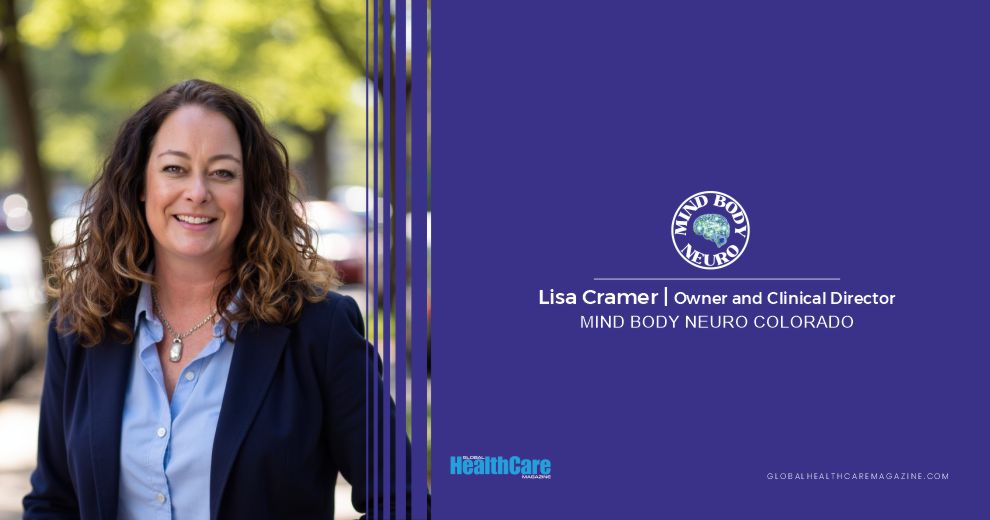
Lisa is the owner and Clinical Director of Mind Body Neuro Colorado, as well as its sister practice in Illinois. She is a Licensed Clinical Professional Counselor (LCPC) and a neurotherapist, but those titles, while accurate, do not quite capture the texture of what she actually does. In a mental health landscape that is often defined by trial and error, Lisa has dedicated her career to the elimination of the guess.
She operates in the quiet, data-rich intersection where human empathy meets hard science. Her work is predicated on a simple, somewhat radical idea: that if a person is stuck, it is not because they aren’t trying hard enough to get better. It is because their brain is physically rehearsing a pattern that no amount of talking can interrupt. To fix the pattern, you first have to see it.
The Listener and the Pattern
Lisa has always been a collector of stories. Even back in high school, long before she knew what a QEEG was, she knew she wanted to work in mental health. She was the person others drifted toward, the natural confidante. “I love listening to people’s stories,” she says. It wasn’t just the drama of the narrative that drew her in; it was the structure beneath it. She found she was skilled at seeing patterns, the invisible threads that connected a childhood event to a current behavior, or a specific stressor to a recurring outcome.
She possessed the requisite temperament for the job. She is, by her own admission, a “people person.” But as she moved into her professional life, she began to notice the limitations of the traditional toolkit. You can listen to a client’s story for hours, but if their brain is stuck in a state of hyper-arousal, the story doesn’t change.
Then she found neurofeedback.
It was a discovery that satisfied both the empathetic listener and the pattern-seeking analyst within her. “I immediately loved the science-backed approach,” Lisa recalls. “It is driven by each person’s unique data to help them find change.”
It felt like finding a missing key. Suddenly, she had a way to help the people who were truly stuck, the ones who had cycled through medications and therapists with little to show for it.
In 2018, she founded Mind Body Neuro of Illinois (headquartered in Lombard), integrating this brain-based work into her counseling practice. She didn’t hoard the knowledge; she gradually trained her staff, widening the circle of who could be helped.
The Accidental Expansion
The story of how Lisa came to own a practice in Lakewood, Colorado, is a lesson in serendipity and shared values. It happened the way many significant life changes do: at a conference.
Lisa was in California attending a professional gathering when she met Shari Johansson. In the niche world of neurotherapy, the community is tight-knit, but the connection with Shari was immediate. As they got to know one another, a rare alignment emerged. Shari was the owner of Grey Matters Neurofeedback & Counseling in Colorado, and she was thinking of selling. Lisa, who was already looking to expand her footprint, was thinking of opening a location in the West.
“The very niche fit of our skillsets doesn’t happen often,” Lisa notes. It wasn’t a hostile takeover or a cold corporate acquisition. It was a meeting of minds. The negotiations were spurred by a mutual desire to see the patients cared for. Lisa purchased the practice, took it under her wing, and rebranded it as Mind Body Neuro Colorado.
This expansion wasn’t just about geography. It was about proving that the model worked across state lines, that the need for data-driven mental health care was universal. Whether in the suburbs of Chicago or the foothills of the Rockies, the human brain struggles in the same fundamental ways.
The End of Guesswork
To understand why Lisa’s waiting room is full, you have to understand the frustration of the modern mental health consumer. In traditional psychiatry, a patient describes a symptom, say, trouble sleeping and racing thoughts. The provider makes an educated guess and prescribes a medication. Maybe it works. Maybe it makes the patient gain twenty pounds and feel numb. So, they try another one. It is a game of battleships played in the dark.
“In mental health, most approaches are guessing, especially prescribing medication,” Lisa says with the candor of someone who has watched patients suffer through the side effects of those guesses. “With our method, we have a road map to guide us without guesses.”
That road map is the QEEG, the Quantitative Electroencephalogram. It is a brain map. When a client comes to Mind Body Neuro, they don’t just talk about their feelings; they get their brain waves measured. Lisa and her team can see, on a screen, the electrical patterns that are driving the emotions. They can see the anxiety. They can see the trauma.
“Brain-based healing means we are following the activity patterns and levels in that specific individual’s brain to perfectly tailor their training plan,” she explains.
“It is essential because sometimes we can want change very badly, but talking is not enough when we have entrenched, stuck brain patterns that are beyond our conscious control.”
The offerings at her clinics are diverse, designed to address the specific terrain of each client’s mind. They utilize red light therapy, microcurrent neurofeedback, and amplitude training. It is high-tech, yes, but the goal is deeply biological: to calm overarousal.
When the brain is constantly screaming “danger,” it cannot process therapy. By using these tools to lower the volume of that neural noise, Lisa’s team creates a window of opportunity.
“Traditional talk therapy or medications can then gain traction and really help,” she says. And in some cases, the intervention is so successful that the external aids become unnecessary. “Some clients come off their medications entirely, as they are supported by the neurotherapies.”
Cultivating Safety in a High-Tech World
Walking into a clinic filled with wires and monitors can be intimidating, especially for a child or for an adult who has already been traumatized by the medical system. Lisa is acutely aware of this. She knows that data means nothing without trust.
“Listening to their story is the first step,” she says. Before the sensors are applied, the human connection must be established. She wants to know what they have tried, what failed, and what hurts.
The team at Mind Body Neuro takes the time to educate clients, translating the complex neuroscience into language that a parent, or even a child, can understand. They demonstrate how the equipment works to demystify the process. They talk about safety. They share success stories, not to boast, but to plant a seed of hope in a patch of soil that has been barren for a long time.
This is the “people person” side of Lisa acting as the bridge to the scientist side. She understands that psychological safety is the precursor to neurological change.
The Weight of the Helm
Running two practices in two different time zones is a logistical feat that requires more than just clinical skill; it requires a distinct kind of leadership. Lisa is candid about the challenge. “This is a lot to balance!” she admits.
Her strategy is rooted in a form of humble delegation. She knows she cannot be in every room at every moment. “There are a couple of key people in each office that help this run smoothly and whom I trust for honest input and ideas,” she says. She has surrounded herself with staff who are not just employees but experts in their own right, highly trained professionals, some with advanced board certifications.
Lisa’s leadership style is not about micromanagement; it is about stewardship. She views her role as protecting the standard of care while navigating the growth of the business. She is serving the patients, yes, but she is also serving the clinicians who treat them, ensuring they have the tools and the environment to do their best work.
But leadership is rarely a straight line. The year 2024 was a crucible for Lisa. It was a year that tested her perseverance from every angle. There were staff changes that required difficult conversations, and the letting go of therapists. Then came the external shocks, most notably the Change Healthcare ransomware attack.
The hack was a massive disruption to the healthcare system, freezing payments and creating chaos for providers across the country. For a private practice owner, it was a nightmare of operational uncertainty.
“That year really challenged my perseverance and operation methods to get us back on track and thriving again,” Lisa says.
She didn’t try to white-knuckle it alone. She leaned into her support network and engaged in business coaching to help navigate the storm. It was a testament to her belief that there is always a way through, a philosophy she applies to her business just as she applies it to her patients’ brains.
Measuring the Invisible
How do you measure success when your product is peaceful? For a business magazine, the temptation is to look at revenue sheets or profit margins. Lisa looks at stories.
“The biggest measure of success are our client’s improvement stories,” she says. The metrics that matter to her are the woman who can finally sleep through the night, the child who can sit through a class without a meltdown, and the executive who has regained their focus.
The real-world impact is visible in the referral network. Clients who have found relief at Mind Body Neuro become evangelists. They tell their friends, their family, their coworkers. “It is a huge win to have a client come to us because someone else told them how it changed their life,” Lisa says.
Perhaps even more validating is the shifting attitude of the medical establishment. Physicians are beginning to suggest her services. They are trusting Lisa and her team to handle complex cases with diligence. This is a significant shift. It signals a move from neurotherapy being seen as “alternative” to it being seen as “integrative.”
One of the achievements Lisa points to with the most pride is the board certification of her staff. In a field that is sometimes unregulated, she has insisted on rigor. Being board-certified in neurofeedback or QEEG involves mentorship, examinations, and deep study. It is a mark of distinction. It tells the world: We take this seriously.
The View from the Summit
Lisa is not done. Her vision extends beyond the walls of her current clinics. She wants to change the conversation.
“The goal is to get the word out about neurofeedback!” she declares. She is driven by the knowledge that there are people suffering right now who believe their only options are pills or talk therapy, unaware that a third path exists. She wants to add more locations in both Illinois and Colorado, not just for the sake of scale, but for the sake of access.
She envisions a future where neurofeedback is considered a front-line treatment, where physicians learn about it in medical school rather than discovering it by accident years into their practice. She wants to legitimize the science in the eyes of the broader healthcare community.
And yet, amidst this ambition, she remains grounded. She knows that to be a healer, she must also be whole.
“Is anyone’s work-life balance perfect?” she asks a rhetorical question that any business owner would answer with a laugh. She makes a conscious effort to disconnect. She plans fun weekends. She monitors her own energy levels with the same vigilance she monitors her clients’ brain waves.
You might find her skiing down a Colorado slope, hiking a trail, golfing, or simply reading by the pool. She spends time with friends and loved ones, rejuvenating the spirit that she pours so generously into her work.
The Answer Exists
If there is a central thesis to Lisa Cramer’s life and work, it is a rejection of hopelessness.
“My personal belief is that there is almost always an answer to health issues,” she says. She urges people to keep looking, to step off the traditional path if it has led them nowhere.
It is a philosophy that applies to leadership as much as it does to neurotherapy. Obstacles, whether they are a resistant brain pattern or a corporate ransomware attack, are just things to be navigated. You can go around them, over them, or through them.
“Mindset is what gets you there,” she says.
Lisa is the guide who has learned to read the map. She has seen the terrain. She knows that the brain is capable of profound change, provided you stop guessing and start looking at the reality of what is happening inside. She is serving the stuck, the tired, and the hopeless, offering them not just a service, but a way back to themselves.
Quotes
Also Read: The 10 Most Influential Mental Health & Neurotherapy Leaders to Watch in 2026