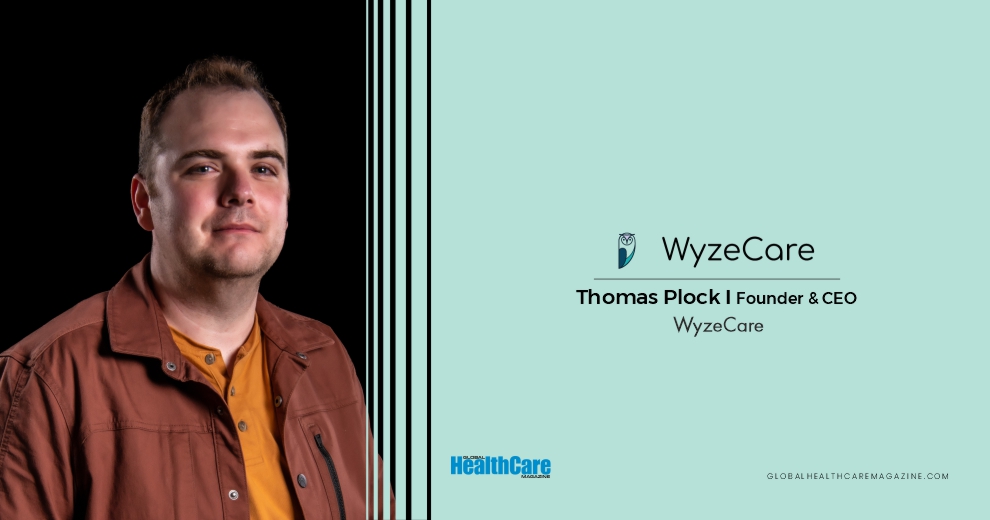
Before WyzeCare ever took shape, its foundation was already forming at the crossroads of lived experience and long years of hands-on work. Modern care, especially outside hospitals, often relies on systems that must function flawlessly when the stakes are high. Yet the people using those systems, nurses, caregivers, and families, rarely have time for tools that slow them down or add friction. That tension sets the stage for Thomas Plock’s work.
Thomas Plock, the Founder and CEO of WyzeCare, comes from a professional world where reliability is not optional. For more than fifteen years, he worked deep inside enterprise software environments, helping organizations adopt platforms that needed to be dependable, auditable, and usable even under pressure. He learned early that technology earns trust only when it works quietly in the background and supports people instead of distracting them. “In high-stakes environments, systems don’t get second chances,” he has often observed. “They either support the work, or they become part of the problem.”
At the same time, life at home sharpened his perspective. His spouse’s career as a nurse exposed him to the daily strain faced by care teams, from staffing gaps to endless documentation. He also watched family members age while trying to remain independent, navigating care that often felt fragmented and reactive. Those experiences made the distance between clinical care and everyday life hard to ignore. WyzeCare emerged from that realization, not as a technology-first venture, but as a practical response to a very human problem. Thomas set out to build tools that respect care as a relationship, using technology to strengthen it rather than replace it.
A Different Way to Check In
At its core, WyzeCare challenges the assumption that better care requires more devices. Instead of asking people to wear, tap, or track, the platform starts with something they already know how to use. The telephone. WyzeCare places scheduled, conversational calls that sound natural and unhurried, allowing people to speak freely about how they are feeling that day.
Behind the scenes, the system quietly does its work. Powered by AI, WyzeCare captures structured insights from everyday conversation, looking for meaningful changes over time. It does not stream constant data, monitor behavior, or create a sense of being watched. “We wanted the experience to feel like a check-in, not an inspection,” Thomas explains.
This approach sets WyzeCare apart from traditional wellness monitoring and senior care technologies. There are no wearables to forget, no apps to learn, and no dashboards demanding attention. The platform listens, learns, and escalates only when it truly matters. In doing so, it protects dignity while still delivering timely, actionable insight for caregivers and families alike.
Independence Without Invisibility
For Thomas, independence and reassurance are not competing goals. They only drift apart when technology inserts itself too aggressively into daily life. WyzeCare was designed to stay light on purpose, present without being persistent. The calls are short, scheduled, and predictable, respecting routines instead of interrupting them.
Older adults remain firmly in control. There is nothing to manage, nothing to charge, and nothing new to learn. They answer the phone, have a brief conversation, and move on with their day. “If the technology demands attention, it has already failed,” Thomas says. “Care should fit into life, not the other way around.”
Families and care teams, meanwhile, receive what they actually need. Not endless data points, but clear summaries and timely alerts when something changes. WyzeCare translates everyday conversations into reassurance without exposing private moments or tracking behavior. The result is a balance that feels natural. Independence stays intact, and peace of mind arrives quietly in the background.
When AI Knows When to Step Back
Thomas is clear about the role artificial intelligence should play in care. It is not there to imitate empathy, but to protect it. At WyzeCare, AI handles the parts of care that benefit from consistency and scale. It listens for patterns, notices small changes over time, and makes sure no signal is missed simply because someone is busy.
That division of labor is intentional. “AI is good at paying attention without getting tired,” Thomas says. “People are good at judgment, context, and compassion.” When a response suggests concern, the system does not attempt to resolve it on its own. It escalates, alerting caregivers and bringing a real person into the loop.
In this model, WyzeCare uses AI as a safety net rather than a substitute. The technology ensures that human care does not fail quietly, while still leaving the most important moments to people who can listen, ask questions, and respond with understanding.
Listening to the Front Line
Much of WyzeCare’s evolution has been shaped not in boardrooms, but through practical conversations with the people using it day after day. Across healthcare providers, senior living operators, and home care teams, the message Thomas kept hearing was consistent. Simplicity matters more than features.
Care coordinators spoke candidly about tool fatigue. They did not want another dashboard competing for attention. Clinicians asked for early signals they could trust, not streams of data that added noise to already long shifts. Families, too, were clear. They wanted reassurance without the anxiety that comes from constant alerts or unclear information.
That feedback forced discipline. “Every time we were tempted to add something new, we asked whether it made life easier or just more complicated,” Thomas says. As a result, WyzeCare doubled down on clear summaries, thoughtful escalation, and flexible configuration. Some of the most meaningful improvements came directly from frontline staff explaining what actually helps when time and staffing are limited.
Designing for Trust from Day One
For Thomas, regulatory requirements are not obstacles to work around. They are signals of what healthcare demands at its core. Trust. WyzeCare was built with that premise from the beginning, embedding HIPAA readiness, consent management, auditability, and data minimization directly into the product design.
Rather than collecting everything and sorting it out later, the platform gathers only what is necessary to deliver value. Workflows are clearly documented, and partners are given a transparent view of how information is used and protected. “If people don’t understand the system, they won’t trust it,” Thomas says. “And without trust, innovation does not last.”
This mindset shapes daily decisions. Compliance is not treated as a checklist completed after development. It is woven into how WyzeCare operates and evolves. By making privacy, clarity, and accountability part of the foundation, the platform earns confidence over time, not just approval at launch.
Clarity as a Leadership Discipline
At the helm, Thomas’s responsibilities stretch across product vision, partnerships, compliance oversight, and go-to-market strategy. The scope is broad, but the through line is consistent. Clarity. He sees it as a discipline rather than a preference, one that shapes how decisions are made and how teams stay aligned.
What motivates him most is using clarity in the service of connection. Clear purpose, clear workflows, and clear outcomes make it easier for people to trust the technology and engage with it naturally. “When a product is easy to understand, it stops demanding attention,” Thomas says. “That is when real connection has room to happen.”
As WyzeCare continues to grow, protecting that original intent remains central to his role. He is deeply invested in keeping the platform simple, respectful, and grounded in the realities of everyday care, ensuring that growth never comes at the cost of what made the work matter in the first place.
Choosing Focus under Pressure
Thomas’s leadership was tested early, during WyzeCare’s first pilots, when expectations outpaced available resources. Partners saw potential quickly, and with that came requests for new features and expanded use cases. The harder work was deciding what not to build.
Rather than overextending the team, Thomas leaned into transparency. He made tradeoffs explicit, explained constraints plainly, and spent time listening to what partners actually needed versus what sounded appealing in theory. “Saying no is easier when people understand why,” he says. That openness helped preserve trust, even when timelines stretched and priorities narrowed.
Staying anchored to the core problem proved essential. By resisting distraction, WyzeCare avoided complexity that would have diluted its purpose. The experience reshaped how Plock views leadership. It is not about having every answer in advance. It is about creating alignment, setting clear priorities, and giving teams the confidence to focus on what truly matters when pressure is highest.
Measuring Impact in Human Terms
For Thomas, the clearest signs of progress are not found on charts or in slide decks. They show up in quieter moments, when the system does exactly what it was meant to do. A care team notices a concern earlier than they typically would. A family shares a sense of relief after a series of consistent check-ins that bring steadiness to an uncertain situation.
These moments stand out because they confirm intent as much as outcome. During early pilots, WyzeCare demonstrated that it could work smoothly across both English- and Spanish-speaking populations, without adding friction or confusion. The technology stayed in the background, and the conversations stayed human.
“That is when I know we are on the right track,” Thomas says. WyzeCare was never built to chase impressive numbers alone. Its success is measured by whether it fits naturally into care and offers support at the moments it matters most. Those human signals remain the milestones he values most.
A Quiet Layer That Lasts
Thomas’s vision for WyzeCare looks beyond single moments of care and toward the long arc of aging and transition. He sees the platform becoming a quiet layer of support that follows people through change, from post-discharge follow-ups to long-term independent living. The goal is not constant intervention, but early awareness. Noticing subtle shifts, responding appropriately, and helping people remain where they want to be for as long as possible.
That vision extends beyond clinical needs. Emotional continuity, reassurance, and dignity are just as central to the work. “Care does not stop at symptoms,” Thomas says. “It is also about how people feel as life changes around them.”
As WyzeCare evolves, its roadmap will continue to be shaped by users and partners on the ground. Looking further ahead, Thomas imagines the platform helping older adults and those facing terminal diagnoses preserve and share their stories, creating something lasting for loved ones. In that way, WyzeCare aims to support not only how people live, but how they are remembered.
Choosing Intention over Balance
Thomas does not frame his life around the idea of perfect balance. He sees that standard as unrealistic, especially when building something that demands care and attention. Instead, he focuses on being intentional with the time he has, choosing when to lean in and when to step away.
Reading widely is one of his steady anchors. It gives him distance from day-to-day decisions and helps him see patterns beyond the immediate moment. He also makes space for occasional getaways with his spouse, using those breaks to disconnect fully and reset. “Stepping away is not about escape,” he says. “It is about returning with clearer thinking.”
Those quieter moments matter because they sharpen perspective. They allow him to come back to WyzeCare with renewed focus and energy, grounded rather than rushed. For Thomas, intention, not balance, is what sustains both the work and the life built around it.
Leading With Integrity, One Decision at a Time
If Thomas were to distill his leadership philosophy into a single principle, it would be simple and demanding at the same time. Do right by the people involved. That includes his team, his partners, and the users on the other end of every call.
He believes progress follows integrity, not the other way around. When decisions are rooted in empathy and care, momentum builds naturally. “You can usually tell when something feels right,” Thomas says. “That feeling comes from knowing you are considering the humans on both sides of the work.”
This mindset has shaped every major decision behind WyzeCare, from what the product does to what it intentionally avoids. By leading with empathy and staying grounded in real human needs, Thomas Plock has built more than a platform. He has built a way of working that keeps trust intact and impact meaningful, even as the work grows in scale and reach.
Quotes
Also Read: The Most Visionary Healthcare CEOs of 2026