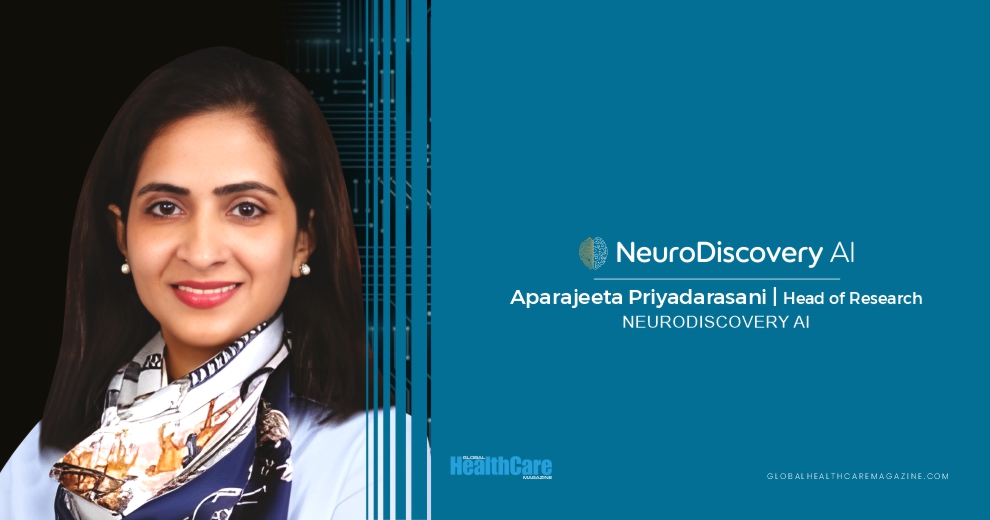
There is a specific rhythm to the way Aparajeeta Priyadarasani speaks about clinical trials. It is not the dry, staccato beat of data entry, nor is it the slow, bureaucratic drone of regulatory compliance, though she knows both of those languages fluently. Instead, it is a fluid, purposeful tempo, one that suggests movement, adaptation, and a disciplined grace. This makes a profound amount of sense when you learn that when she is not overseeing the implementation of Large Language Models (LLMs) to solve the crisis of Neurology and rare disease recruitment, she is a trained Odissi dancer.
Odissi is one of the eight classical dance forms of India, known for its emphasis on the tribhangi; the independent movement of head, chest, and pelvis. It requires the dancer to be grounded yet fluid, rigid in discipline yet emotive in expression. It is a striking metaphor for the career of Aparajeeta, a woman who has spent over twenty years navigating the rigid structures of global pharmaceuticals only to find herself, in the third act of her career, improvising a new future for healthcare in the unmapped territory of Artificial Intelligence.
Aparajeeta has moved from the humid, orderly streets of Singapore to the gray, historic sprawl of London, carrying with her a singular obsession: speed. Not speed for the sake of commerce, but speed for the sake of the life that is waiting at the other end of a delay. She has worked for the giants, Sanofi, Novartis, Medidata, and she has climbed the corporate ladder to the very top of the Asia Pacific region. But now, she has stepped off the ladder to join the scrum of a startup, trading the safety of a multinational corporation for the dynamic, mission-driven focus of a company called NeuroDiscovery AI.
Why? Because the old ways are too slow. Because the patients are waiting. Because, as she puts it with the quiet intensity of someone who has seen the numbers, “traditional approaches often prove inadequate.”
The Laboratory was Too Quiet
Aparajeeta’s journey began not with a computer code, but with a pipette. She holds a master’s degree in biotechnology, and her early twenties were spent in the hushed, sterile environments of cancer research labs, specifically focusing on breast cancer. It was noble work. It was essential work. But for Aparajeeta, it was agonizingly slow.
“I felt like research is not my cup of tea,” she admits, reflecting on that first year. “It’s a bit slow and all.”
There is a specific type of personality that looks at the incremental progress of academic research, where a breakthrough might take a decade, and feels a sense of claustrophobia. Aparajeeta wanted to see the impact. She wanted to see the medicine move from the bench to the bedside. So, she pivoted. She moved into the industry side, joining the world of Clinical Research Associates (CRAs).
This was her boot camp. Over the next decade, she worked her way through the gears of the clinical trial machine. She worked in clinical operations. She managed clinical data. She moved into medical affairs. She worked on everything from Phase I safety trials to Phase IV post-marketing surveillance. She saw the belly of the beast at major pharmaceutical houses like Sanofi and Novartis.
It was at Sanofi that the first itch for technology began to manifest. She was trying to build something called “risk-based quality management” along with a vendor. It was a project designed to make trials smarter, to look at the data and predict where the failures might happen before they destroyed a study. It was 2017. The world was beginning to buzz with the potential of big data, and Aparajeeta realized that the future was not just in the chemistry of the drugs, but in the technology that tested them.
“I was looking for some technology which can really….. accelerate the clinical trials,” Aparajeeta says. She realized that the bottleneck wasn’t the science; it was the process.
The Medidata Era: Building Bridges in Asia
If Aparajeeta’s early career was about learning the rules, her time at Medidata was about rewriting them across borders. She joined the company, a giant in the world of Electronic Data Capture (EDC) and clinical technology, to take care of the Australian and New Zealand business. But they didn’t just need someone to manage accounts; they needed a clinical trial and eClinical technology consultant. They needed someone who understood the clinical reality of a Phase I center and could explain why a piece of software mattered to a doctor who was busy saving lives.
She stayed for seven and a half years. She started as an individual contributor and ended as a senior leader for the entire Asia Pacific region. She expanded her portfolio from ANZ to Southeast Asia, India, Korea, and finally China.
This was not a desk job. This was a diplomatic mission. Clinical trials are governed by a complex web of regulations that vary wildly from country to country. Aparajeeta found herself at the intersection of technology and bureaucracy, trying to push innovation through the narrow doors of government policy.
The true test came during the COVID-19 pandemic. Suddenly, the world needed “decentralized clinical trials.” Patients couldn’t come to the hospitals. The trials had to go to the patients. In the West, this was a logistical challenge. In Asia, it was a regulatory nightmare.
“Half of the country actually were not open to doing a decentralized clinical trial,” she recalls. “In China, for instance, strict regulatory frameworks prioritize the security of patient data, ensuring that Personal Health Information (PHI) and Personally Identifiable Information (PII) do not leave their source records. This meant that practices common elsewhere, such as remote consenting or tele-visits, were not viable options under their specific compliance standards.”
Aparajeeta found herself in the room, virtually, with regulatory bodies, advocating for a hybrid model. She wasn’t just consulting on software; she was arguing for the continuity of science. She helped implement pilot projects in Korea and Eastern Europe, proving that technology wouldn’t compromise patient safety. It was a lesson in patience and persistence, two qualities she would need in abundance for what came next.
The Pivot to the Brain
A year and a half ago, Aparajeeta moved from Singapore to London. She was working with Dassault Systèmes, a massive player in the tech space. It was a good job. It was a safe job. But the itch returned. She looked at the landscape of clinical trials and saw a glaring inequality.
“Most of the companies….. in the e-clinical technology, they focus on mostly oncology,” she explains. “Because oncology is the way for….. many years.”
Cancer research attracts money. It attracts talent. It attracts technology. But as the global population ages, a new tsunami is rising: neurological diseases. Alzheimer’s, Parkinson’s, ALS, and rare neurological disorders. These conditions are devastating, deteriorating, and incredibly difficult to study. For Aparajeeta, this mission is not abstract. A few years ago, her father was diagnosed with Parkinson’s disease. The professional challenge of neurology had suddenly become a personal crusade.
“Nobody bothers about neurology,” she states with the bluntness of someone who cares too much to be polite.
The challenges are logistical and cruel. A patient with advanced Alzheimer’s cannot easily travel fifty miles to an investigator site. A child with a rare neurological condition might be one of only a few hundred people in the country with that diagnosis. How do you fill a trial with thousands of patients when the patients are scattered, immobile, or simply too few in number?
The answer, Aparajeeta decided, was Artificial Intelligence.
In August of 2025, she left the safety of the multinational world to become the Head of Research for NeuroDiscovery AI, a US-based startup focused exclusively on the neurology space. She had been advising them since April, but the pull of the mission became too strong to resist.
“I was contemplating whether I should join an MNC or a startup company,” Aparajeeta says. “I decided to join NeuroDiscovery to bring innovative solutions to the clinical world.”
The Synthetic Arm
NeuroDiscovery AI is not just digitizing forms. They are using Large Language Models (LLMs) and a massive reservoir of data to fundamentally change how trials are designed. They have access to data from multiple providers across the US, totaling 5.4 million patient records.
Aparajeeta’s role is to look at this ocean of data and find the patterns that human eyes miss. She is building “cohort builders,” AI models that can scan Electronic Health Records (EHR) to match patients to trials with a precision that manual recruitment could never achieve.
But the true breakthrough, the “Strategic Genius” of her current work, lies in the concept of the “Synthetic Control Arm.”
To understand why this matters, you have to understand the heartbreak of a rare disease trial. In a traditional trial, half the patients get the experimental drug, and half get a placebo. If you are a parent of a child with a devastating condition like Infantile Spasms, and there is a trial for a new drug, the last thing you want is for your child to be placed in the placebo group. You want hope. You want the medicine.
“The patient would not go for any kind of placebo arms or fake medication,” Aparajeeta explains. “Because they don’t have any other hope.”
This leads to a recruitment crisis. Parents refuse to sign up. Trials stall. Drugs die on the vine.
Aparajeeta and her team worked on a solution for a biotech company funded by venture capital. They used their AI model to create an “artificial arm.” They took historical data, published studies, and anonymized EHR data to simulate what would happen to a control group. They created a digital ghost of a placebo group, so that real children didn’t have to take the sugar pill.
They submitted this to the FDA. It was a bold move. The pharmaceutical industry is risk-averse; they fear rejection more than they desire innovation. But the FDA, recognizing the impossibility of the situation, granted partial approval. They allowed the synthetic arm to replace 50% of the control group.
“We utilized either pseudo or actual patient data to create a synthetic control arm using our AI model,” Aparajeeta says.
This is not just efficiency. This is mercy. It means fewer children on placebos. It means the trial fills up faster. It means the drug gets to market, or fails, quicker. It transforms the timeline from years to months.
The Startup Pace
Life at a startup is a different beast than life at a pharmaceutical giant. Aparajeeta is currently working globally. She is managing teams remotely, bridging the time zones between London and the US.
“That was actually fun because that’s basically what nobody asked me to do,” she laughs. “I just wanted to bring the innovation quicker.”
Aparajeeta is fighting a war on two fronts. On one side, she is pushing the technology forward, refining the LLMs, looking for “patient apps” that can gather more data. On the other side, she is battling the inherent conservatism of the industry.
“Pharma is still in a conservative mode,” she observes. “Because we are actually facing a lot of life-and-death conditions.”
The skepticism is natural. AI is a black box to many. Regulators are cautious. But Aparajeeta sees a shift. The FDA’s willingness to look at AI for early-stage trials is a crack in the dam. Her job is to widen that crack until the water flows freely.
She measures her success not just in revenue, but in the granularity of the data. Can the AI predict an adverse event before it happens? Can it tell us that a specific patient, due to their medical history, will react poorly to this specific molecule?
“We could determine in advance that this patient may not be a better fit,” Aparajeeta says. This is the holy grail of personalized medicine, saving a patient from a trial that would hurt them, before they ever sign the consent form.
The Dancer’s Discipline
When the twelve-hour day ends, Aparajeeta does not collapse. She dances.
She is a trained Odissi dancer, a practice she has maintained through all the moves, the promotions, and the strategic pivots. It is her anchor.
“I have a lot of time. I’m a trained dancer,” she shares, her voice softening. “So I get to teach a couple of students.”
But even here, in her art, the theme of service, the servant leadership that defines her career, emerges. She does not just dance for applause. She works with charities. She goes to shelters to work with women who have been assaulted or abandoned. She teaches them dance not to make them performers, but to give them a moment of joy, a reconnection with their own bodies.
“I just teach them a couple of different types of dance and to make them happy and talk to them,” Aparajeeta says.
This is the “Who” behind the “What.” Whether she is fighting for a synthetic control arm to save a child with spasms, or teaching a mudra to a woman who has survived trauma, Aparajeeta is driven by a need to restore dignity and agency to those who have lost it.
The Generational Divide
Aparajeeta is observing the new generation entering the workforce with a mixture of hope and caution. She sees their speed, their desire for instant results. “The new generation is very fast-paced. We want everything now,” she acknowledges.
But her advice is grounded in the patience of the laboratory and the discipline of the dance floor.
“You have to believe what you have actually thought about yourself,” she advises. “Stick to your beliefs and stick to your vision.”
She worries that the younger generation is too easily influenced by the noise of the industry, too focused on the financial outcome rather than the mission. “Don’t focus on only financial things. Money will always come,” she asserts.
For Aparajeeta, the vision has always been clear. From the frustration of the cancer lab to the high-stakes negotiation of regulatory approvals in China, to the frontier of AI in neurology, she has been guided by a single question: How can we help the patient faster?
The Next Protocol
As she looks to the future, Aparajeeta’s vision is expansive. She wants to see neurology eradicated. She wants to see a world where a patient’s location does not determine their survival. She wants to see protocols designed not for the convenience of the doctor, but for the reality of the patient.
“When protocols are developed, it is essential to bridge the gap between clinical theory and the practical reality of the patient’s life,” she explains. “We must use data to ensure that the design of a trial accounts for how a patient will actually access it, ensuring the study is as accessible as it is scientifically rigorous.”
She is using AI to force the industry to look at the practical, human reality of the disease. She is building a system where the trial comes to the patient, where the data fills the gaps, and where hope is not a scarce resource.
Aparajeeta Priyadarasani is a woman of two worlds. She exists in the high-speed, digital ether of Artificial Intelligence and the grounded, physical discipline of ancient dance. She operates in the rigid, regulated world of clinical trials and the chaotic, innovative world of startups. But in the end, these dualities collapse into a single mission. She is the choreographer of a new kind of medicine, one where the data moves as fluidly as a dancer, and where the ultimate performance is a life saved.
Quotes

Also Read: Women Leaders in Clinical Innovation: The Top Business Women Leaders