For decades, doctors could only manage symptoms, often watching helplessly as patients suffered. We could never have imagined rewriting the code of life and curing incurable diseases. But it is possible now.
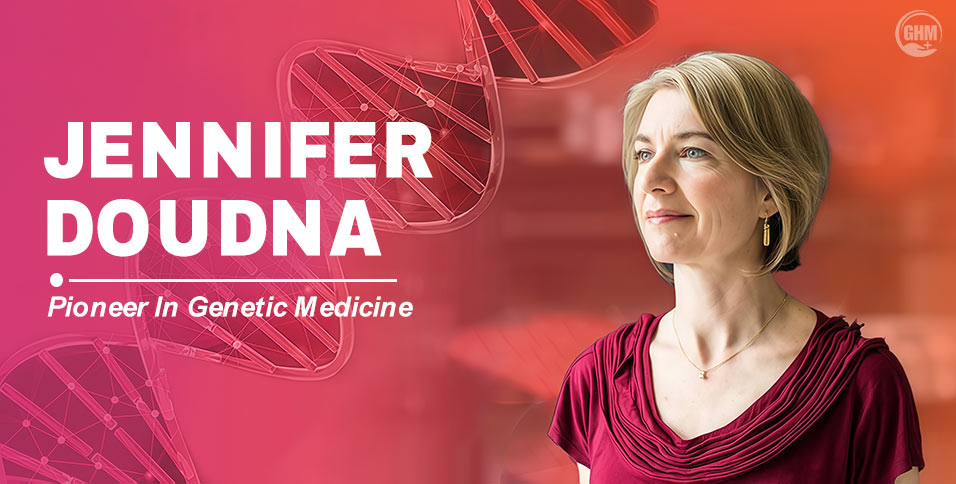
Today, we have revolutionary technologies that fight against these life-threatening diseases. One of them is CRISPR who is changing the narrative forever for genetic disorders. But, at the heart of this medical earthquake is Jennifer Doudna, a visionary scientist whose work is turning science fiction into life-saving reality.
Jennifer Doudna is not only a Nobel Prize Winner but also a central figure driving personalized gene therapy and the future of gene editing medicine worldwide.
Even Forbes recently recognized Jennifer Doudna on its prestigious list of America’s 250 Greatest Innovators. This honor is a perfect opportunity to reflect on her work and validates her transition from a curiosity-driven researcher to a titan of clinical and technological impact.
This article will do exactly that.
Who is Jennifer Doudna?
| Full Name | Jennifer Anne Doudna |
| Born | February 19, 1964, Washington, D.C. |
| Education | B.A. in Chemistry from Pomona College (1985); Ph.D. in Biochemistry from Harvard University (1989) |
| Current Roles | Professor at UC Berkeley, Investigator at Howard Hughes Medical Institute, Founding Director of the Innovative Genomics Institute (IGI), and Li Ka Shing Chancellor’s Chair in Biomedical and Health Sciences |
| Major Discovery | Co-discovery of CRISPR-Cas9 as a programmable tool for high-precision genome editing (2012) |
| Key Awards | Nobel Prize Winner (Chemistry, 2020), Kavli Prize (2018), and election to the National Academy of Engineering (2026) |
| Notable Honors | America’s 250 Greatest Innovators (Forbes); Member of the National Academies of Sciences, Medicine, and Engineering |
| Entrepreneurship | Cofounder of seven biotech companies, including Caribou Biosciences and Mammoth Biosciences |
How Did Jennifer Doudna Become America’s Greatest Innovator
For her extraordinary contributions to science and medicine, Forbes recently named Jennifer Doudna to its list of America’s 250 Greatest Innovators. This recognition highlights her unique ability to bridge the gap between complex academic research and real-world medical solutions.
Forbes focuses on innovators who demonstrate:
1. Pioneering Research: She Discovered The Breakthrough CRISPR
Jennifer Doudna gained worldwide recognition for co-developing “gene editing technology”: CRISPR, with Emmanuelle Charpentier. This discovery earned them the 2020 Nobel Prize in Chemistry and global recognition as pioneers of modern gene-editing medicine.
This CRISPR-Cas9 system technology works like molecular scissors, allowing scientists to precisely cut and edit DNA and correct faulty genes that cause disease. That possibility has changed how researchers think about treating everything from cancer to rare genetic disorders.
Their discovery opened the door to therapies that could cure inherited diseases by fixing mutations at their source.
Key Finding in CRISPR Gene Editing Medicine:
- Correction of disease-causing mutations at the DNA level
- Rapid development of experimental therapies for rare diseases
- Expansion of genome editing into cancer and cardiovascular research
- Potential one-time curative treatments instead of lifelong medication
2. Entrepreneurial Vision: She Revolutionized Personalized Gene Therapy
One of the most exciting contributions of Jennifer Doudna is the rise of personalized gene therapy. Unlike traditional medicine, which often treats symptoms, personalized gene therapy aims to fix the underlying genetic cause of disease.
Instead of lifelong treatment, CRISPR-based therapy could correct that gene once, potentially curing the disease. This shift from symptom management to genetic correction represents a fundamental change in modern healthcare.
3. Translational Impact: She Developed CRISPR Therapy For Rare Genetic Disease Treatment
Six months ago, in a landmark case, a team led by Jennifer Doudna’s Innovative Genomics Institute (IGI) developed a custom CRISPR therapy. This method was used to treat an infant with a lethal metabolic disorder who faced a dire prognosis. Because of this rapid innovation by IGI, KJ is now a healthy toddler.
Rare genetic diseases affect millions globally. According to the World Health Organization, more than 300 million people worldwide live with rare diseases, and about 70% of these conditions are genetic.
Personalized gene therapy offers new hope for these patients by targeting the exact mutation responsible for the illness. This approach could extend beyond rare diseases to common conditions such as cancer and cardiovascular disease.
Key Advantages of Personalized Gene Therapy
- Targeted treatment with fewer side effects
- Faster therapy development timelines
- Potential to treat previously incurable conditions
4. Leadership and Mentorship: She Built A Therapeutic Innovation Ecosystem
Jennifer Doudna did not stop at discovery. She has actively built an innovation ecosystem through the Innovative Genomics Institute, which focuses on translating CRISPR science into practical healthcare solutions.
This ecosystem includes partnerships with universities, biotech startups, and pharmaceutical companies working to bring gene therapies to patients faster.
Through the IGI, she fosters collaboration between UC Berkeley, UCSF, and UC Davis. To date, her ecosystem has spun out 31 companies valued at approximately $9 billion.
Demonstrating how scientific innovation can directly accelerate therapeutic development and healthcare transformation.
These startups, such as Mammoth Biosciences and Scribe Therapeutics, focus on everything from cardiovascular disease to rare genetic disease treatment.
The Future of Gene Editing
But the future of gene editing is broad and promising. Current research is exploring CRISPR-based treatments for:
Emerging Applications of CRISPR in Healthcare
| Medical Field | Potential CRISPR Application |
| Oncology | Targeting cancer-causing mutations |
| Cardiovascular Disease | Editing cholesterol-related genes |
| Infectious Diseases | Disabling viral genetic sequences |
| Neurological Disorders | Correcting inherited mutations |
| Pediatric Genetic Disorders | Personalized curative gene therapy |
To ensure the future of gene editing remains bright, Jennifer Doudna is currently aiming to raise $1 billion for the IGI to support a $100 million annual budget for the next decade. Her goal is to expand CRISPR applications into common conditions.
Final Note
Jennifer Doudna has transformed how we approach human health. From her Nobel Prize-winning discovery to her recognition as one of America’s 250 Greatest Innovators by Forbes, her leadership is undeniable. Her contributions are driving a new era of precision medicine that focuses on curing disease at its genetic roots.
As CRISPR gene editing continues to evolve, the influence of Jennifer Doudna will remain central. Her work not only offers scientific breakthroughs but also raises essential questions about ethics, access, and the responsible use of powerful genetic technologies.
The future of gene editing is still unfolding, but thanks to Proff. Jennifer A. Doudna, it is moving steadily from possibility to reality.
Found this article insightful? Share this with your network to spread the word about this incredible woman and her innovations!
Sanskruti Jadhav
Frequently Asked Question
- Who actually discovered CRISPR?
Biochemist Jennifer Doudna and microbiologist Emmanuelle Charpentier co-invented the gene-editing system CRISPR-Cas9, a technology for editing DNA with unprecedented precision and efficiency.
- What country did CRISPR come from?
CRISPR was first discovered in 1987 by researchers in Japan, who identified short, repeated regions in bacterial genomes. However, their function remained a mystery for another 20 years, until researchers in France revealed that these sequences play a role in bacterial immunity.
- What is the name of the book about Jennifer Doudna and CRISPR?
The book is called “The Code Breaker: Jennifer Doudna, Gene Editing, and the Future of the Human Race,” written by American historian and journalist Walter Isaacson.