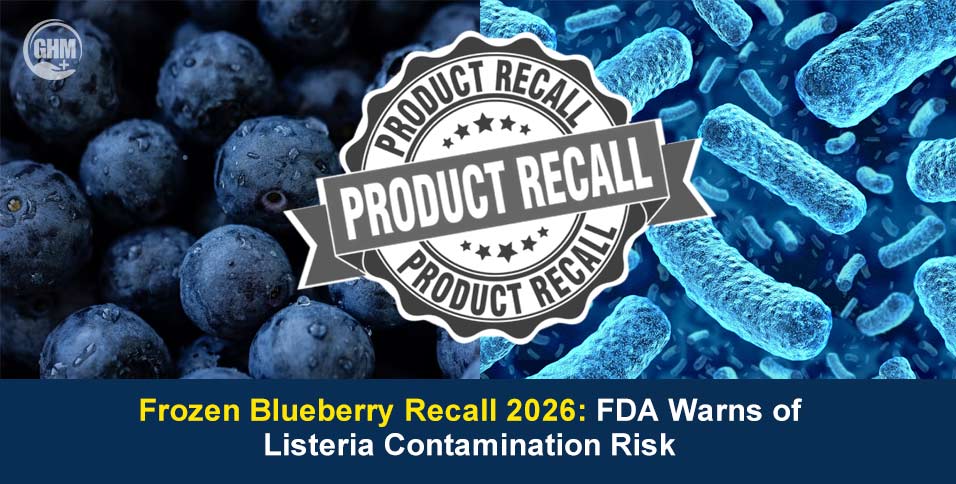
In the frozen blueberry recall 2026, the U.S. regulators flagged a potential Listeria contamination risk in over 55,000 pounds of frozen fruit. The recall, escalated to a Class I recall by the Food and Drug Administration (FDA), indicates a reasonable probability that exposure could cause serious health consequences or death.
Health authorities say the affected products were distributed across multiple states through the food supply chain, raising contamination risks for institutions, retailers, and consumers.
The frozen blueberry recall 2026 highlights ongoing gaps in contamination detection, cold-chain monitoring, and large-scale recall response protocols.
What Triggered the Frozen Blueberry Recall In 2026?
The frozen blueberry recall 2026 involves approximately 55,000 pounds of individually quick frozen blueberries distributed across several U.S. states and Canada. The affected product was produced by Oregon Potato Company and supplied mainly in bulk to food manufacturers and service providers rather than direct retail shelves.
According to reports from USA Today, the FDA recall was initiated after routine testing suggested possible contamination with Listeria monocytogenes, a bacterium known to survive even in refrigerated and frozen environments.
The FDA later elevated the situation to a Class I recall. Such recalls involve products where there is a high probability of severe illness or fatal outcomes.
As the recall involves tens of thousands of pounds of frozen blueberries circulated across multiple states, the scale demonstrates how quickly contamination risks can travel through complex food supply chains.
How Listeria Contamination Affects Our Health
Listeria monocytogenes is a bacterium that can survive freezing temperatures, making frozen foods uniquely vulnerable. Unlike many pathogens, it does not die in cold storage and can multiply once thawed.
One major challenge with Listeria contamination is its delayed onset. Symptoms can appear days or even weeks after consuming contaminated food, complicating outbreak tracking.
The symptoms of Listeria can include:
- Fever and chills
- Nausea and diarrhea
- Muscle aches and fatigue
- Severe cases: confusion, seizures, or meningitis
High-Risk Groups Facing Risk
Public health experts emphasize that certain populations are disproportionately affected:
- Pregnant women (risk of miscarriage or neonatal infection)
- Older adults
- Newborns
- Immunocompromised individuals
Public health authorities stress that the listeria risk is higher when the bacteria spread beyond the gut into the bloodstream or nervous system.
Why Bulk Distribution Matters In Food Product Recall
Unlike many retail recalls, the frozen blueberry recall 2026 largely affects bulk industrial packaging used by food processors. This raises contamination risks across the broader food supply chain, as blueberries may be used as ingredients in smoothies, baked goods, or prepared foods.
The products were shipped in large corrugated cases and industrial totes, increasing the complexity of traceability. Food safety officials are now working with distributors to ensure all affected batches are removed or destroyed.
This incident mirrors patterns seen in recent food safety events, such as the peanut butter recall and the Tesco fruit medley recall, which are still going on, where contamination risks extended beyond immediate retail shelves.
What Consumers Should Know About Blueberry Contamination
Although the Oregon Potato Company’s frozen blueberry recall mainly affects bulk suppliers, vigilance remains important.
Consumers and institutions should:
- Verify the origin of frozen fruit products
- Avoid using recalled ingredients
- Follow safe thawing and cooking practices
Broader Food Safety Implications
The frozen blueberry recall of 2026 highlights a critical issue: frozen foods are not automatically safe from contamination risks. As global food supply chains grow more complex, a single contamination event can ripple across multiple manufacturers and regions.
Policy experts emphasize stronger preventive controls, improved environmental testing, and transparent recall communication as essential tools to protect population health.
To Conclude
Ultimately, the frozen blueberry recall in 2026 is more than a single product warning. It highlights systemic contamination risks in modern food distribution networks that rely heavily on centralized processing and long-distance logistics.
As food supply chains grow more globalized, contamination risk persists. Strengthening regulatory coordination, improving microbial testing, and enhancing recall traceability will be critical steps to prevent similar events in the future.