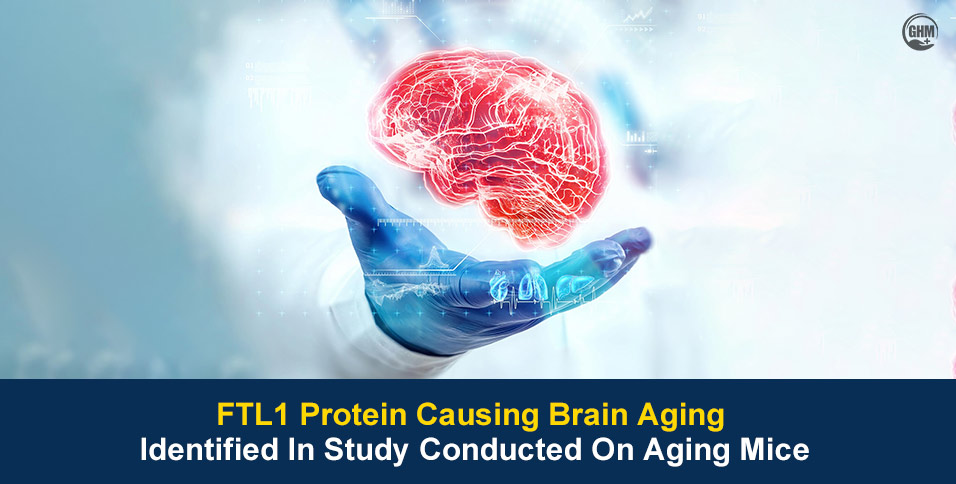
A groundbreaking discovery has revealed a protein causing brain aging—and scientists say reducing it may even reverse memory decline.
Researchers at the University of California, San Francisco, have identified the FTL1 protein (Ferritin Light Chain 1), which appears to play a central role in how the brain ages. Their findings, published in Nature Aging, show that this FTL1 protein causing brain aging, can disrupt memory, but also that lowering it can restore brain function in animal models.
This major neuroscience breakthrough can bring new hope in the fight against cognitive decline and age-related brain disorders.
How Does Brain Aging Work
As people age, the brain naturally undergoes changes. One of the most affected regions is the hippocampus, which controls learning and memory.
Common effects of brain aging include:
- Reduced communication between brain cells
- Slower thinking and memory recall
- Increased risk of cognitive decline
To better understand this process, scientists studied aging mice, tracking changes in genes and proteins over time. Among hundreds of candidates, one stood out—the FTL1 protein linked to brain aging.
FTL1 Protein: The Key Protein Causing Brain Aging
The study identified FTL1 protein (Ferritin Light Chain 1) as a major factor behind cognitive decline.
Here’s what researchers found:
- Older mice had higher levels of FTL1 protein
- These mice showed weaker neural connections
- They performed worse in memory-based tests
This clearly suggests that FTL1 is not just associated with aging—it is a protein causing brain aging.
How FTL1 Affects the Brain
Scientists also discovered how FTL1 damages brain function.
The FTL1 protein acts like a brake on the brain’s energy system:
- It slows down cellular metabolism, which affects energy production.
- Brain cells lose the power needed to function properly
- Synapses (connections) begin to weaken and disappear.
Interestingly, when researchers used compounds to boost metabolism, they were able to prevent these negative effects.
How Does the FTL1 Protein Turn Young Brains Old
To confirm whether FTL1 directly drives aging, scientists conducted a critical experiment.
They increased FTL1 levels in young mice.
The result:
- Young brains began to resemble older ones
- Neurons (brain cells) lost their complex branching structures
- Memory and learning abilities declined
This experiment confirmed that FTL1 is a driver of brain aging, not just a byproduct.
According to senior researcher Saul Villeda, “this was a crucial step in understanding the biology of aging.”
Can Brain Aging Be Reversed?
In the next step, researchers reduced FTL1 levels in older mice and observed a remarkable recovery.
Key improvements included:
- Regrowth of neural connections
- Better communication between brain cells
- Significant improvement in memory tests
“It is truly a reversal of impairments,” said Saul Villeda. “It’s much more than merely delaying or preventing symptoms.”
This suggests that targeting the protein causing brain aging could lead to future treatments for memory loss.
Other Factors Causing Cognitive Decline
While this discovery is significant, experts emphasize that brain aging is complex.
Other key contributors include:
- Neurodegenerative diseases like Alzheimer’s: Research on dementia highlights multiple biological pathways involved in cognitive decline.
- Environmental pollution: A study found that environmental risks like air pollution are increasingly linked to brain health.
These findings show that while FTL1 is a protein causing brain aging and other neurological conditions, it is not the only factor involved.
What This Means for Future Treatments
This discovery on the FTL1 protein and brain aging could transform research on memory loss treatment.
Potential future therapies may include drugs that reduce FTL1 levels, treatments on brain metabolism, and combination therapies targeting multiple aging pathways.
However, it is important to note:
- The study was conducted in mice
- Human clinical trials are still needed
- Treatments may take years to develop
Still, this represents a major breakthrough by scientists in understanding cognitive decline.
Conclusion
The identification of a protein causing brain aging marks a turning point in neurology research. Instead of viewing aging as an irreversible process, scientists are beginning to see it as something that can be modified—and potentially reversed.
This neuroscience breakthrough offers hope not just for older adults, but also for healthcare systems working to address the growing burden of cognitive disorders.
While more research is needed, with this research, cognitive decline is being challenged.