There is a quiet, profound tension in the rooms where cancer is treated. It is a space defined by a desperate balancing act. On one side of the scale is the undeniable necessity to eradicate a rapidly mutating, deeply adaptable disease. On the other side is the fragile reality of the human body, which can only withstand so much chemical bombardment before the cure begins to feel indistinguishable from the illness. In the parlance of the pharmaceutical industry, this precarious balance is known as the narrow therapeutic window. For decades, modern medicine has accepted this harsh reality as an immutable law of oncology. We have chased the “single bullet” theory, designing potent, isolated molecules to strike specific biological targets, often leaving a trail of collateral systemic exhaustion in their wake.
But what if the fundamental philosophy of this approach is incomplete? What if the answer to a disease defined by chaotic complexity is not a single, isolated weapon, but rather a symphony of natural compounds working in perfect, evolved harmony?
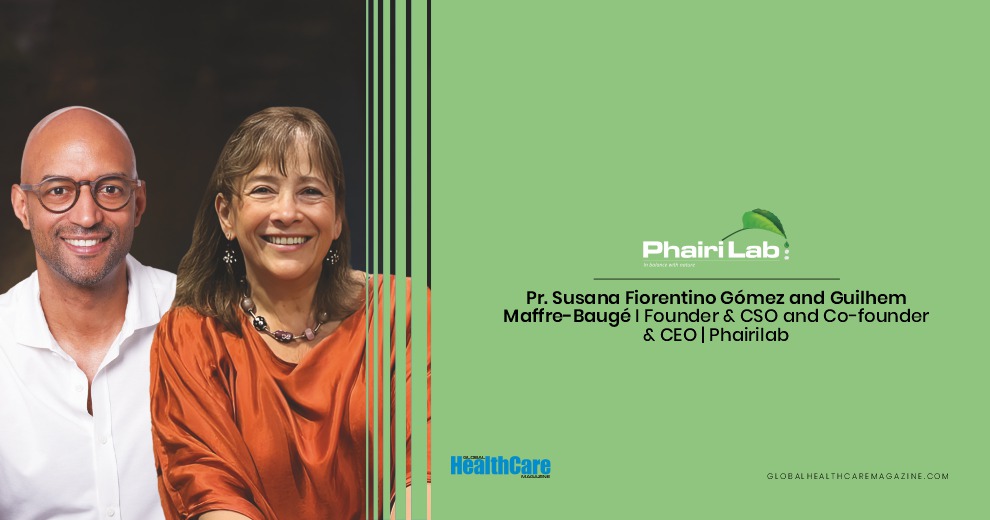
This is the central question that animates the daily lives of two remarkable leaders. They come from vastly different worlds, yet they have converged on a singular, deeply human mission. Pr. Susana Fiorentino Gómez is an esteemed academic and immunologist whose roots are deeply planted in the rich biodiversity of Colombia. Guilhem Maffre-Baugé is a veteran of the global pharmaceutical and finance sectors, a man who has navigated multi-billion-euro business units. Together, as the Founder & CSO and Co-founder & CEO of Phairilab, they are pioneering a radical yet profoundly ancient approach to cancer care. They are developing nature-powered, polymolecular oncology drugs.
Their story is not merely one of biotech innovation. It is a narrative about discovering a deeper purpose, a defining “why” that challenges the orthodoxies of modern science. It is also a masterclass in servant leadership, asking constantly who they are truly serving in the long, arduous journey of drug development.
The Soil and the Science: A Vision Born in Colombia
To understand the quiet revolution brewing at Phairilab, one must first understand the extraordinary trajectory of Pr. Fiorentino Gómez. Her scientific journey is a tapestry of rigorous global education and a deep, unyielding connection to her homeland. She holds a BSc from the Pontifical Javeriana University in Colombia, a PhD in Immunology from the prestigious University of Paris VI, an MSc in Molecular Oncology from the Center for Biosanitary Studies in Spain, and a Master’s in Immunology from the University of Antioquia. Following her doctoral work, she completed a rigorous Postdoctoral Fellowship in Molecular Immunology and Antitumor Immunotherapy in France, working at the renowned Necker Hospital and Saint Louis Hospital.
Yet, for all her time spent in the pristine, sterile laboratories of Europe, her greatest revelation occurred when she returned home.
“When I finished my PhD and postdoc in France and returned to my country, I was convinced that the mechanisms controlling cancer were diverse and had to be activated simultaneously to have a synergistic effect,” Pr. Fiorentino Gómez recalls.
This was the genesis of her profound “why.” Cancer is not a static enemy. It possesses what scientists call metabolic plasticity, meaning it can adapt, mutate, and change its energy sources to survive the assaults of single-target drugs. Pr. Fiorentino Gómez realized that to defeat an adaptable enemy, you need an adaptable, multi-faceted response.
“Plants had the perfect mix of these components, and the traditional knowledge associated with them allowed the search to proceed more quickly,” she explains. The earth had already spent millions of years perfecting complex chemical defenses. By looking at ethnobotanical knowledge, the historical wisdom of how local populations utilized specific plants, Pr. Fiorentino Gómez found a roadmap.
Driven by a desire to serve patients running out of options, she founded DreemBio in Colombia alongside close colleagues Ricardo Ballesteros and Claudia Urueña, among others. This first company became the repository for the intellectual property derived from 20 years of relentless work by her research group. As a Full Professor at the Pontifical Javeriana University, the Director of the Immunobiology and Cell Biology Group, and the Scientific Director of the GAT program (Generation of Therapeutic Alternatives in Cancer) funded by the World Bank, she embedded herself deeply in the scientific establishment. She is also a Corresponding Member of the Colombian Academy of Exact, Physical, and Natural Sciences, and a Senior Researcher for the Ministry of Science.
She spent her days reading voraciously about cancer immunology and tumor metabolism, desperate to unlock the secrets of the disease. “It’s fascinating from an academic point of view,” she says softly, “but the most beautiful thing is when we see the theory manifest itself in clinical results.”
For 22 years, Pr. Fiorentino Gómez and her team at the Pontifical Javeriana University faced immense skepticism. They were attempting to bridge a massive cultural and scientific chasm. When she first approached oncologists in Colombia more than two decades ago, they were intrigued but cautious. They told her that once relevant clinical data existed to validate her findings, they would consider supporting the development and administration of these botanical drugs, provided they passed rigorous trials.
The Architecture of Scale: A Leader Finds His True North
While Pr. Fiorentino Gómez was unlocking the secrets of botanical oncology in the laboratories of Bogotá, Guilhem was navigating the complex, high-stakes corridors of global pharma. For more than twenty years, he built an impressive career spanning general management, finance, strategy, marketing, and sales.
His resume is a testament to corporate excellence. He successfully led the strategic planning process for over thirty products and projects within a massive €3.6bn business unit. This role required a delicate mastery of corporate strategy, marketing, and research and development. He served as the head of Bayer’s specialty medicine business in Greece, taking full accountability for multiple product launches and intricate business strategies. As a VP head of business strategy and operations, he managed organizational transformation across emerging markets, cultivating a vital “intrapreneurial” mindset. Later, as a Business Unit Head for Cardiovascular and Women’s Health, he tackled the immense challenges of single-country operations in established markets. An executive MBA from the London Business School further sharpened his ability to reconcile complex business practice with theoretical insights.
Guilhem knew how to bring efficacious drugs to the global market. He understood the mechanics of the pharmaceutical world intimately. But he also understood its limitations. Through his constant interactions with physicians in oncology, cardiology, and ophthalmology, he witnessed the human toll of the narrow therapeutic window. He saw the risks inherent to conventional treatments.
When Guilhem met Pr. Fiorentino Gómez, a profound shift occurred. He was not merely looking for another corporate role. He was looking for a purpose that aligned with his deep desire to serve patients in a more holistic, humane way.
“When I met Susana, our founder, what struck me was the strength of the evidence supporting the botanical drugs the team was evaluating,” Guilhem explains. He saw past the unconventional origins of the medicine and looked straight at the data.
The plant-derived nature of the products, heavily based on ethnobotanical knowledge, presented undeniable advantages to his strategic mind. These botanical drugs offered the possibility to hit various biological targets simultaneously. Furthermore, they offered an incredible safety profile thanks to the optimal natural concentration of each molecule, forming a complex yet perfectly balanced medicine.
“Scalability emerges from the multiple applications of a single plant extract,” he notes. “Ethnobotanical knowledge provides strong historical validation, showing that the plants behind our medicines were used across multiple disease areas.”
Guilhem realized that Phairilab was not just a company developing a single drug. It was a scalable biotech platform. It was a bridge that could bring 20 years of Colombian botanical research to the rigorous European and American markets. He stepped into the role of Co-founder and CEO with a clear mission: bring first-in-class polymolecular oncology drugs to the patients who desperately need them.
A Symphony of Molecules: The Mechanism of Hope
To understand why Phairilab’s approach is so revolutionary, one must look closely at how its drugs actually function. The foundation of their work is built around polymolecular drugs derived from nature.
Pr. Fiorentino Gómez explains the scientific insight with the clarity of a lifelong educator. “The focus of the complex drugs developed by our companies in partnership with academia is to specifically modulate tumor energy metabolism, enabling the activation of the immune response.”
Cancer cells are notoriously greedy. They alter their metabolism to consume vast amounts of energy, allowing them to multiply uncontrollably while simultaneously hiding from the body’s immune system. Conventional drugs often try to block a single pathway in this process. But cancer, with its metabolic plasticity, simply finds a detour.
Phairilab’s botanical candidates, however, exhibit unique mechanisms of action that make them incredibly difficult for the tumor to outsmart. This efficacy depends entirely on the fine, intricate mixture of components they contain. Nature has provided a cocktail of organic acids and metabolites that act in perfect synergy.
“We now have the entire pipeline of activities necessary to unlock the secret of these mixtures in different tumors,” Pr. Fiorentino Gómez states with quiet pride. “We are building the capabilities to study and develop new drugs from new sources of biodiversity to which we have privileged access.”
This is not herbalism. This is a high-level biotechnology meeting of ancestral wisdom. And the data is speaking loudly.
Guilhem points to their lead drug, known as Esperanza. “In the completed Phase I trial of our lead candidate, Esperanza, we observed the expected safety profile along with a strong early efficacy signal that supports the potential demonstrated in preclinical studies.”
For Guilhem, articulating this vision to investors and partners steeped in conventional oncology models requires leaning heavily into this data. “We deliberately chose to develop polymolecular drugs to address the specific challenges of aggressive cancers, particularly their metabolic plasticity. This approach reflects the widely recognized reality that cancer’s complexity demands multi-targeted therapeutic strategies rather than a single “magic bullet.””
He is remarkably candid about the limitations of the current paradigm. “Safety is paramount, and there are limits to how many conventional drugs can be administered simultaneously. These agents often have narrow therapeutic windows and meaningful safety risks. For us, a more rational approach is to leverage multiple molecules that act synergistically across several biological targets—without overexposing the body to high doses of any single compound.”
Today, that 22-year wait for clinical validation has yielded beautiful fruit. Pr. Fiorentino Gómez shares the monumental milestones that have silenced the early skepticism. They have completed a Phase I study of one drug for gastric cancer, and a Phase II study of another for breast cancer. The results regarding their effectiveness in controlling cancer are clear and undeniable.
“We have found wonderful allies among the oncologists,” Pr. Fiorentino Gómez says, her voice carrying the weight of two decades of perseverance.
The Ecosystem of Trust: Navigating Uncertainty and Access
Leadership in the biotech space is not for the faint of heart. It is an industry defined by staggering regulatory hurdles, massive capital requirements, and heartbreaking clinical failures. When asked about navigating this uncertainty, Guilhem frames it not as a test of conviction, but as a test of resilience.
“Compared with other technology sectors, biotech requires long-term investment, and the regulatory bar for approval is higher than ever,” he notes. We prioritize areas of highest unmet need because this alignment creates value for all stakeholders—patients, clinicians, society, and investors.
Here, the philosophy of servant leadership shines brightly. Guilhem and Pr. Fiorentino Gómez do not view these stakeholders as competing interests, but as a unified ecosystem they are bound to serve. When addressing high unmet needs with a relevant, safe solution, regulatory pathways exist that can shorten the time to market. This allows for early access for suffering patients while simultaneously providing better return-on-investment perspectives for the financial backers who make the research possible.
To manage the inherent risks of biotech, Phairilab has adopted a highly strategic portfolio approach. “Uncertainty is best addressed through a diversified and risk-balanced strategy.” Guilhem explains. Because they cannot know in advance which specific product will experience the highest demand, they research and develop a variety of plant extracts and solutions in parallel. They prioritize those that address the most urgent clinical needs as soon as their safety and efficacy profiles become clear.
Another massive hurdle the team had to overcome was securing sustainable, ethical access to the raw materials. The biodiversity required for these groundbreaking medicines is located in Colombia, a region rich in flora but historically vulnerable to exploitation.
Pr. Fiorentino Gómez and her team approached this challenge with deep humility and respect for the local communities. Through the Scientific Directorate of CAIDVANDRE (Agricultural Research and Technological Development Center), they established privileged access to biodiversity that strictly complies with the standards of fair and equitable benefit-sharing with local farmers.
“Our challenge is to enter the pharmaceutical industry with a One Health vision, impacting health and with a focus on sustainability for users and all other stakeholders in the value chain,” Pr. Fiorentino Gómez asserts. They are not merely extracting resources. They are building a reciprocal relationship with the earth and the people who tend it.
A Harmonious Partnership: The Mind and the Brain
The success of Phairilab is inextricably linked to the profound respect and synergy between its two leaders. They are a study in complementary strengths, a perfect balance of scientific visionary and strategic architect.
Pr. Fiorentino Gómez is deeply self-aware regarding her passions and her limits. “When I founded Phairilab, I was looking for a partner I could inspire with my passion. My focus is on science, and while I enjoy management, it’s clear that at this level and in our current stage of development, we need someone to handle the business administration and financial aspects, enabling me to advance the generation of new knowledge.”
She speaks of her Co-founder with immense gratitude. “Guilhem’s arrival at the company has been invaluable. He has undoubtedly provided the boost Phairilab needed to begin engaging with major players in the pharmaceutical industry. We make decisions together, and I greatly appreciate our collaborative work. Each one of us does what we love without interfering in each other’s work, but we learn from one another.”
Their collaboration extends outward to the clinical teams they partner with. Everything they do is anchored by a shared empathy for the realities of the hospital ward. “We always begin with the patient’s needs,” Guilhem says. “We stay close to the daily realities of patients and physicians. Our strongest motivation comes when we see our treatments working and hear about the relief they bring.”
This is the ultimate metric of their success. While investors may look at burn rates and market capitalization, Guilhem and Pr. Fiorentino Gómez looked entirely at clinical results. They are acutely aware that they “look” different from companies developing conventional synthetic drugs. Because of this, their focus on the clinical demonstration of efficacy and safety must be absolute and unassailable. It is through rigorous, peer-reviewed results that the artificial barriers in perception between conventional drugs and botanical drugs will finally crumble.
The Horizon: Mapping the Uncharted Territories of Nature
As they look to the future, both leaders radiate a grounded, quiet optimism. They know they are standing on the precipice of a medical revolution.
“Several elements inspire great optimism,” they note collectively. “First, we do not work alone. We are a business group leveraging biodiversity and traditional knowledge. DreemBio, our partner, advances hand in hand with those who have first-hand knowledge of the ancestral use of plants.”
They view Phairilab and DreemBio (Dreemlab) not just as a business group, but as a “platform of platforms.” Because each of their carefully calibrated plant extracts has demonstrated activity in more than one disease, the potential for cross-application is staggering. The magnitude of the effects they have observed in both clinical and preclinical settings for incredibly difficult-to-treat diseases offers profound hope. They are actively creating an entirely new class of drugs designed specifically to shorten treatment durations and dramatically reduce drug resistance.
Yet, for all their success, they remain humbled by the sheer vastness of what they do not yet know. “The more we work with plants and uncover the treasures of ethnobotanical knowledge, the more we realize how little we humans know and how much remains to be discovered.”
When asked what success looks like over the next five years, their vision is sharp and uncompromising. They intend to be the very first company to officially bring botanical drugs into the highly regulated realm of modern oncology through rigorous, evidence-based clinical evaluation. They want to provide a sustainable, humane alternative to the constant tension between safety and efficacy that defines the narrow therapeutic window.
Concretely, Guilhem and Pr. Fiorentino Gómez has set a firm target. They want to deliver at least one fast-tracked product launch for a type of cancer with a very high unmet clinical need.
They are not driven by a desire to conquer nature, but rather to partner with it. They listen to the frantic, complex signals of the mutating tumor, and they answer it with the deep, balanced vocabulary of the earth. They serve the tired oncologist, the vulnerable patient, and the rural farmer with equal reverence.
“We have everything in our hands to do so,” they state, looking toward the horizon of the next five years. “And we won’t rest until it’s done.”
Quote
Also Read: Leaders in Nature-Powered Oncology & Biotech Innovation 2026