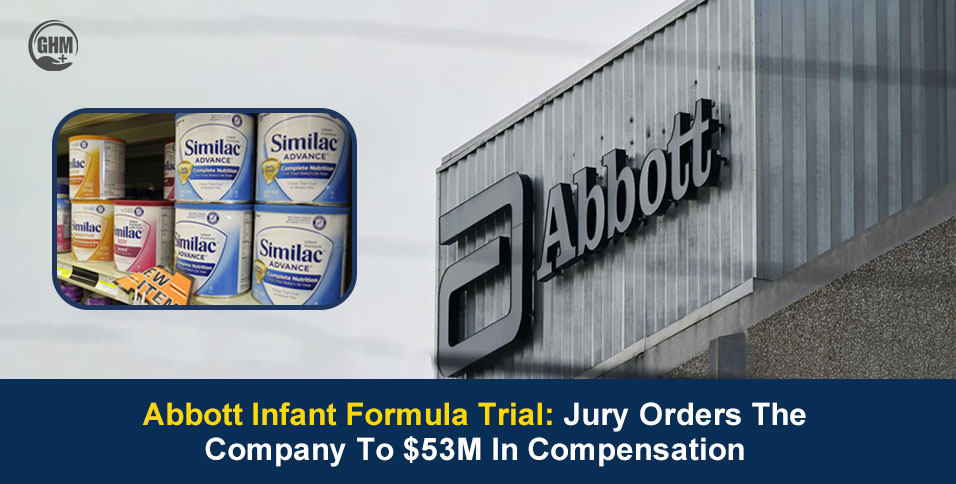
The Abbott infant formula trial has taken a major turn after a Chicago jury ordered Abbott Laboratories to pay $53 million in damages to families of premature infants. The case centers on allegations that the company’s cow milk-based formula contributed to the development of Necrotizing enterocolitis (NEC), a serious and potentially fatal intestinal condition affecting preterm babies.
This latest development in the Abbott infant formula lawsuit is part of a broader wave of litigation, with hundreds of similar cases filed across the United States. As the court prepares to consider punitive damages, the verdict is expected to have far-reaching implications for infant nutrition practices, medical guidance in neonatal care, and ongoing legal scrutiny of formula manufacturers.
What Happened In the Abbott Infant Formula Trial?
In the Abbott infant formula trial, four families accused Abbott of failing to warn about the risks associated with its cow’s milk-based formula for premature babies.
The jury found that:
- The product had design defects
- Abbott failed to provide adequate warnings
- The company acted negligently
Plaintiffs argued:
- Abbott baby formula should carry stronger warning labels
- Parents and doctors were not fully informed
- Safer alternatives, like breast milk, were not emphasized enough
One attorney reportedly told the jury, “Formula is harmful. It increases the risk of NEC.”
This argument has become central across many Abbott’s infant formula cases currently being litigated.
As a result of the infant formula lawsuit, Abbott is ordered to pay $53 million in compensatory damages. Individual awards ranged from $7 million to $16 million, covering pain, suffering, and long-term health complications.
According to the Chicago Tribune report, the jury will also decide on punitive damages, which could increase the total payout significantly.
How Does Necrotizing Enterocolitis (NEC) Affect Health
The Abbott infant formula lawsuit started with a serious condition called Necrotizing enterocolitis (NEC) affecting the premature babies.
Necrotizing Enterocolitis (NEC) is a life-threatening intestinal disease that primarily affects premature infants. It causes inflammation and tissue death in the intestines.
Necrotizing Enterocolitis (NEC) health risks:
- Mortality rate can exceed 20%
- Survivors may face lifelong digestive issues
- Often requires surgery in severe cases
In this Abbott infant formula trial, all four infants developed NEC but survived with long-term complications.
How Did Abbott Laboratories Respond To the Jury’s Result?
Abbott Laboratories has strongly denied the allegations in the Abbott infant formula trial.
The company maintains:
- There is no proven causal link between formula and NEC
- Their products are essential when breast milk is unavailable
- The verdict conflicts with established medical consensus
A company statement noted that preterm formulas are “safe, necessary, and critical” in neonatal care.
Interestingly, a 2024 report by U.S. health agencies suggested that the absence of breast milk, rather than formula itself, may increase NEC risk.
This scientific divide continues to fuel ongoing Abbott infant formula lawsuits.
Other Ongoing Lawsuits Against Abbott
The current Abbott infant formula case is just one of many.
- Over 1,700 lawsuits filed against Abbott
- Hundreds of cases are pending in federal courts
- Similar claims filed against Mead Johnson Nutrition
Previous outcomes have been mixed:
- One case resulted in a $495 million verdict (under appeal)
- Others have been dismissed or retried
This growing litigation landscape suggests that the trial for Abbott’s infant formula could influence future legal and medical standards.
Impact of Abbott Infant Formula Trial on Infant Nutrition
The Abbott infant formula trial has major implications. For the healthcare sector, the greater emphasis is on risk communication. Also, reevaluation of NICU feeding protocols is essential.
For parents, increased awareness of Abbott infant formula risks and more discussions about breast milk alternatives need to be addressed.
Policymakers should provide possible updates to labeling regulations & and keep stronger oversight of infant nutrition products.
Conclusion
The Abbott infant formula lawsuit is far from over. The jury’s decision on punitive damages is pending. Abbott is expected to appeal the verdict, and additional trials could shape nationwide outcomes.
The Abbott infant formula trial marks a critical moment in healthcare litigation. While the $53 million verdict highlights concerns over safety and transparency, it also underscores the complexity of neonatal care.
As further updates unfold, the balance between medical necessity and patient safety will remain at the center of global healthcare discussions.