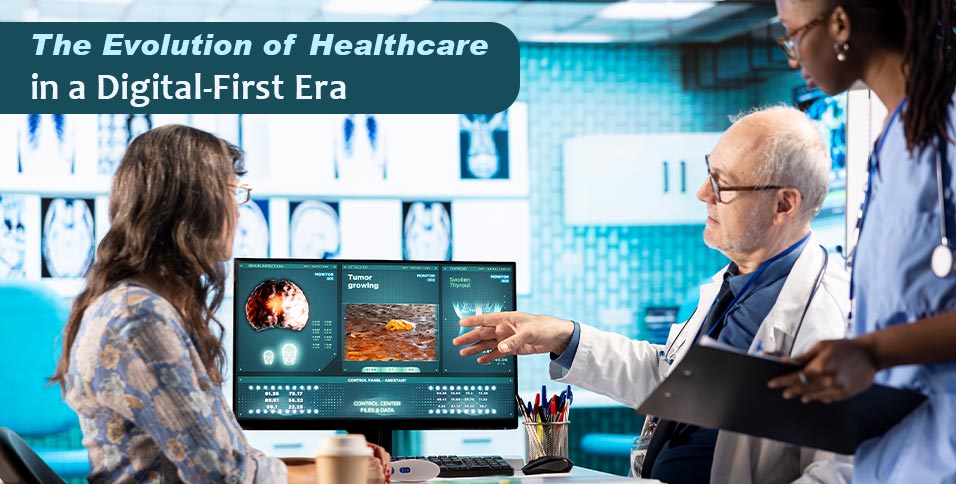
Healthcare is undergoing a profound transformation. What was once a system heavily dependent on paper records and fragmented workflows is now becoming increasingly digital, connected, and data-driven.
At the center of this transformation are electronic health record systems. EHR platforms are no longer just digital versions of patient charts. They have evolved into comprehensive ecosystems that support clinical decisions, patient engagement, and operational efficiency.
As the demands on healthcare providers continue to grow, these systems are playing a crucial role in shaping the future of care delivery.
From Documentation Tools to Intelligent Clinical Systems
Early EHR systems were primarily designed to store patient data. While this was a significant step forward, it did not fully address the complexity of modern healthcare environments.
Today’s EHR platforms are built to do much more. They integrate clinical workflows, support real-time decision-making, and provide tools that help clinicians manage both routine and complex cases more effectively.
This shift reflects a broader trend in healthcare: moving from passive record-keeping toward active, intelligent systems that enhance patient outcomes.
The Growing Importance of Workflow Integration
One of the most critical challenges in healthcare today is fragmentation. Clinical care, administrative processes, and financial operations have traditionally existed in separate systems.
This separation creates inefficiencies such as:
- duplicate data entry
- delayed communication
- increased risk of errors
Modern EHR platforms are addressing this issue by integrating multiple aspects of healthcare into a single, unified system.
By connecting clinical data with administrative and financial workflows, providers can streamline operations and reduce unnecessary complexity.
Improving Patient Care Through Operational Efficiency
Efficiency in healthcare is not just about reducing costs. It directly impacts patient care.
When clinicians spend less time navigating complex systems or handling administrative tasks, they can focus more on what matters most: the patient.
Integrated systems help:
- reduce documentation time
- improve accuracy in clinical records
- enhance communication between care teams
These improvements lead to better patient experiences and more consistent outcomes.
The Role of Billing in the Healthcare Experience
While clinical care is the most visible part of healthcare, billing plays an equally important role in the overall experience.
For many patients, the billing process can be confusing, delayed, or inconsistent. For providers, it can be time-consuming and prone to errors.
This is where modern EHR medical billing software is making a significant difference. By connecting clinical documentation directly to billing workflows, these systems can automatically generate cleaner claims, reduce manual intervention, and improve reimbursement timelines.
Instead of treating billing as a separate administrative task, it becomes a seamless extension of the patient visit.
How Automation Is Reducing Administrative Burden
Administrative overload is one of the biggest challenges facing healthcare providers today.
Tasks such as coding, claim submission, and payment tracking can take up a substantial portion of a clinician’s time.
Innovative EHR systems are addressing this issue through automation. Features such as:
- AI-assisted coding
- automated claim validation
- real-time eligibility checks
help streamline the billing process and reduce the likelihood of errors.
This allows healthcare teams to operate more efficiently without sacrificing accuracy or compliance.
Data-Driven Insights for Better Decision Making
Another key advantage of modern EHR platforms is their ability to generate actionable insights.
By analyzing clinical and financial data together, providers can:
- identify trends in patient outcomes
- monitor financial performance
- optimize operational workflows
These insights enable more informed decision-making and support long-term sustainability for healthcare practices.
Enhancing Patient Engagement Through Technology
Patient engagement is becoming a central focus in healthcare innovation.
Modern systems are designed to keep patients informed and involved throughout their care journey. This includes:
- secure messaging
- appointment scheduling
- transparent billing and payment options
When patients have better access to information and clearer communication, they are more likely to stay engaged with their care plans.
The Future of EHR and Healthcare Innovation
As technology continues to evolve, EHR systems will play an even more significant role in healthcare.
Future developments are likely to focus on:
- deeper integration across systems
- more advanced automation
- improved interoperability between providers
The goal is to create a healthcare environment where information flows seamlessly, allowing providers to deliver care more efficiently and effectively.
Conclusion
Healthcare is no longer defined solely by clinical expertise. It is increasingly shaped by the systems that support it.
Innovative EHR platforms are transforming how care is delivered by reducing administrative burdens, improving efficiency, and enhancing patient experiences.
As these systems continue to evolve, they will play a central role in building a more connected, efficient, and patient-centered healthcare ecosystem.