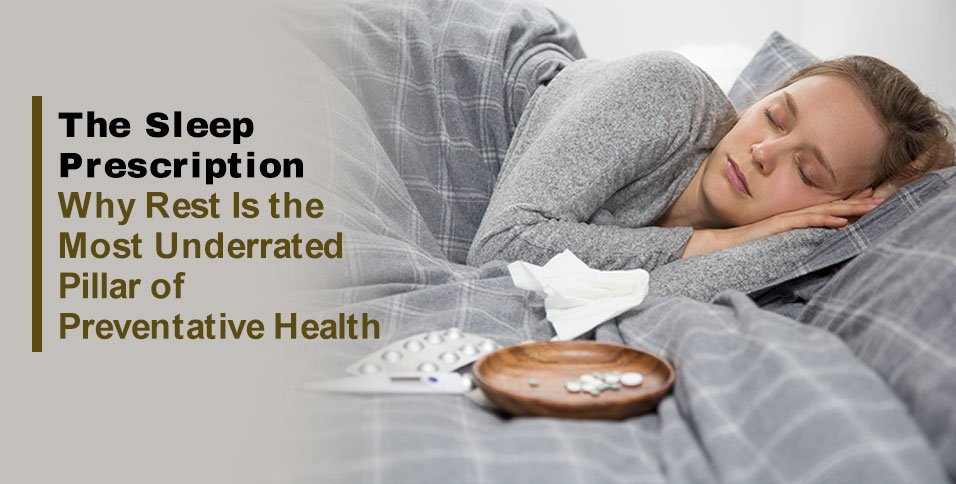
Public health messaging has spent decades training people to watch what they eat and how much they move. Sleep, the third leg of that stool, still tends to be treated as the thing you sacrifice to make time for the other two. The evidence increasingly suggests that is the wrong trade, and that consistent, good-quality rest belongs alongside diet and exercise rather than beneath them.
Why Rest Reaches So Far
The reason sleep earns that place is how widely it reaches. Researchers have linked insufficient sleep to a long list of outcomes, from impaired glucose regulation and higher blood pressure to weakened immune response and reduced concentration. None of that means a single bad night does lasting harm, and sleep is not a substitute for medical care when something is wrong. What the research points to is a pattern: rest is the period when the body carries out repair and regulation that it cannot do while you are awake, and chronically cutting it short removes a layer of protection most people do not realise they are giving up.
The reach extends into the choices people make while awake, which is part of why it matters so much. Tired people tend to eat more, reach for quicker and less nourishing food, and find it harder to summon the will for exercise. Short sleep has been associated with shifts in the hormones that govern appetite, which helps explain why a week of poor nights so often coincides with a week of worse eating. Seen that way, sleep is not just one pillar among three. It quietly props up the other two.
The Badge-of-Honour Problem
Part of the problem is cultural. Running on little sleep has long been worn as a badge of seriousness, the mark of someone too busy and too driven to indulge in a full night. That framing is slowly losing its grip as the costs become harder to ignore, but the habit is sticky, and plenty of otherwise health-conscious people who would never skip a workout think nothing of routinely sleeping five hours. Treating rest as optional is the gap in an otherwise sensible approach to staying well.
The framing has started to shift, helped by a generation of athletes and high performers who talk openly about treating sleep as training. When the people held up as models of discipline describe protecting their nights as carefully as their workouts, the old idea that rest is for the unambitious begins to look dated. That cultural change matters, because the habits people hold up as admirable tend to be the ones the rest of us eventually copy.
Inputs Within Reach
The encouraging side of preventative thinking is that the inputs are largely within reach. A consistent sleep and wake time does more for sleep quality than most people expect, because the body settles into a rhythm it can rely on. A cool, dark, quiet room supports the transition into deeper sleep. Limiting late caffeine and protecting the wind-down hour from screens removes two of the most common reasons people lie awake. These are unglamorous adjustments, but they compound, and they cost almost nothing.
Consistency is the quiet hero among them. The body runs on an internal clock that thrives on regularity, and a wildly different bedtime each night undermines even a long sleep. Going to bed and waking at roughly the same hours, weekends included, steadies that clock and makes falling asleep easier over time. It is the least exciting piece of advice on the list and probably the most effective, which is why it is so often ignored.
The Part People Overlook
The sleep environment is the part that gets overlooked, perhaps because it asks for a one-off decision rather than a daily habit. You can manage your routine perfectly and still sleep badly on a surface that no longer supports you, and the quality of the mattress you sleep on shapes how much genuine rest those good habits actually translate into. A bed that keeps the spine supported and the body from overheating lets the rest of the routine work, while a worn-out one quietly undoes it night after night.
There is a strange blind spot here. People will spend on supplements, gym memberships and the latest tracker while sleeping on a mattress a decade past its best, despite spending roughly a third of their lives on it. Few health purchases are used so heavily for so long, which makes a worn-out bed one of the least sensible places to economise. Replacing it is a single decision that pays back every night until the next one.
Giving Sleep Equal Standing
Framing sleep as preventative is not about promising it will keep illness away. It is about giving rest the same standing as the other choices people already accept as part of looking after themselves. The case for it is no longer fringe, and the people who act on it tend to notice the difference long before any chart does. Of the three pillars, sleep may be the one with the best return for the least effort, which makes its reputation as the expendable one harder and harder to justify.