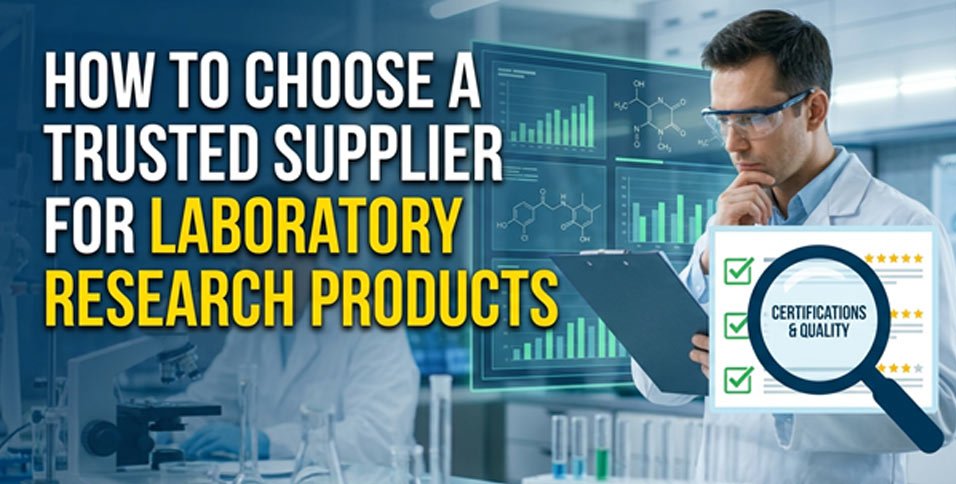
Finding a reliable supplier for laboratory research products is one of the most important decisions a research team can make. Whether you are working in biochemistry, pharmacology, or analytical science, the quality of your starting materials directly shapes the reliability of your results. Poorly sourced compounds introduce variables that can compromise entire studies, waste valuable resources, and make findings difficult to reproduce.
This guide walks through the core criteria researchers and procurement teams should evaluate when selecting a supplier, with a focus on scientific standards, documentation practices, and quality assurance processes.
Why Supplier Quality Directly Affects Research Outcomes
In laboratory science, reproducibility is everything. A study built on impure or mislabeled compounds is difficult to replicate and even harder to publish with confidence. When reagents or research-grade materials do not meet stated specifications, the downstream effects can be significant: skewed assay results, failed validation runs, and wasted experimental cycles.
This is why quality sourcing is not simply a procurement concern. It is a scientific one.
The Link Between Compound Purity and Data Integrity
Compound purity is among the most critical variables in controlled research. Even minor contamination in a reference standard or experimental compound can shift binding affinities, alter enzymatic activity, or produce inconsistent dose-response curves. Laboratories working with sensitive detection methods such as mass spectrometry or HPLC are particularly vulnerable to purity issues.
When evaluating suppliers, researchers should specifically ask about the testing protocols used to establish purity levels, and what documentation is available to verify those claims independently.
Key Criteria for Evaluating a Laboratory Supplier
1. Analytical Testing and Documentation
A trustworthy supplier will provide comprehensive certificates of analysis (CoA) for every product batch. These documents should include purity data derived from validated testing methods such as high-performance liquid chromatography (HPLC), nuclear magnetic resonance (NMR) spectroscopy, and mass spectrometry (MS).
Batch-specific CoAs are important. Generic or product-level documentation that is not tied to a specific lot number offers limited assurance and cannot confirm the actual composition of what was received.
2. Transparency in Manufacturing Processes
Reputable suppliers are open about where and how their products are manufactured. Look for facilities that follow good manufacturing practice (GMP) guidelines, even when GMP is not strictly required for research-only materials. Adherence to these standards reflects a culture of quality control that benefits end users.
Some specialized suppliers, such as Pure Health Peptides, focus specifically on producing research-grade compounds under controlled laboratory conditions with documented testing at every stage. This kind of process transparency gives research teams a clearer picture of what they are working with.
3. Storage, Handling, and Stability Information
Research compounds often have specific stability requirements. A competent supplier provides detailed storage recommendations, shelf-life data, and guidance on handling conditions such as temperature sensitivity or moisture control. Suppliers that omit this information or provide only vague instructions are a red flag in quality evaluation.
4. Regulatory Awareness and Ethical Standards
Suppliers operating within a research context should understand the regulatory landscape relevant to their products. This includes compliance with applicable import and export regulations, proper labeling of research-only materials, and clear statements that products are not intended for human use or consumption.
Procurement teams should verify that suppliers make these distinctions clearly and consistently across their documentation, product listings, and communication.
Understanding Research-Grade vs. Pharmaceutical-Grade Standards
Many laboratories work with research-grade materials that are not held to the same regulatory standards as pharmaceutical APIs. This does not mean quality should be sacrificed. In fact, research-grade compounds used in early-stage studies must meet high purity benchmarks to produce findings that are credible and publishable.
What “Research Grade” Actually Means
The term “research grade” refers to compounds produced and sold exclusively for in-vitro and laboratory study purposes, not for clinical use or human administration. These materials are used in settings such as cell-based assays, protein interaction studies, animal model research, and analytical method development.
When sourcing peptides or other bioactive compounds for laboratory work, researchers should confirm that the supplier clearly designates their products for research use only, and that all labeling reflects this classification without ambiguity.
Evaluating Long-Term Supplier Reliability
Choosing a supplier is rarely a one-time decision. Laboratories that source research materials regularly benefit from building ongoing relationships with suppliers who demonstrate consistency across multiple batches, responsive customer support, and a commitment to scientific accuracy in how they describe their products.
Questions to Ask Before Committing to a Supplier
Before entering a procurement agreement, consider asking the following:
Testing methodology: What specific analytical instruments and protocols are used to generate the CoA? Are the results produced in-house or by an independent third-party laboratory?
Batch consistency: How does the supplier ensure reproducibility from one production run to the next? What internal quality control checkpoints are in place?
Availability of reference standards: Does the supplier offer reference standards or comparator compounds that can help validate your own analytical findings?
Return and dispute process: If a product does not meet stated specifications upon receipt, what is the supplier’s process for investigation and resolution?
Answering these questions before purchasing can prevent significant disruption to ongoing research programs.
The Role of Third-Party Testing in Building Trust
Independent verification is one of the most reliable signals of supplier credibility. When a company commissions third-party analytical testing from accredited laboratories and makes those results available to customers, it demonstrates a level of accountability that goes beyond self-reported quality claims.
Some suppliers publish this data openly on their platforms. For example, Pure Health Peptides provides third-party verified purity results alongside its research-grade compound listings, which allows procurement teams and researchers to conduct their own technical review before ordering.
This kind of transparency supports the kind of informed sourcing decisions that well-run laboratories depend on.
Conclusion
Choosing a supplier for laboratory research products requires the same rigor that researchers apply to experimental design. Purity documentation, manufacturing transparency, regulatory awareness, and long-term reliability are all essential criteria that should guide every sourcing decision. By treating supplier evaluation as a scientific process rather than a routine administrative task, research teams can protect the integrity of their work and build a more dependable foundation for reproducible results.
Important Note: All peptides and related compounds referenced in this article are intended strictly for research and laboratory study purposes only. They are not approved for human use, consumption, or medical application. Researchers are responsible for ensuring compliance with all applicable laws and institutional regulations governing the use of research-grade materials in their jurisdiction.