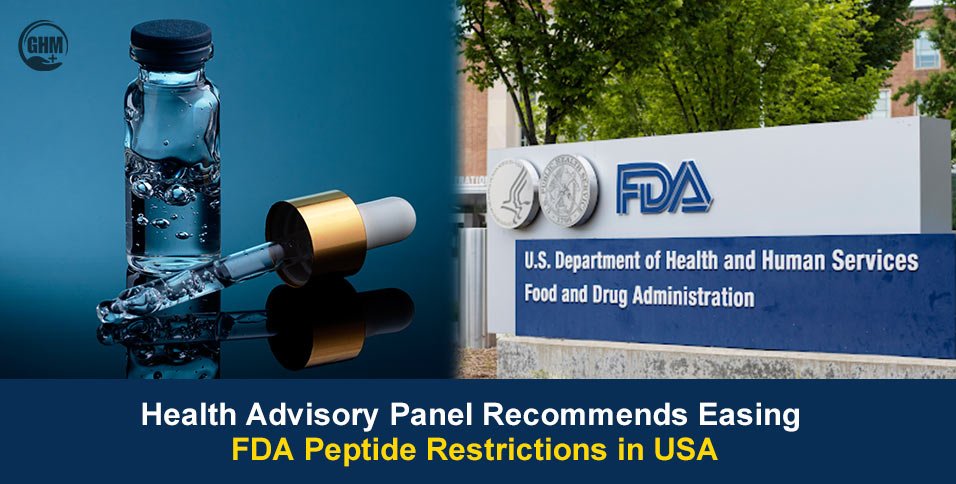
The FDA Pharmacy Compounding Advisory Committee meeting held on 23 and 24th July voted to allow several controversial peptides for inclusion on the Section 503A Bulks List. This major US Health panel vote marks a pivotal shift for the FDA peptide restrictions in USA.
However, this FDA peptide panel vote applies specifically to compounded peptides such as custom-made formulations prepared by specialized pharmacies and does not constitute formal FDA approval of these products.
The advisory panel’s positive recommendations initially covered BPC-157, KPV, TB-500, and MOTS-c, while additional compounds were evaluated during the second day of deliberations.
Why Is the FDA Reviewing Peptide Restrictions in USA?
The surging popularity of peptide therapy in performance medicine and wellness culture has generated the need for a formal FDA peptide review. Short chains of amino acids, peptides act as biological messengers in the body. Their popularity has driven an expansion of online sales through an unregulated “gray market,” where vendors sell unapproved compounds under the legal loophole of being “for research use only”.
To address these market dynamics, the FDA has convened the advisory panel to address several core regulatory concerns:
- Limited Human Clinical Evidence: Most data relies on animal studies rather than standardized human trials.
- Unknown Long-Term Safety: Lack of safety monitoring leaves long-term side effects unclear.
- Quality and Consistency Issues: Absence of standard manufacturing oversight creates risks of contamination or incorrect dosing.
- Chemical Characterization: Several peptides lack universally accepted chemical formulas, making precise regulatory evaluation difficult.
Which Peptides Did the FDA Advisory Panel Recommend?
During the multi-day FDA peptide panel vote, committee members reviewed scientific data for specific clinical indications before voting on whether to recommend easing FDA peptide restrictions in USA.
- BPC-157: Ulcerative colitis (UC)
- KPV: Wound healing and inflammatory conditions
- TB-500: Wound healing
- MOTS-c: Obesity and osteoporosis
Day 2 discussions expanded to include Emideltide (DSIP) for sleep disorders, Semax for neurological conditions, and Epitalon for insomnia, rounding out the broad evaluation of compounded peptides access.
Why Did FDA Scientists Oppose Broader Peptide Access In US?
Despite the health panel’s vote, agency career scientists strongly argued against loosening FDA peptide restrictions in USA.
Agency officials highlighted key scientific risks of peptides:
- Insufficient Human Clinical Trials: Career reviewers noted a distinct lack of robust human data proving efficacy.
- Safety Uncertainties: Without controlled clinical trials, potential risks, such as immune reactions, remain unknown.
- Chemical Ambiguity: It is difficult to evaluate substances that lack standard chemical definitions.
The FDA staff urged developers to pursue formal Investigational New Drug (IND) applications and standard clinical trials rather than relying on compounding exemptions.
Why Did the Advisory Committee Favor Peptide Access in USA?
Key Arguments during FDA peptide panel vote:
Supporters argued that strict peptide therapy regulation drives consumers to unregulated online sellers.
Panelists emphasized that pharmacy compounding establishes manufacturing oversight, grants physicians vital treatment options, and provides safer peptide access in USA under medical supervision.
Critics countered that consumer demand should not override scientific rigor. Dissenters warned that patients might mistake compounded items for fully FDA-approved drugs, emphasizing that more research is required before expanding access.
What’s The Next Step in Peptide Access in USA
Despite this decision on FDA peptide restrictions in USA, the legal pipeline is crucial
- Non-Binding Status: Advisory committee recommendations are non-binding advice.
- FDA Review: The agency will independently evaluate the panel’s votes and public comments.
- Formal Rulemaking: Any change to USA peptide compounding policies requires formal administrative rulemaking before taking effect.
- Current Legal Status: Until a final rule is issued, these compounds remain unapproved drugs.
Implications for Patients, Pharmacies, and the Industry
The FDA peptide panel vote signals notable updates across the healthcare landscape:
- Patients: May eventually gain regulated access to compounded peptides through licensed pharmacies, though clinical efficacy uncertainties remain.
- Compounding Pharmacies: Face a potentially expanded catalog of legal bulk substances alongside increased regulatory oversight.
- Healthcare Industry: A clearer regulatory path opens commercial opportunities in USA peptide compounding, driving clinical research investments to satisfy safety demands.