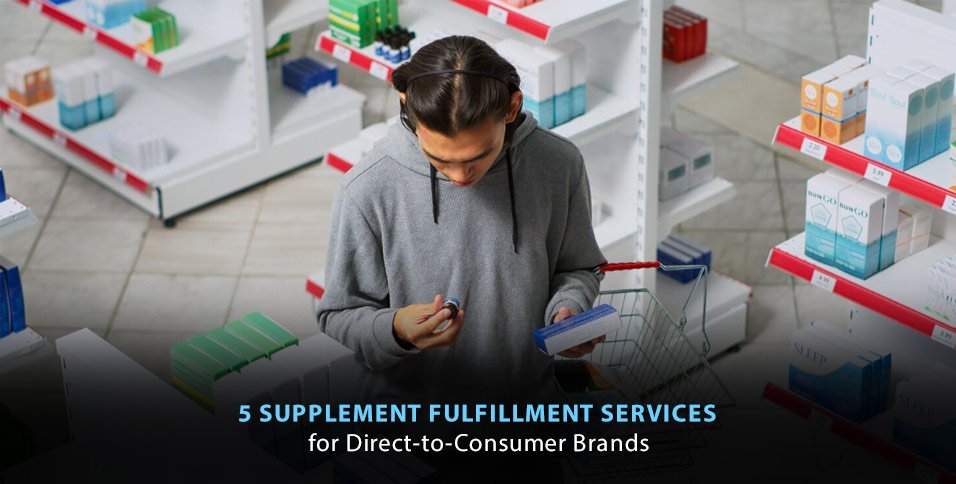
Most DTC supplement brands don’t realize how much their 3PL choice affects their bottom line until a cold chain failure wipes out a probiotic shipment or an FDA audit exposes lot traceability gaps. Supplement fulfillment carries a different level of operational challenge than standard ecommerce, with FDA cGMP standards, expiration date management, and temperature sensitivity all adding layers that generic warehousing wasn’t built to handle. After reviewing dozens of providers across the space, this guide covers five options built for exactly this kind of work.
The shortlist methodology
Each option was researched using publicly available information gathered from official websites, company directories, and client-facing case studies. Review patterns, operational track records, and service depth were all factored in. Only providers with documented performance in ecommerce fulfillment made the final list.
→ See the full research breakdown
- Ops Engine – Best for DTC brands, subscription services, and complex fulfillment operations
- Deliverzen – Best for D2C and B2B e-commerce fulfillment for beauty, skincare, and supplement brands
- Rakuten Super Logistics – Best for ecommerce fulfillment and logistics outsourcing
- Red Stag Fulfillment – Best for enterprise and fast-growing ecommerce brands handling big, heavy, and bulky products
- Ship Fusion – Best for ecommerce order fulfillment and 3PL logistics
The Business Case for Understanding Supplement Fulfillment Services
Choosing the wrong fulfillment partner in this space doesn’t just slow down shipping. It can put your entire brand at risk.
FDA cGMP requirements apply at the warehouse level, not just in manufacturing. That means your 3PL needs to understand lot traceability, expiration date tracking, and proper storage conditions, or you’re exposed.
Beyond compliance, the day-to-day operational gaps add up fast. Stockouts during a seasonal spike, a missed subscription renewal shipment, or a mislabeled product bundle all hit your order accuracy rate in ways that are hard to recover from.
The right supplement fulfillment partner keeps your on-time shipping rate and order accuracy rate high while keeping inventory shrinkage and expiration loss low. That combination is what separates a growing DTC brand from one that’s constantly firefighting.
Top 5 Supplement Fulfillment Services: What You Need to Know
Note: All data in this table is sourced from review platforms and the official websites of the listed companies.
| Company Name | Years Operating | Headquartered In |
| Ops Engine | N/A | Valencia, CA, United States |
| Deliverzen | Est. 2017 | Irving, Texas |
| Rakuten Super Logistics | Est. 2001 | Las Vegas, NV |
| Red Stag Fulfillment | Est. 2013 | Knoxville, Tennessee |
| Ship Fusion | Est. 2013-2014 | Toronto, Canada |
- Ops Engine – Best for DTC Brands, Subscription Services, and Complex Fulfillment
What Is Ops Engine Known For?
Ops Engine is a DTC-focused 3PL based in Valencia, CA that functions more like an embedded warehouse department than a vendor. They cover the full fulfillment stack: receiving, storage, picking, packing, kitting, assembly, and reverse logistics. What makes them stand out is their four-part scan verification system, which the team credits for a 99.99% order accuracy rate. For brands that need their 3PL to get it right on something like supplement fulfillment for health brands, that kind of precision matters more than price. CEO Arsen Janikyan brings over 20 years of operational experience from organizations like Buck Mason and JPL NASA, and that background shows in how the company is structured around transparency and accountability.
Why Is Ops Engine Built for Supplement Fulfillment Services?
Supplement brands deal with a level of SKU variety, think flavors, sizes, bundles, and auto-ship configurations, that most warehouse systems aren’t set up to handle cleanly. Ops Engine’s dedicated account management model and flexible kitting capabilities make them a strong fit for brands where one missed component in a subscription box creates a real customer service problem.
Customer Review Snapshot:
Clients consistently point to Ops Engine’s transparency in billing and their responsiveness as standout qualities. The personalized attention they bring to complex fulfillment situations is something larger 3PLs typically can’t match. For DTC brands with complicated order structures, that level of hands-on partnership makes a noticeable difference.
- Deliverzen – Best for D2C and B2B Fulfillment for Beauty and Supplement Brands
What Is Deliverzen Known For?
Deliverzen is a Texas-based fulfillment provider founded in 2017, operating out of a 34,000 square foot climate-controlled warehouse in Irving. They focus on beauty, skincare, and supplement brands specifically, which means the team isn’t learning your product category from scratch. Services include Amazon fulfillment, influencer product drops, kitting, and custom pack-outs. The climate control piece matters for supplement brands handling probiotics or liquid formulas (temperature-sensitive products that standard warehouses often mishandle). Their stated 99% order accuracy rate and no-hidden-fees pricing model make them easy to evaluate and trust early on.
Why Is Deliverzen Built for Supplement Fulfillment Services?
Supplement brands scaling from startup to mid-market need a fulfillment partner that can grow with them without breaking on volume. Deliverzen has demonstrated exactly that, scaling one client from 12,000 to 35,000 monthly orders while supporting business growth from $20M to $75M. That kind of documented growth capacity is rare at this size, and it gives smaller brands real confidence that switching 3PLs mid-scale won’t be necessary.
Customer Review Snapshot:
Client feedback points to Deliverzen’s floor-based customer service team as a real differentiator. Most 3PLs keep account managers away from the warehouse, but having support on the floor means questions get resolved faster. Brands in the beauty and supplement space particularly value the custom pack-out capabilities and the hands-on approach.
- Rakuten Super Logistics – Best for Ecommerce Fulfillment and Logistics Outsourcing
What Is Rakuten Super Logistics Known For?
Rakuten Super Logistics, founded in 2001 and based in Las Vegas, runs a web-based fulfillment platform built around speed and platform integration. Their two-day delivery network reaches 98% of the U.S. within one to two days, which is a large coverage footprint for DTC brands competing with Amazon Prime delivery expectations. They connect with Shopify, Amazon, Magento, Walmart Marketplace, and eBay through tools like SmartFill, SmartStock, and SmartShip Optimizer. For supplement brands managing high order volume across multiple channels, that kind of multi-platform coordination removes a lot of manual work.
Why Is Rakuten Super Logistics Built for Supplement Fulfillment Services?
Supplement brands running on multiple platforms at once struggle with inventory visibility across channels. Rakuten’s web-based system keeps stock levels synced in real time to reduce stockouts. Their nationwide fulfillment center network also helps brands hit faster delivery windows without paying express shipping rates, which adds up quickly on high-volume supplement subscriptions.
Customer Review Snapshot:
Reviews for Rakuten Super Logistics tend to highlight platform integrations and delivery speed as the main strengths. For brands that prioritize on-time shipping rate metrics above everything else, the network reach seems to deliver. The breadth of their integration library is where they pull ahead of smaller regional providers.
- Red Stag Fulfillment – Best for Enterprise and Fast-Growing Ecommerce Brands
What Is Red Stag Fulfillment Known For?
Red Stag Fulfillment is a Knoxville, Tennessee-based 3PL founded in 2013 by ecommerce operators who built the business around performance guarantees with financial teeth. They operate two warehouses totaling 1.2 million square feet, covering both Sweetwater, TN and Salt Lake City, UT, which puts 96% of the U.S. within a two-day ground shipping window. Their service covers DTC, retail partners like Walmart and Target, and Amazon fulfillment, plus kitting and LTL shipping for heavier orders. Being named one of the best 3PLs for small businesses by Fit Small Business for six consecutive years says something about consistency.
Why Is Red Stag Fulfillment Built for Supplement Fulfillment Services?
Growing supplement brands often ship a wide range of product formats, from single-unit capsule bottles to heavy multi-pack bundles, and Red Stag’s infrastructure handles both without switching workflows. Their performance guarantees cover zero shrinkage, order accuracy, and on-time shipping, with actual financial accountability if they miss. That makes them a serious option for brands where fulfillment errors carry real reputational risk.
Customer Review Snapshot:
Red Stag’s performance guarantee model generates a lot of client confidence. Being named on the Inc. 5000 list and earning a 98% overall rating from WebRetailer backs up the positioning. Clients working with major brands like Oatly seem to appreciate that the founder-owned structure keeps the focus on quality rather than cutting corners for margin.
- Ship Fusion – Best for Ecommerce Order Fulfillment and 3PL Logistics
What Is Ship Fusion Known For?
Shipfusion is a Toronto-based 3PL founded between 2013 and 2014, operating over one million square feet across four North American and Asian locations. What sets them apart technically is their own custom fulfillment software, which gives clients real-time analytics and deep integration capabilities that off-the-shelf warehouse management systems can’t match. Every client gets a dedicated account manager, and all fulfillment centers run on Shipfusion’s own staff (no third-party operators), which keeps quality consistent. Their SQF and Health Canada certifications make them a credible option for supplement brands that need verified storage standards.
Why Is Ship Fusion Built for Supplement Fulfillment Services?
Subscription supplement brands often need fulfillment software that can handle variable inventory tied to auto-ship schedules, and Shipfusion’s custom platform was built with exactly that kind of flexibility. Real-time inventory visibility combined with dedicated account management reduces the risk of stockouts and subscription renewal fulfillment failures, which are two of the most damaging problems a supplement brand can face.
Customer Review Snapshot:
Shipfusion’s client results are pretty clear: one client posted a 211% order volume increase while maintaining 99.9% accuracy and on-time delivery rates. Their placement on Deloitte’s 2021 Technology Fast 500 List adds weight to the growth story. And the software and service team seem to move together rather than creating friction between systems and people.
Selection Standards and Verification Process
The process behind this list was built around finding supplement fulfillment providers that hold up under scrutiny, not just ones with well-designed websites.
Data Collection Framework
The research started by pulling together a broad list of 3PL providers serving the supplement and DTC ecommerce space. Sources included industry directories, fulfillment-focused review platforms, and service pages published by the providers themselves. The goal at this stage was to cast a wide net and avoid filtering too early, so promising options wouldn’t be missed due to limited name recognition.
Filtering Candidates by Key Criteria
From that initial pool, each provider was reviewed against a set of baseline requirements. Providers without publicly verifiable service details, client results, or operational track records were removed. Review patterns across multiple sources were analyzed to identify consistent strengths and flag any recurring service gaps. Options with thin or unverifiable public footprints were excluded regardless of how polished their marketing appeared.
The Fact-Finding Process
Each remaining candidate was evaluated by cross-checking their stated capabilities against real-world evidence. Client case studies, published performance figures like order accuracy rates and on-time shipping benchmarks, and platform integration details were all compared against what reviewers and clients actually reported experiencing. Where a company’s site claims didn’t line up with independent review data, those discrepancies were noted and factored into the final assessment.
Reading the Authority Signals
Beyond direct reviews, the research looked at external authority markers as a way to validate each provider’s standing in the industry. Awards from recognized business publications, mentions in logistics and ecommerce-focused editorial coverage, and recognition from bodies like Deloitte or Fit Small Business were all considered. These signals don’t tell the full story on their own, but they add useful context when a provider’s self-reported performance is otherwise hard to verify independently.
Looking at Supplement Fulfillment Services Specifically
The final layer of evaluation focused on supplement fulfillment requirements. Providers were assessed on whether they maintained dedicated service pages for supplement or nutraceutical fulfillment, had documented experience handling temperature-sensitive or perishable inventory, and could show familiarity with lot traceability and expiration management. Verified reviews from supplement or health and wellness brands were weighted more heavily than general ecommerce feedback, since the operational demands of this category are distinct enough to warrant that distinction.
Picking the Right Fit
Finding a supplement fulfillment partner isn’t just about price per order. The right 3PL depends on what your brand actually needs right now and where it’s heading.
- Industry/Domain Experience: Look for providers with documented experience in supplement or nutraceutical fulfillment specifically. General warehouse experience doesn’t automatically translate to FDA cGMP awareness or lot traceability competency.
- Features and Services: Confirm they can handle your specific product mix, including subscription auto-ship orders, kitting, bundle configurations, and temperature-sensitive storage if your products require it.
- Pricing Structure: Transparent pricing with no hidden fees matters more than a low headline rate. Ask about receiving fees, long-term storage charges, and kitting labor rates before signing.
- Results Measurement: Any serious 3PL should be able to give you order accuracy rate and on-time shipping rate data. If they can’t, that’s a signal worth paying attention to.
- Industry Knowledge and Compliance: Your fulfillment partner needs to understand how expiration dates, lot numbers, and storage conditions factor into your compliance exposure, not just how to pick and pack efficiently.
The Bottom Line
Supplement fulfillment is a category where the operational details genuinely matter. A 3PL that handles general ecommerce well may still struggle with lot traceability, cold chain requirements, or subscription complexity specific to health brands. The five providers covered here each bring real strengths to this space, and the best fit depends on your brand’s size, channel mix, and product complexity. As DTC supplement brands keep scaling, fulfillment precision will only grow in importance.