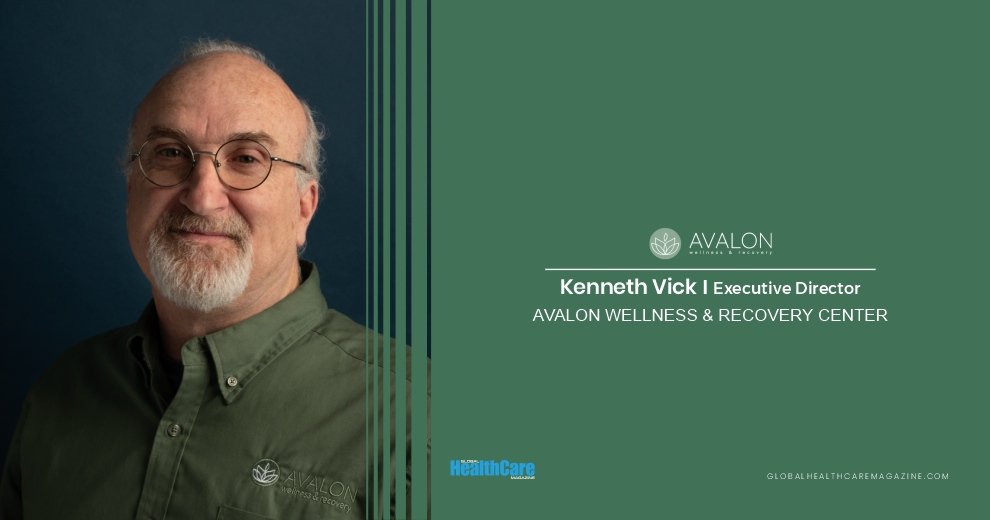
The paperwork on an executive director’s desk rarely tells you anything about the person who signs it. Compliance reports, payer contracts, workforce schedules. It is the kind of stack that could belong to almost any behavioral health organization in the country. But behind the desk at Avalon Wellness & Recovery Center in Lawrence, Kansas, sits a man for whom none of it is abstract. Every policy he writes, every program he builds, traces back to a version of himself that once needed exactly the kind of help he now spends his days trying to provide.
Kenneth Vick is the Executive Director of Avalon Wellness & Recovery Center, a role that asks him to hold operations, compliance, program development, workforce culture, and financial sustainability all at once, while never losing sight of the person the whole enterprise exists to serve. He is also the founder of Recovery Consulting, through which he mentors behavioral health professionals and helps organizations elsewhere strengthen their own teams and services. Two roles, one throughline: a life spent turning personal recovery into professional and organizational work that can help others.
A Journey That Did Not Start on Paper
Ask Kenneth how he arrived in behavioral health, and he does not point to a graduate program or a five-year plan. “My journey into behavioral health did not start in a classroom or on a career path I mapped out,” he says. “It started in my own recovery.”
That recovery is not a brief chapter. Kenneth has now been in recovery for more than 25 years, and he describes it plainly as the experience that changed the trajectory of his life. What followed was not a straight line into leadership, but a gradual accumulation of roles: peer support, counseling, training, program development, and eventually organizational leadership. Somewhere in that accumulation, something shifted. “That personal transformation became a calling,” he says. “I did not want anyone else to have to live the life I once lived if I could help it.”
It is a sentence worth sitting with, because it explains much of what follows in his career. Every program he has built, every professional he has trained, is rooted in the same conviction: recovery is not theoretical to him. He has lived it, and he wants that possibility made real and accessible for others.
What Drew Him to Avalon
Avalon Wellness & Recovery Center opened on April 14, 2025, under the leadership of David Hawley, Founder and CEO, and is headquartered in Lawrence, Kansas. When Kenneth describes what pulled him toward the organization, it was not a job title. It was a match between mission and personal history.
As Executive Director, his responsibilities span operations, compliance, program development, organizational culture, workforce development, quality, and financial sustainability, essentially, in his words, everything that has to work behind the scenes so recovery can happen in front of it.
“What drew me to Avalon was the opportunity to build something whose mission matched my own story,” he explains. “Hope, healing, and resilience are not slogans on a wall; they are the outcomes we organize around.” For him, leading Avalon is not simply employment. It is an extension of the work he has pursued through his personal recovery and professional life.
The Two Faces of Stigma
Ask any leader in behavioral health what stands in the way of progress, and stigma will come up quickly. Kenneth’s answer, though, has a layer to it that is easy to miss. He describes stigma as coming from two directions: the stigma society directs at people in active substance use or early recovery, and a quieter, internal stigma that exists within the recovery community itself, between different pathways, credentials, and philosophies of care.
Alongside stigma sits a workforce challenge that he attributes not to a single cause, but to outdated habits of leadership. “I believe part of that challenge comes from old-school beliefs about productivity and team building,” he says. Too often, he argues, productivity gets measured by how busy someone appears rather than by outcomes or the quality of the work itself. Supervision that focuses mainly on compliance and correction, he adds, will not build strong teams on its own.
Compensation matters, Kenneth is careful to note, but it is not the whole story. Culture, leadership, trust, professional growth, and whether people feel valued and connected to the mission all factor into it. His experience has taught him something specific: when organizations invest in people and build a culture worth being part of, recruitment and retention look entirely different.
Programs Built Like Recovery Itself
When Kenneth talks about program development, he uses recovery as the model. “I build programs the same way I approach recovery itself,” he says, “grounded in lived experience, informed by education and science, strengthened by evidence-based practice, and stripped of unnecessary barriers.”
He is careful not to set lived experience and clinical science against each other. He believes strongly in both, and in the responsibility to keep learning and following evidence rather than treating the two as competing philosophies. Accessibility, in his framework, is not something added after a program is designed. It has to be built in from the start.
Sustainability, for him, means something beyond simply running a good program. It requires a team, an infrastructure, and a culture sturdy enough to carry the mission forward without depending on any one individual, including himself.
Recovery Beyond the Clinic
Clinical care, in Kenneth’s view, is only one piece of a much larger picture. What actually sustains someone over the long term, he says, is often community, connection, stable housing, employment, practical resources, and relationships with people who understand the journey firsthand.
This is where peer support becomes central to how he thinks about care. “I strongly believe in peer support because lived experience creates connections that education alone cannot replicate,” he says. Clinical expertise and lived experience are not, in his framing, competitors. Bring them together intentionally, he argues, and the result is a stronger system of care altogether.
A Simple Filter for Complicated Decisions
Running an organization like Avalon means constantly balancing operational demands against the human mission behind them. Kenneth manages that tension with what sounds almost deceptively simple. “I use a simple filter for operational decisions,” he says. “Does this ultimately serve the person in front of us?”
Compliance, financial sustainability, quality, and program development are not, in his mind, separate from recovery-focused care. They are what keep the doors open long enough for that care to happen at all. His job, as he sees it, is to build the infrastructure well enough that clinical and peer staff can stay focused on people, rather than being buried under systems and paperwork.
Partnerships That Close the Gaps
No single organization, Kenneth insists, can meet every need a person in recovery has, and Avalon is no exception. Healthcare providers, social services, and community organizations each hold a different piece of the puzzle, whether that is medical care, housing, employment, or benefits navigation.
“Strong partnerships mean a person does not fall through the cracks between systems,” he says. Building those relationships has taken years, he notes, because recovery does not happen in isolation, and the organizations supporting it should not operate in isolation either.
Recovery Consulting and the Culture He Builds
Outside of Avalon, Kenneth mentors behavioral health professionals and helps organizations strengthen their teams through Recovery Consulting. He has also codified his approach to leadership and care into two authored books: Recovery Leadership: Building Teams for Better Outcomes and The Essence of Healthy Relationships, ensuring his practical frameworks are accessible to those he cannot mentor directly. His guiding belief here is unambiguous: “Culture is everything.”
He notes that he has always had people wanting and waiting to work on his teams, and he does not consider that an accident. It comes, he says, from leading with transparency, investing in people’s growth, recognizing their value, and creating an environment where staff feels connected to the mission. The practice he brings to every organization he mentors mirrors what he applies at Avalon: hire for heart and character, train relentlessly, and build a culture people do not want to leave. Workforce instability, in his assessment, remains one of the biggest blind spots in behavioral health leadership today, and it is almost always a culture problem rather than a pay problem alone.
Meeting People Exactly Where They Are
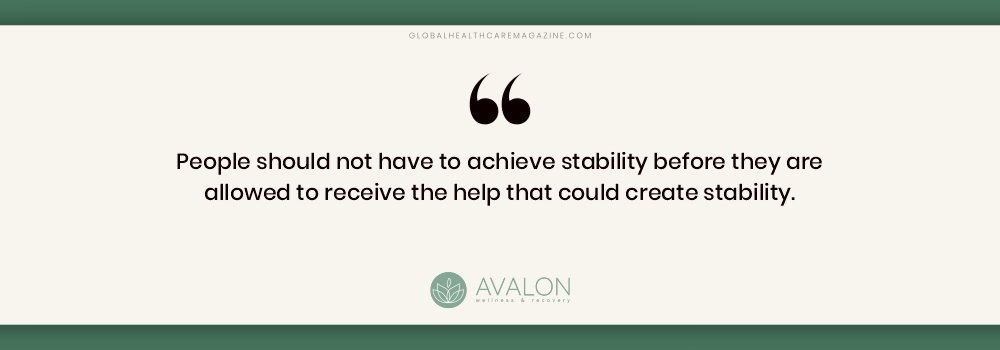
For populations facing homelessness or barriers to substance use treatment, Kenneth’s approach begins with a single principle: meeting people exactly where they are, without conditions attached to that first point of contact. People should not have to achieve stability before being allowed to receive the help that could create that stability in the first place.
He points to specific, practical barriers that often go unexamined: complicated paperwork, transportation, cost, rigid program structures, and expectations that can unintentionally exclude the very people organizations are trying to serve. Once again, peer support surfaces as a critical tool. Trusted relationships, he says, can open a door where traditional systems have struggled to engage someone at all.
What the Numbers Say
Pressed on measurable impact, Kenneth does not reach for vague language. At Avalon, the organization grew from zero clients to serving dozens of individuals at a time, while simultaneously developing the operational, clinical, workforce, payer, and compliance infrastructure necessary to support that growth. Along the way, Avalon achieved Joint Commission accreditation and expanded its relationships with insurers and community partners.
Through Recovery Consulting, he has mentored behavioral health leaders and helped other organizations strengthen services, compliance, workforce development, and culture. But if you ask him which accomplishment he values most, it is not a number at all. It is consistently building teams that people want to join and remain part of. In behavioral health, he says, retention and organizational culture are themselves meaningful measures of leadership.
Where the Field Is Headed
Looking forward, Kenneth sees the field moving toward a more integrated understanding of recovery, one that brings together science, evidence-based treatment, lived experience, and peer support rather than treating them as competing approaches. As the field learns more about substance use disorders, trauma, mental health, medications, and what actually helps people sustain recovery, he expects systems of care to evolve alongside that knowledge, with peer support continuing to expand as the evidence supporting its effectiveness grows.
He also expects, and hopes for, greater attention paid to the behavioral health workforce itself. “We cannot continue building modern recovery systems around outdated ideas of productivity, supervision, and team development,” he says. Better outcomes for the people served, in his view, require healthier organizations for the people doing the work.
A Vision Without Unnecessary Barriers
Asked to describe his vision for the future, Kenneth returns to the same values that have shaped his entire career: a behavioral health system where people can access help without unnecessary barriers, where lived experience is valued alongside professional education, and where organizations recognize that healthy cultures produce better outcomes for employees and the people they serve.
At Avalon, he wants to keep expanding the ways the center supports recovery beyond treatment itself, and to deepen its connection to the surrounding community. More broadly, his leadership carries a message shaped by both his personal recovery and his professional life: people can change, organizations can change, and recovery should be possible regardless of where someone begins.
Quotes
Also Read: The Most Impactful Behavioral Health & Recovery Leaders to Watch in 2026