Picture a single clinic day in western or upstate New York. A newly diagnosed breast cancer patient walks through the door before nine. A myeloma case follows shortly after. Then a pancreatic cancer. Then, before lunch, something rarer still: a sarcoma. Four diseases, four bodies of literature, four sets of guidelines, and one physician expected to deliver the current standard of care across all of them.
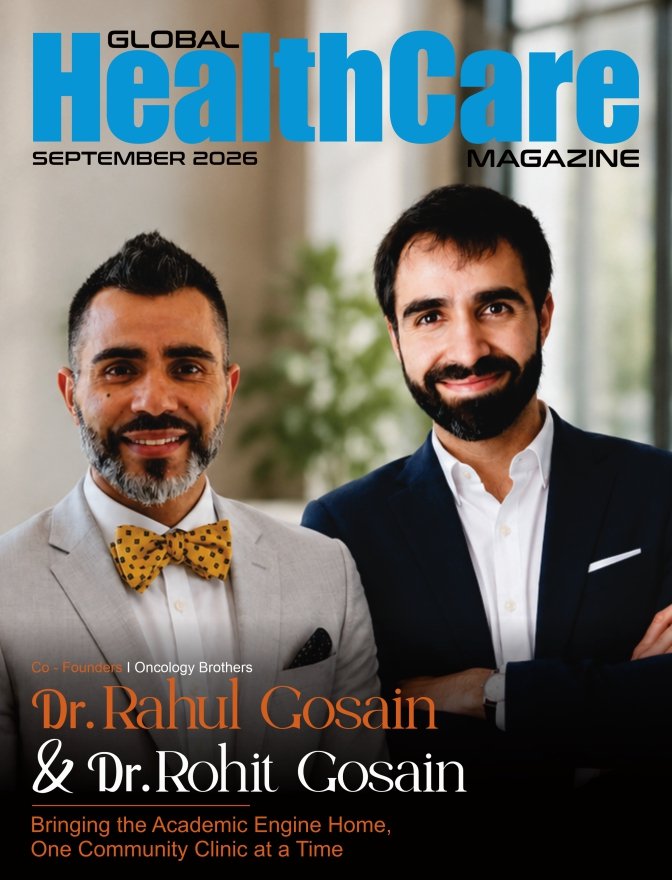
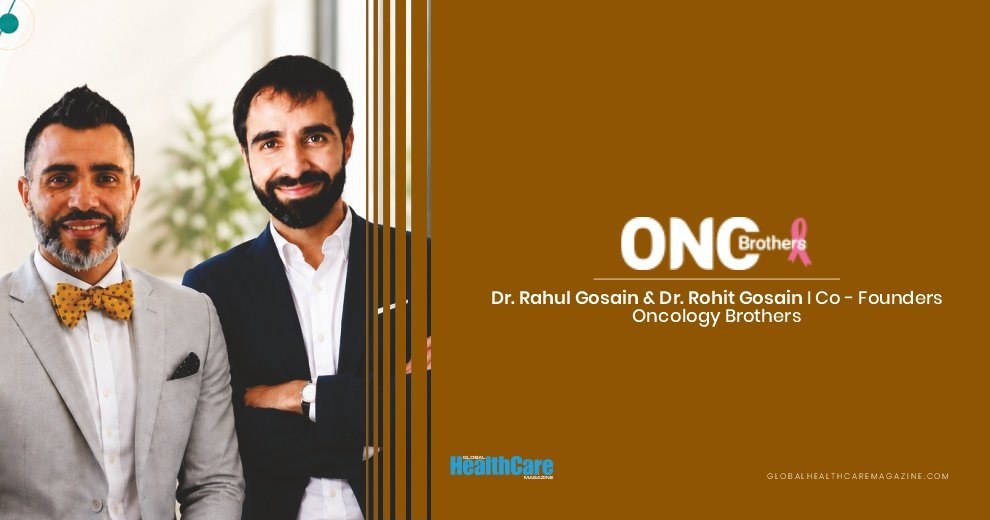
This is the ordinary texture of community oncology, and it is the world that shaped two brothers, Dr. Rahul Gosain, MD, MBA, and Dr. Rohit Gosain, MD, both medical hematologist-oncologists who trained in academic centers and chose, deliberately, to practice in the community instead.
Dr. Rahul Gosain currently serves as Medical Director of the Wilmot Cancer Center at the Webster location, part of the University of Rochester Medicine network. Dr. Rohit Gosain serves as Medical Director of the Roswell Park Care Network at the Southtowns location, within Roswell Park Comprehensive Cancer Center PC in Orchard Park, New York. Together, they are better known by a name that has traveled well beyond either clinic: the Oncology Brothers, co-hosts of Oncology Brothers: Practice-Changing Cancer Discussions, a podcast and live education platform built to bridge the gap between academic research and community practice, bringing specialized knowledge closer to where patients receive care.
The Distance Between Fellowship and Monday Morning
“In fellowship you are surrounded by disease-specific experts, subspecialty tumor boards, and a deep trial portfolio,” Dr. Rahul Gosain explains. “Then you walk into a community clinic on a Monday and see a newly diagnosed breast cancer, a myeloma, a pancreatic cancer, and a rare sarcoma before lunch. The expectation is identical: deliver the current standard of care, but the surrounding infrastructure is not.”
Layered onto that gap is a field that will not sit still. The brothers point to a number that frames everything else they do: oncology now sees roughly 40 to 50 new drug approvals and new indications every single year. No single clinician, however diligent, can read all of it and still run a full clinic.
The brothers describe this not as a knowledge gap among community oncologists, but as a context gap. Oncology Brothers, the brothers say, began as the conversation they themselves needed, the disease expert telling them plainly what had changed and what to do about it on Monday morning.
Three Companions of a Diagnosis
Ask either brother what a patient actually carries into the exam room, and the answer is consistent. Three burdens surface almost daily. The first is access, meaning geography, transportation, and time away from work and family. As Dr. Rahul Gosain puts it, a patient should not have to drive two hours each way for a therapy that could be delivered safely fifteen minutes from home. The second is financial toxicity, which has become, in their words, as much a part of the treatment plan as the regimen itself. The third is information overload, families arriving having read a dozen conflicting things online, unable to separate hope from hype.
Their answer has been to build comprehensive services locally, so that treatment, supportive and palliative care, survivorship, genetics, financial navigation, and clinical trials all live inside a patient’s own community rather than hours down the road. The brothers are quick to credit the people who carry the heaviest share of this work: navigators, nurses, pharmacists, social workers, and advanced practice providers. What remains protected, deliberately, is time in the exam room itself, time spent translating what is known, what is not, and why a particular path is being recommended, keeping that patient at the center of all this.
An Academic Engine, Delivered Locally
Getting current evidence into a community clinic, the brothers insist, has to be built into the system rather than left to chance. They describe four mechanisms working together. Standardized pathways and treatment algorithms ensure care does not shift depending on who happens to be on service that day. Comprehensive biomarker and molecular testing is built into the workflow from the start, since so much of modern oncology now hinges on getting that result before the first treatment decision rather than after the second one. Tumor boards where other team members get to weigh in put community teams at the same virtual table as academic subspecialists. And clinical trials are pushed out to community sites instead of being concentrated at a single main campus.
The network models the brothers work within, Roswell Park and Wilmot, are designed around the same principle: extending academic expertise into local care. On top of that structure sits their own continuing-education habit, the one that eventually became a podcast. “When we sit down with the investigator who actually ran the trial and ask how they are sequencing a therapy in their own clinic, we are asking for our patients first,” Dr. Rohit Gosain says. “Sharing it with everyone else is the bonus.”
Webster: An Operational Achievement, Not a Slogan
Dr. Rahul Gosain’s leadership at the Wilmot Cancer Institute’s Webster location has sharpened one conviction above all. “Comprehensive care close to home” is not a phrase for a brochure; it is an operational achievement. It requires a site where access to treatment, infusion capacity, and trial access are genuinely present, so that the only reasons a patient would need to travel to the main campus are transplant, cellular therapy, or highly specialized surgery, not a routine cycle of treatment.
It has also reshaped how Dr. Rahul Gosain thinks about the team around him. A community site, he notes, succeeds or fails on the strength of its nurses, pharmacists, navigators, and advanced practice providers, and on whether the physicians there feel connected to the wider academic enterprise rather than isolated from it. Much of medical direction, in his telling, comes down to removing friction, shortening the distance between a question and an expert answer, between a diagnosis and a treatment start.
Southtowns: A Generalist Held to a Subspecialist’s Standard
Down the road, Dr. Rohit Gosain’s practice at the Roswell Park Care Network’s Southtowns location demands a different kind of discipline. On a single clinic day, he might manage a metastatic lung cancer on a targeted agent, a myeloma patient being considered for a bispecific therapy, an early breast cancer weighing genomic risk, and a non-malignant hematology consult. Breadth, he says plainly, is not optional in the community. It is the job.
What makes that workable is what he calls the connective tissue of a comprehensive cancer center: shared pathways, disease-specific colleagues who are one message away, and again, tumor boards that reach beyond the main campus. That breadth, Dr. Rohit Gosain adds, is precisely why he and his brother understand how hard it is to stay current across every disease they treat, and it is a large part of why the podcast exists at all.
The Gap That Had Nothing to Do With Information
When the brothers describe the origin of Oncology Brothers, they are careful to note what the problem never was. The information existed, published in journals, presented at ASCO, ASH, San Antonio, and ESMO, summarized in guidelines. The real obstacle was the last mile. A community oncologist finishing clinic at seven in the evening is not going to read four hundred abstracts, and the traditional formats – hour-long lectures, dense review articles, conference coverage written for specialists – assume a kind of time that practicing clinicians simply do not have.
So the brothers designed for the reality instead of the ideal: bite-sized conversations, typically twenty minutes, short enough to finish on a commute or between clinic sessions. Practicing clinicians asking practical questions. And always the same closing frame, one they return to in nearly every episode: what does this change for the patient in front of me tomorrow?
From the Data to the Decision
Translating a new FDA approval into something usable at the bedside, the brothers say, starts in the clinic and works backward. The useful questions are rarely about a hazard ratio in isolation. They are about who the right patient is, where a therapy sits in the treatment sequence, what it displaces, what toxicity to watch on day one or day ten, and what needs to be in place before the order is even written.
Several formats carry that work. Treatment algorithms map where a new agent fits within a disease. Conference highlights distill a week of data into the handful of items likely to change practice. Case-based discussions place a real patient in front of an expert and ask what that expert would actually do. FDA approval episodes move quickly to dosing, monitoring, and pitfalls. Their active clinical practice remains the final quality filter: if an answer would not help them on Monday, it does not make the episode.
Dissolving Geography
Podcasts and digital education, in the brothers’ view, dissolve a barrier that used to be permanent: geography, which historically determined who had access to expertise. A physician in a rural practice now has the same access to a world-renowned myeloma or lung cancer expert as a colleague down the hall from that expert’s own office, a genuine democratization of knowledge that, as Dr. Rohit Gosain notes, did not exist a decade ago.
That exchange runs in both directions. Academic investigators, the brothers say, learn a great deal from community realities – what is feasible without an inpatient service on site, how patients actually tolerate a regimen outside a trial population, where a guideline meets a real-world constraint. And the audience for the podcast extends well past physicians, reaching nurses, pharmacists, advanced practice providers, trainees, and industry colleagues, reflecting the team-based nature of modern cancer care itself.
Two Brothers, Zero Politics
Ask what being siblings adds to the work, and both answer without hesitation: complete candor, with none of the diplomacy that might otherwise soften a disagreement. If one of them finds an answer unconvincing or a piece of data overstated, he says so on the spot, on air, in front of the guest. Listeners, they say, tell them this candor is the most valuable part of the show, because it is often the question a listener was already thinking but hesitated to ask aloud.
Practicing in two different community settings, within two different academic networks, gives them genuinely different vantage points on the same problem, and cases get texted back and forth between them at hours neither would recommend. There is also a rhythm neither can quite explain, built from decades of finishing each other’s sentences, which is part of why the conversations feel like conversations rather than lectures, and why guests tend to relax and speak candidly.
What Comes Next for Community Oncology
Looking forward, the brothers see several shifts converging. On the treatment side, cellular therapies and bispecific antibodies, once confined to tertiary centers, are increasingly deliverable closer to home with the right protocols, training, and support. Antibody–drug conjugates continue expanding across tumor types, and ctDNA and minimal residual disease testing are moving from simply describing outcomes to actively guiding treatment decisions.
On the delivery side, the pressure is toward decentralization, more care delivered locally, supported by remote expertise, with real attention to cost and value. Artificial intelligence, they believe, will eventually ease documentation burden and support clinical decisions, though both are careful to frame its role narrowly: it will augment judgment, not replace it. On education, the shift is from scheduled to on-demand, from passive to practical. Clinicians want the answer at the moment of the decision, and whoever builds education around that exact moment, the brothers argue, will have the greatest impact.
The Principles Underneath It All
Balancing clinical work, patient care, education, and medical leadership rests, for the brothers, on a small set of fixed principles. The patient is the organizing question, and every operational decision – staffing, scheduling, pathway design, and service expansion gets tested against whether it makes care better or easier for the person receiving it. They insist on staying clinical themselves, bringing the same challenges to the podcast that they face day to day, believing that leadership disconnected from an active clinic loses credibility quickly.
Intellectual honesty matters just as much: when they do not know something, they say so, to patients, to their teams, and on air. The final principle is accountability between the brothers themselves, who see their partnership as a built-in check on their decisions and assumptions.
The Numbers Behind the Mission
Since launching in 2022, Oncology Brothers has produced close to 300 episodes, publishing twice weekly and reaching an audience across the globe. The platform has surpassed 1 million downloads and plays, with 50,000 subscribers spread across social media and podcast platforms. Guests have come from institutions including Roswell Park, Wilmot Cancer Institute, Mayo Clinic, Memorial Sloan Kettering, MD Anderson, Dana-Farber, Mount Sinai, and others around the world, and the brothers have produced more than 20 live conference programs spanning multiple disease states.
Clinically, their teams care for thousands of patients annually across their two community sites, many of whom would otherwise have traveled considerably farther for the same standard of care. Yet the milestone the brothers say they value most resists a number entirely: hearing from a physician who changed a treatment decision because of a conversation the podcast published.
Advice for the Next Generation
For emerging oncologists hoping to shape not just patient care but how oncology knowledge reaches communities, the brothers offer a sequence rather than a slogan. Be excellent clinically before attempting anything else, since every ounce of credibility in their education work traces back to being in clinic every week. Find the gap that genuinely frustrates you rather than chasing a brand, since work rooted in a real need sustains itself once the novelty wears off.
Start smaller than feels right and stay consistent, since their own first episodes were rough, and consistency, they say, compounds while perfection can become a barrier to starting. Do not underestimate community practice, where the overwhelming majority of cancer patients are actually treated, since improving that setting may be the highest-leverage contribution available to the field. And find a collaborator. Theirs happened to be a brother, but the principle, they say, holds regardless: the work is better, and more sustainable, alongside someone else.
Quotes