In the quiet, highly controlled atmosphere of a modern biopharmaceutical laboratory, a single drug candidate can spend years oscillating between computer simulations and laboratory glass. The fundamental challenge of modern drug discovery is rarely a lack of powerful molecules; it is the stubborn, physical reality of getting those molecules across biological barriers into the human bloodstream. Bridging that physical divide requires a rare blend of computational mechanics, chemical ingenuity, and deep physiological insight.
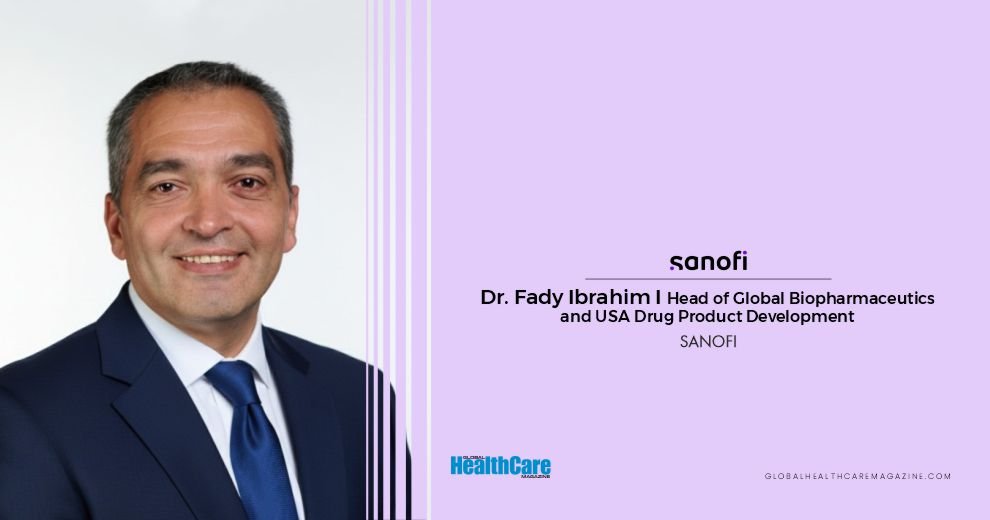
At Sanofi, this crucial discipline is directed by a recognized authority in the field. Serving as Head of Drug Product Development and Biopharmaceutics at Sanofi since May 2024, a role Dr. Fady Ibrahim has held for over two years and five months, in Cambridge, Massachusetts, he leads biopharmaceutics and formulation activities in Sanofi USA, developing drug-product strategies to support the transition of medicines into human studies and subsequent market launch. His career, spanning more than fifteen years, has been defined by a relentless drive to translate complex molecules into commercial therapeutics.
From Egypt to Houston and Vancouver
The scientific trajectory of Dr. Ibrahim began at Tanta University in Egypt, where, from January 2000 to July 2007, he spent seven years and six months as a Teaching Assistant in the College of Pharmacy. During this period, he developed tablet and capsule formulations for hospital use, collaborated with the local Bioavailability Center on human pharmacokinetic studies for drug licensing, and taught courses in pharmaceutics and industrial pharmacy.
In August 2007, Dr. Ibrahim moved to the United States to pursue his Ph.D. at the University of Houston College of Pharmacy. Over three years and nine months, ending in May 2011, his doctoral research focused on the formulation and pharmacokinetic evaluation of Lazaroid U-74389G, a 21-aminosteroid with radioprotective and antiproliferative potential.
He engineered cationic nanosuspensions, microspheres, and liposomal formulations, validating analytical methods using HPLC and UPLC/MS/MS. Utilizing NONMEM, WinNonlin, and ADAPT II, he constructed complex pharmacokinetic models, with his research examining the ability of different formulations to alter tissue exposure and drug disposition. Concurrently, from August 2009 to May 2011, he worked as a Research Assistant, mastering jugular vein cannulation and microdialysis techniques.
Following his doctorate, Dr. Ibrahim completed a two-year and four-month Postdoctoral Fellowship at the University of British Columbia from May 2011 to September 2013. His work spanned Phase II clinical trial population kinetics of doxorubicin in liver cancer patients, novel lanthanide compounds in osteoporosis models, and the intestinal absorption of cholesterol and vitamins. Notably, he characterized the intraluminal processing of lipophilic drugs using in vitro lipolysis models, evaluating oral lipid-based formulations of Amphotericin B in animal models of disseminated candidiasis.
Seven Years of Impact at Pfizer
In October 2013, Dr. Ibrahim brought his expertise to Pfizer in Groton, Connecticut, where he spent five years and one month as a Principal Scientist. As a biopharmaceutics project leader for discovery and clinical programs, he designed immediate-release and modified-release oral formulations, constructed absorption models, and authored critical biowaiver justification documents submitted to the FDA and EMA.
He built custom in-house tools to identify optimal active pharmaceutical ingredient salts and polymorphs, coordinating multidisciplinary PK, toxicology, and clinical strategies. His Pfizer work also contributed to patented solid-dosage-form technology, including a U.S. patent for palbociclib formulations.
By November 2018, he was promoted to Senior Principal Scientist, managing Pfizer’s Translational Biopharmaceutics group for two years and four months until March 2021. In this managerial role, he linked in vitro characterization with state-of-the-art in silico tools like GastroPlus® and Simcyp® to predict human bio-performance, strengthening the use of quantitative modeling to inform pharmaceutical development decisions.
Scaling Capabilities and AI Innovation at Sanofi
Dr. Ibrahim joined Sanofi in March 2021 as Head of Early Development Biopharmacy, serving three years and two months in that role while building and scaling biopharmaceutics capabilities across the organization. His promotion in May 2024 to Head of Drug Product Development and Biopharmaceutics expanded his mandate across Sanofi USA’s drug-product development activities.
At Sanofi, he has built and scaled global biopharmaceutics capabilities, pioneering the Biopharm Risk Evaluation (BRE) workflow to identify and de-risk development candidates early. He has spearheaded artificial intelligence initiatives and automated workflows, integrating computational tools such as gPROMS, GastroPlus®, and Simcyp® to enable data-driven formulation selection. His focus on complex platforms, including spray-dried dispersions, lipid-based systems, and modified-release technologies, supports the transition of molecules from preclinical development toward clinical and commercial applications.
Across his career, Dr. Ibrahim has maintained an extensive track record of peer-reviewed publications, patents, and regulatory submissions. “The future of drug development,” Dr. Ibrahim frequently asserts, “depends on our ability to accurately predict biological fate inside a computer before we ever mix a batch in the plant.” As 2026 unfolds, his integration of biopharmaceutics and predictive artificial intelligence continues to advance the pursuit of speed, precision, and patient-focused drug development.