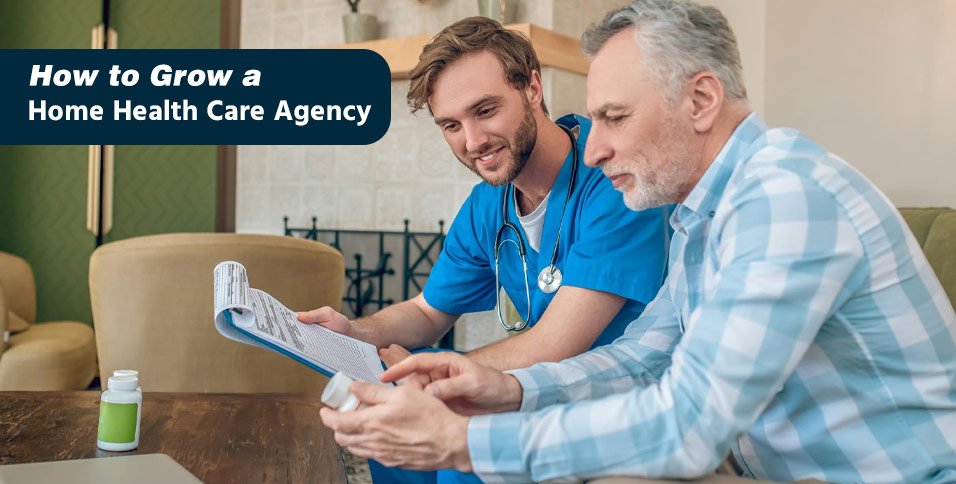
An agency may receive more inquiries than its team can confidently cover. Before accepting another client, it needs caregivers who are prepared for the work and available for the required visits.
To grow a home health care agency, define a service focus your team can deliver, prepare caregivers for their assignments, and expand referrals as staffing allows.
A repeatable onboarding process helps you plan that expansion.
The Bureau of Labor Statistics projects 18 percent employment growth for home health and personal care aides from 2025 to 2035.
That occupation-wide projection gives context for workforce planning; it doesn’t predict growth for any individual agency.
Key takeaways
- Match growth to capacity. Accept a new client only when cleared caregivers and backup coverage are available for the visits involved.
- Verify readiness. Review course completion and required paperwork, then confirm that caregivers can perform their assigned duties.
- Track staffing delays and early retention. Monitor declined referrals, time to first assignment, and 90-day retention.
Define the services your team can reliably deliver
Start by identifying which services your staff are qualified and available to provide.
Choose a clear service focus. Nonmedical personal care and skilled home health involve different duties and requirements.
BLS describes personal care aides as generally limited to nonmedical services, while home health aides may perform permitted health-related duties under professional supervision.
Medicare home health eligibility includes a need for part-time or intermittent skilled services and homebound status.
Pick a service area and client population that match your staff’s qualifications, and confirm the applicable licensing requirements with your state authority before marketing those services.
Calculate usable capacity. Count a caregiver’s available hours only after checking clearance, travel time, and schedule fit.
On a planning worksheet, list each caregiver’s weekly availability, relevant competencies, realistic travel time, supervising staff member, and backup coverage if they call out.
Use those details to identify the hours you can reliably cover before committing to new visits.
Budget for preparation. Include training wages, supervisor observation time, and schedule coverage during orientation in the growth budget.
Under the general federal rule for covered employees, training attendance can be excluded from working time only when all four conditions are met: it occurs outside regular hours, attendance is genuinely voluntary, the content is not directly related to the job, and no productive work is performed.
Budget for paid onboarding, including mobile coursework, and have payroll confirm the applicable federal and state requirements.
Put caregiver onboarding best practices into a repeatable process
Give each onboarding step a named owner, a deadline, and a completion record, as Viventium recommends in its August 2026 guidance for post-acute and long-term care.
The table below offers a suggested process to adapt to your agency’s roles and requirements.
| Stage | Action | Evidence of readiness |
|---|---|---|
| Pre-start | Confirm the start date, send the schedule and expectations, and complete applicable screening and credential checks | Screening and credential results reviewed and filed |
| Role-specific learning | Assign courses for the role plus agency procedures on documentation, communication, and emergencies | Completion records reviewed by the step owner |
| Supervised practice | Observe the caregiver performing practice tasks and, where required, complete a formal competency evaluation | Required competency evaluation results and dated supervisor sign-off filed |
| First-assignment preparation | Walk through the care plan, introduce the client contact, and confirm who to call with questions | Caregiver can open the plan and reach a supervisor |
| Continuing check-ins | Consider check-ins at the end of week one, then around days 30, 60, and 90 | Notes from each check-in with someone assigned to resolve each open issue |
Keep learning assignments tied to the caregiver’s role. CareAcademy Training, offered on Activated Insights’ website, is one commercial option for assigning caregiver training courses and tracking completion.
Before choosing a provider, check course coverage for your staff’s roles and state requirements. Confirm those requirements with the appropriate licensing or accrediting authority.
At Medicare-certified home health agencies, the home health aide condition of participation requires successful competency evaluation before aides furnish the services covered by the rule.
A training platform that tracks course completion can support that preparation. Review those records alongside observed practice and any required competency evaluation before clearing a caregiver for assignments.
Agencies outside that rule should confirm their applicable requirements and have a qualified supervisor verify readiness.
Before the first visit, have caregivers practice opening the care plan, documenting a visit, and contacting a supervisor outside office hours. Resolve any access or communication problems before the caregiver works independently.
Adapt the suggested check-in schedule to your agency and new hires. Sage’s caregiver onboarding toolkit, written for senior living, recommends asking new hires what worked and updating the process as themes emerge.
Apply that management principle by asking caregivers what was confusing during their first month.
Use recurring feedback to revise instructions or add practice where caregivers need it. A hands-on caregiver onboarding approach can complement the readiness checklist.
Expand referrals at the pace your team can sustain
Plan referral outreach around confirmed staffing availability, including backup coverage.
Make your capabilities clear. Publish an accurate summary of your service area, services, and availability.
Share the same summary with local referral contacts, such as physician offices and discharge planners.
Medicare’s coverage guidance describes providers referring eligible patients to home health agencies.
Give those contacts enough detail to identify a suitable match, and name a single intake contact with a response time your team can keep.
Track what happens after intake. Count referrals declined because suitable staff weren’t available. Measure the time from an accepted job offer to the caregiver’s first appropriately cleared assignment.
For 90-day retention, divide the number of hires still employed at day 90 by all hires whose full 90-day period has elapsed. Leave newer hires out until they reach that point.
Read these measures alongside check-in feedback. If a long offer-to-assignment gap coincides with comments about unclear expectations, review the onboarding instructions and handoffs.
Course completion dates from your training platform can help you understand that timeline.
Track required clearance and supervisor sign-off separately, and use the actual first-assignment date to calculate the measure.
Improve one bottleneck. Before increasing referral outreach, review your last few hires.
Find the step that delayed readiness most often, whether screening turnaround, scheduled observation time, or an unanswered question in week one. Assign someone to resolve that delay before expanding outreach.