The American Association of Orthodontists reports that adult orthodontic treatment has increased by over 40% in the past decade, with one in four orthodontic patients now being adults. This surge reflects more than just aesthetic trends — it represents a fundamental shift in how we understand oral health across the lifespan. Unlike adolescent orthodontics, which primarily capitalizes on natural growth patterns, adult treatment requires navigating fully mature bone structures, existing dental work, and complex lifestyle considerations.
For adults considering braces, the stakes extend beyond straighter teeth. Misaligned bites can accelerate tooth wear, contribute to jaw pain, and complicate oral hygiene in ways that compound over decades. As digital orthodontics and new bracket technologies make treatment more discreet and efficient than ever before, understanding the unique biological and practical realities of adult orthodontics becomes essential for making informed decisions about long-term oral health.
How Do Adult Braces Work and Differ From Teen Treatment?
The fundamental process of moving teeth remains consistent across age groups — controlled pressure gradually shifts teeth through the surrounding bone. However, adult orthodontics operates within a dramatically different biological environment than teenage treatment. Adult bones have completed their growth phase, meaning the periodontal ligament and surrounding alveolar bone are denser and less responsive to orthodontic forces.
This biological reality translates to longer treatment times for adults. Where a teenager might achieve similar movement in 12-18 months, adults typically require 18-36 months for comparable results. The bone remodeling process that allows teeth to shift occurs more slowly in mature tissues, requiring gentler, more sustained pressure to avoid complications like root resorption or excessive discomfort.
Adult orthodontics also faces challenges rarely encountered in teenage treatment. Existing dental work — crowns, bridges, implants, or previous orthodontic treatment — can complicate movement patterns and require specialized approaches. Many adults have experienced decades of wear patterns that have altered their natural bite, meaning orthodontic treatment must address both alignment issues and functional restoration.
Perhaps most significantly, adults lack the growth spurts that orthodontists can harness in younger patients. Techniques that might expand the jaw or redirect facial development in teenagers simply aren’t options for adults, requiring more creative approaches to address crowding or bite discrepancies. This often means adult treatment plans must prioritize the most impactful changes rather than pursuing comprehensive facial restructuring.
The psychological component also differs substantially. While teenagers often view braces as a temporary inconvenience among peers facing similar experiences, adults must navigate professional environments, social situations, and established self-image while wearing orthodontic appliances. This dynamic influences both treatment choice and compliance throughout the process.
What Are the Common Types of Adult Braces and How to Choose?
The landscape of adult orthodontic options has expanded significantly beyond traditional metal brackets, with each approach offering distinct advantages for different lifestyle and treatment needs. The choice typically balances three primary factors: treatment effectiveness, aesthetic considerations, and practical maintenance requirements.
Clear aligners have captured significant market share among adults, offering near-invisible correction for mild to moderate alignment issues. These removable trays work best for spacing problems, mild crowding, and minor bite irregularities, but struggle with complex rotations or significant vertical movements. The removable nature appeals to adults who prioritize dietary freedom and easier oral hygiene, though this same feature requires exceptional compliance — aligners must be worn 22 hours daily to achieve predicted results.
Self-ligating braces represent a technological advancement that eliminates the need for elastic ties, reducing friction and potentially shortening treatment times. These systems often appeal to adults seeking efficiency, as they typically require fewer adjustment appointments and may cause less discomfort during initial movement phases. The reduced friction can be particularly beneficial for adults whose slower bone remodeling makes every efficiency gain valuable.
Treatment complexity often dictates the choice more than personal preference. Severe crowding, significant bite discrepancies, or the need to move roots rather than just crowns typically requires the precision and control that only traditional braces can provide. An experienced orthodontist for adults can evaluate specific movement requirements and recommend the most appropriate system for achieving lasting results within reasonable timeframes.
What Are the Characteristics of Metal Braces for Adults?
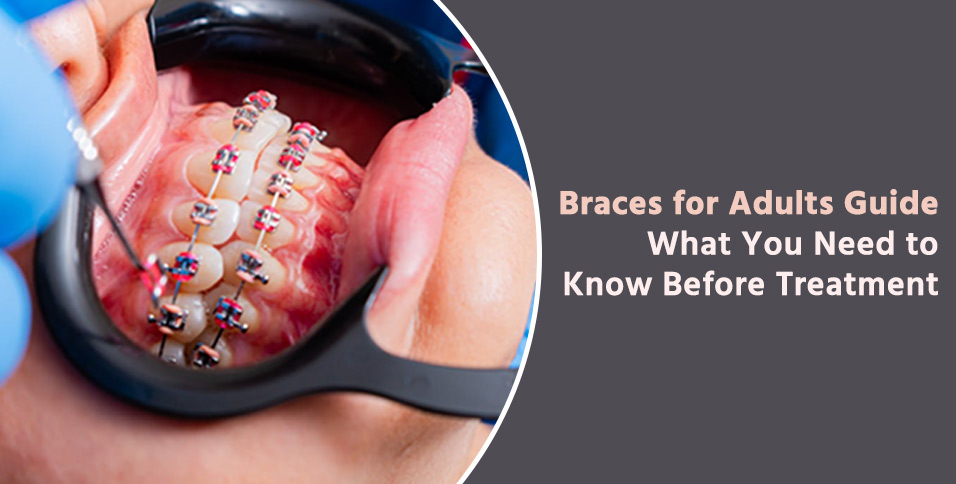
Traditional metal braces remain the most versatile and predictable option for complex adult orthodontic cases. Modern metal brackets are significantly smaller and more comfortable than their predecessors, with enhanced designs that reduce irritation and improve oral hygiene access. The stainless steel construction provides exceptional durability — crucial for adults whose treatment timelines extend longer than typical teenage cases.
The primary advantage of metal braces lies in their mechanical control. Complex movements like root torquing, precise rotations, or closing significant gaps require the three-dimensional control that only fixed appliances can provide. For adults with severe crowding, crossbites, or previous orthodontic relapse, metal braces often represent the only option capable of achieving comprehensive correction.
Cost considerations also favor traditional metal braces, typically running $1,000-$2,000 less than ceramic or lingual alternatives. For adults facing extended treatment times, this cost efficiency can be substantial. Additionally, metal brackets resist staining and damage better than ceramic options, important for adults whose dietary habits and lifestyle may challenge more delicate materials throughout lengthy treatment periods.
How Do Ceramic Braces Compare for Adult Patients?
Ceramic braces offer a compromise between the control of traditional braces and the aesthetic appeal crucial for many working adults. These tooth-colored brackets blend with natural enamel, making them significantly less noticeable than metal alternatives while maintaining the mechanical advantages of fixed appliances.
The trade-offs become apparent in both durability and maintenance. Ceramic brackets are more prone to chipping or fracturing, particularly problematic for adults who may grind their teeth or have harder bite patterns developed over decades. The larger size required for structural integrity can also make oral hygiene more challenging, creating additional surfaces where plaque and staining can accumulate.
Treatment duration may extend slightly with ceramic systems, as the material properties sometimes require gentler forces to prevent bracket failure. For adults whose primary concern is professional appearance during treatment, this modest time extension often proves acceptable. However, the archwires connecting ceramic brackets are typically still metal, limiting the overall aesthetic improvement compared to fully transparent aligner systems.
What Lifestyle and Oral Health Changes Are Needed With Adult Braces?
Adult orthodontic treatment demands significant lifestyle modifications that extend far beyond teenage dietary restrictions. The mature oral environment presents unique challenges that require proactive management throughout the treatment process.
Dietary adjustments prove more complex for adults than adolescents, as established eating patterns and social obligations often conflict with orthodontic requirements. Hard, sticky, or crunchy foods can damage brackets or bend wires, but adults must navigate business lunches, social dinners, and family meals where dietary restrictions feel more conspicuous. Coffee, tea, and red wine — staples of many adult diets — can stain ceramic brackets or clear aligners, requiring either substitution or enhanced cleaning protocols.
Oral hygiene protocols become exponentially more critical for adults, whose longer treatment times and potentially compromised gum health create increased risks for complications. Adults are more susceptible to gum recession and periodontal disease, conditions that orthodontic appliances can exacerbate without meticulous care. Electric toothbrushes, water flossers, and specialized cleaning tools transition from optional to essential for maintaining healthy tissues throughout treatment.
The pain management experience differs significantly from teenage orthodontics. Adults often experience more intense discomfort following adjustments, as mature bone responds more slowly to orthodontic forces. Over-the-counter pain relievers become routine necessities, and many adults require several days of modified eating following each appointment. Sleep patterns may be disrupted during initial adjustment periods, affecting work performance and daily functioning.
Professional and social considerations create unique pressures for adult patients. Speaking patterns may temporarily change with certain appliances, affecting presentations, client interactions, or social confidence. Many adults report feeling self-conscious during the initial months, requiring psychological adjustment strategies that teenagers typically don’t need. The extended treatment timeline means these social adaptations must be sustainable across multiple years rather than the shorter periods typical of adolescent treatment.
What Are the Long-Term Benefits and Potential Risks of Adult Braces?
The long-term dental health benefits of adult orthodontic treatment extend well beyond cosmetic improvements, addressing functional issues that can prevent serious complications decades later. Proper alignment dramatically improves cleaning access, reducing the risk of periodontal disease and tooth loss that disproportionately affect older adults. Corrected bite patterns distribute chewing forces more evenly, preventing excessive wear on specific teeth that might otherwise require crowns or replacement.
Facial aesthetics can improve substantially with adult treatment, though expectations must remain realistic given the completed facial growth. Proper alignment can enhance lip support, improve smile symmetry, and address minor facial asymmetries caused by dental compensation patterns. These changes often appear subtle but create meaningful improvements in overall appearance and self-confidence.
The bite correction achieved through adult orthodontics frequently alleviates temporomandibular joint (TMJ) symptoms that have developed over years of improper alignment. Many adults report reduced jaw pain, decreased headaches, and improved chewing function following treatment. However, TMJ disorders have multiple causes, and orthodontic treatment alone may not resolve all symptoms.
Potential risks require careful consideration, particularly for adults with existing dental conditions. Root resorption — the shortening of tooth roots during movement — occurs more frequently in adults and can compromise long-term tooth stability. Adults with previous gum recession face increased risks of further tissue loss during treatment. Existing restorations may require replacement if orthodontic movement exposes margins or creates poor fit.
The relapse potential poses a significant concern for adult patients, as mature tissues have less adaptive capacity than younger bone structures. Lifelong retainer wear becomes essential — not optional — for maintaining results. Adults who had previous orthodontic treatment face higher relapse risks, as teeth demonstrate memory for their original positions throughout life.
What Are the Latest Advances and Future Trends in Adult Orthodontics?
Digital orthodontics has revolutionized treatment planning and monitoring for adult patients, with 3D imaging technology enabling unprecedented precision in movement prediction. Cone beam computed tomography (CBCT) scans now allow orthodontists to visualize root positions, bone density, and anatomical limitations before treatment begins, reducing complications and improving outcomes for complex adult cases.
Artificial intelligence is increasingly integrated into treatment planning software, analyzing thousands of similar cases to predict optimal treatment sequences and timelines. These systems prove particularly valuable for adult treatment, where individual variations in bone density and healing response create more complex variables than typical teenage cases.
Accelerated orthodontics represents one of the most promising developments for time-conscious adults. Techniques like high-frequency vibration devices and micro-osteoperforations can reduce treatment times by 30-50% by stimulating bone remodeling processes. These approaches address the primary drawback of adult orthodontics — extended treatment duration — making comprehensive correction more appealing to busy professionals.
Emerging bracket technologies continue improving comfort and efficiency specifically for adult patients. Self-ligating systems with enhanced slot designs reduce friction while improving control, while new ceramic materials offer better stain resistance and durability. Smart brackets that can monitor force levels and movement progress represent the next frontier, potentially allowing remote monitoring and reducing appointment frequency.
The future points toward increasingly personalized treatment protocols that account for individual bone density, genetic factors affecting tooth movement, and lifestyle considerations unique to each adult patient. As our understanding of adult bone biology improves, orthodontic techniques will continue evolving to work with, rather than against, the natural constraints of mature oral structures.