Coronary heart disease is the most common type of heart disease in the world, affecting around one in twenty adults aged twenty and over. It occurs when plaque—a buildup of cholesterol, fat, and other substances—narrows the major arteries that supply blood and oxygen to the heart muscle, potentially triggering heart attacks. When it comes to preventing major coronary episodes, early diagnosis is vital. Today, healthcare data, artificial intelligence, and predictive analytics are all helping physicians detect disease early and improve long-term patient outcomes.
The Changing Nature of Coronary Diagnostics
Traditionally, coronary disease was diagnosed through four main methods: electrocardiogram (ECG), stress testing, coronary angiography, and blood biomarkers. The development of digital diagnostics was a major step forward in the field of diagnostics, as were electronic health records, wearable monitoring devices, and advanced imaging technologies such as coronary computed tomography angiography (CCTA), cardiac magnetic resonance imaging (MRI), echocardiography, and positron emission tomography (PET)—all of which enabled health professionals to view the heart in higher resolution images and greater accuracy. Today, the integration of ECG data with connected care platforms has enhanced the accessibility of health data, allowing physicians to access real-time, comprehensive data to make more accurate diagnoses and provide patients with more precise treatment plans.
How Data-Driven Diagnostics Work
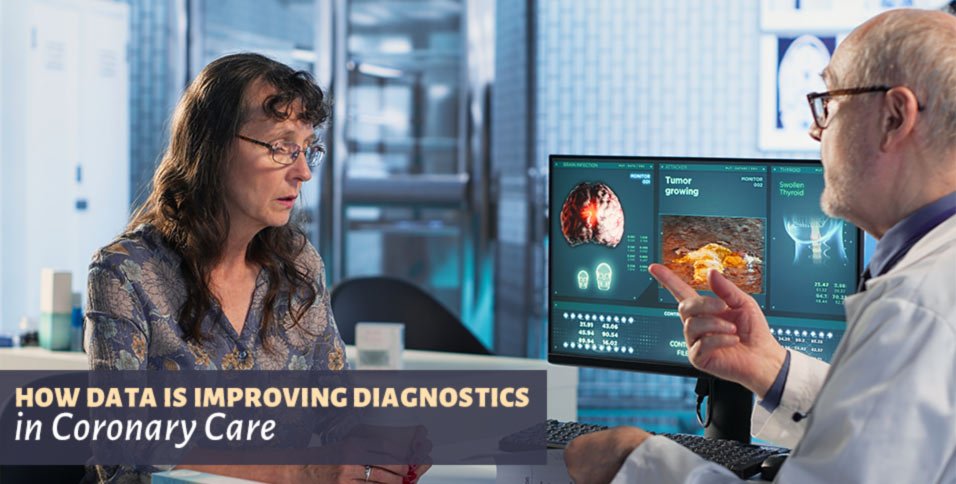
Today, healthcare systems collect and analyze cardiovascular data from numerous sources, including electronic health records (EHRs), ECGs, stress tests, bloodwork results, medical imaging, and wearable devices, combining them into a single patient profile. Machine learning, which analyzes millions of patient records, is then used for pattern recognition and the identification of risk factors that can sometimes be undetectable via traditional methods. These algorithms become increasingly useful as more data is collected. Today, these algorithms are used to predict future cardiac issues, detect arrhythmias (via smartwatches), and identify high-risk patients before they experience any symptoms.
Improving Treatment Outcomes
Early diagnosis is vital because it allows health professionals to recommend tailored treatments and actions patients can take to reduce the risk of heart-related events. For instance, physicians may recommend lifestyle changes, medication, and/or regular monitoring as preventive measures. Health professionals can also rely on advanced imaging and predictive analytics to identify which coronary blockages are most likely to cause serious cardiac events. Data allows them to make informed decisions regarding interventions such as angioplasty and heart stent placement. In patients with significant coronary artery disease, angioplasty may be used to widen a narrowed artery with a balloon, often followed by the placement of a small wire-mesh stent to help keep the artery open. These procedures can improve blood flow to the heart, relieve symptoms, and, in certain high-risk cases, reduce the likelihood of serious cardiac events such as heart attacks.
Continuous Monitoring Is Vital
Modern coronary care extends beyond diagnosis, placing a heavy emphasis on continuous monitoring. The boom in wearable technologies such as smartwatches, portable ECG monitors, and connected blood pressure devices enables real-time transmission of health data and the notification of warning signs. They are especially useful for those who have had a heart attack or undergone stent placement, to track the rehabilitation process. With wearable and portable devices, patients can now take a more active role in their care, make data-driven lifestyle changes, and adhere to their medication schedule. Of course, the rise of these technologies has also raised concerns about data privacy, cybersecurity risks, data quality, and algorithmic bias. It is therefore vital for healthcare providers to invest in cybersecurity measures. They must also be aware of algorithmic bias and data incompleteness, using AI as a means of support rather than a replacement for their knowledge.
The Future of Data Collection
Researchers are currently aiming to enhance the accuracy and predictive power of data analytics and AI by integrating genomic and genetic information with traditional clinical data. The aim is to identify those who are genetically predisposed to coronary heart disease. Developers of wearable devices are also working to create more sophisticated models that enable diagnostic systems to identify individuals at high risk of coronary disease years before any symptoms appear.
Traditional means of predicting coronary disease and identifying preventive measures and treatments continue to be used. However, these methods have been augmented through data collection and machine learning. Today, physicians are already able to identify patients with a higher risk of coronary heart disease and cardiovascular disease as a whole. Thanks to wearable technology and real-time monitoring, patients can also take a more active role in their health journeys.