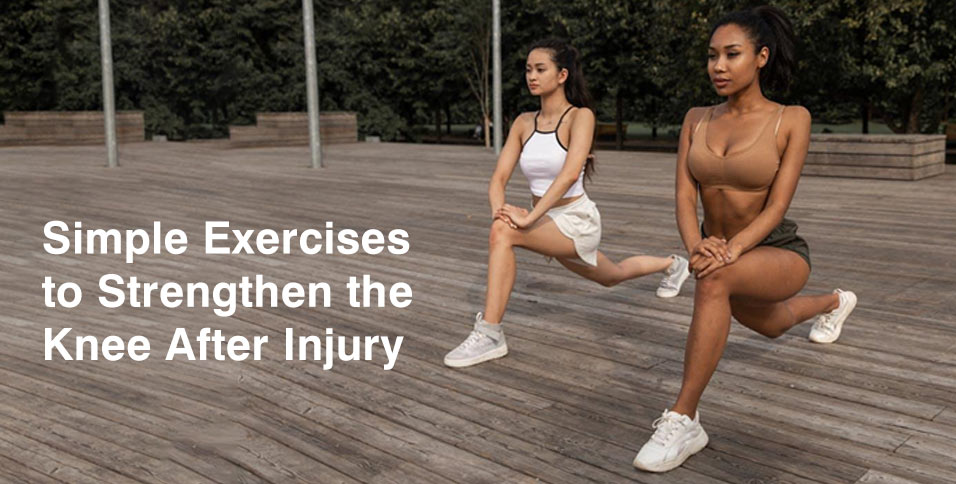
A knee injury doesn’t just sideline you from sports — it can turn everyday activities like climbing stairs, getting out of a car, or even standing up from a chair into painful reminders of lost strength and mobility. Whether you’re dealing with the aftermath of a torn ligament, post-surgical recovery, or chronic conditions like arthritis, the path back to confident movement often feels overwhelming. Consulting an orthopedic specialist in New Jersey or a qualified physical therapist can help ensure a structured recovery plan tailored to your condition. Yet physical therapists consistently see patients who regain full function through targeted exercise programs, while others struggle for months without proper guidance.
The difference typically comes down to understanding which exercises actually promote healing versus those that might inadvertently slow recovery. Modern rehabilitation approaches have moved far beyond simple rest and ice, embracing evidence-based movement patterns that actively rebuild the complex network of muscles, tendons, and ligaments supporting your knee joint. For anyone facing the challenge of knee recovery, knowing how to exercise safely while maximizing your body’s natural healing capacity can mean the difference between months of limitation and a confident return to the activities that matter most to you.
How Do Exercises Aid Knee Recovery After Injury?
When your knee is injured, your body’s natural response creates a cascade of changes that extend far beyond the initial damage. Swelling restricts movement, pain signals cause surrounding muscles to weaken through a process called “arthrogenic muscle inhibition,” and protective compensation patterns can actually create new problems in your hip, ankle, or opposite leg.
Targeted exercises work by reversing these secondary effects while supporting the primary healing process. Controlled movement stimulates blood flow, delivering oxygen and nutrients essential for tissue repair while helping clear inflammatory byproducts that contribute to persistent swelling. This increased circulation is particularly crucial for cartilage, which lacks its own blood supply and depends entirely on joint movement to receive nutrients through synovial fluid.
The strengthening component addresses one of injury’s most overlooked consequences: rapid muscle atrophy. Research from the American College of Sports Medicine shows that quadriceps muscles can lose up to 20% of their strength within just two weeks of knee injury, even without complete immobilization. Progressive resistance exercises specifically target these weakened muscles, but they also train the intricate coordination between muscle groups that creates stable, pain-free movement.
Perhaps most importantly, exercises help retrain your nervous system’s protective responses. After injury, your brain essentially “forgets” normal movement patterns, defaulting to guarded, inefficient motions that perpetuate dysfunction. Functional exercises gradually restore confidence in the joint while teaching your nervous system that normal movement is safe again. This neurological retraining often proves as critical as the physical strengthening — explaining why some people with structurally sound knees continue experiencing pain and limitation, while others with significant damage move freely and confidently.
Which Exercises Suit Different Knee Conditions?
The exercise approach that helps someone recover from ACL surgery differs dramatically from what benefits a person managing osteoarthritis, yet many generic “knee exercise” programs ignore these crucial distinctions. Understanding your specific condition allows you to choose movements that target the root cause of your limitations rather than simply addressing surface-level symptoms.
Surgical recoveries and acute ligament injuries require a carefully phased approach that respects healing timelines while preventing the muscle atrophy and stiffness that complicate long-term outcomes. Chronic conditions like arthritis, on the other hand, benefit from consistent, moderate-intensity exercises that maintain joint mobility and surrounding muscle strength without triggering inflammatory flares.
Exercises for Surgical and Ligament Injuries
Post-surgical knee recovery follows a predictable progression, though the timeline varies significantly based on the procedure and individual factors. ACL reconstruction typically begins with ankle pumps and gentle range-of-motion exercises within days of surgery, progressing to straight-leg raises once quadriceps control returns.
The key during early recovery is maintaining muscle activation without stressing healing tissues. Quad sets — tightening your thigh muscle while your leg is straight — can begin almost immediately and help prevent the dramatic muscle loss that occurs when pain inhibits normal muscle firing patterns. Heel slides, where you slowly bend and straighten your knee while lying down, restore basic joint mobility without the resistance that could damage surgical repairs.
For ligament sprains that don’t require surgery, the approach focuses on supporting the healing process while maintaining function. Hamstring curls using resistance bands strengthen the muscles that assist the ACL in controlling forward knee motion, while calf raises address the ankle stability that often becomes compromised when people alter their walking patterns to protect an injured knee.
Balance training becomes crucial once weight-bearing is cleared. Single-leg standing progresses to single-leg activities on unstable surfaces, retraining the rapid muscle responses that prevent reinjury during unpredictable real-world movements. This neuromuscular education often determines whether someone returns to their previous activity level or remains vulnerable to reinjury.
Exercises for Arthritis and Chronic Knee Pain
Arthritis management requires a delicate balance between maintaining joint mobility and avoiding activities that increase inflammation. Water exercises provide an ideal environment, offering resistance for strengthening while reducing joint compression through buoyancy. Simple walking in chest-deep water provides cardiovascular benefits while allowing pain-free movement patterns.
Stationary cycling with minimal resistance helps maintain range of motion while strengthening the quadriceps and hamstrings in a controlled, low-impact environment. The key is adjusting seat height so your knee never bends beyond comfortable limits — typically keeping some bend in your knee even at the bottom of the pedal stroke.
Range-of-motion exercises become particularly important as arthritis tends to create morning stiffness and gradual loss of flexibility. Heel slides performed multiple times daily help prevent the joint contractures that can develop when people avoid bending their knee due to pain. Straight-leg raises in multiple directions — front, side, and back — maintain hip and thigh strength without requiring knee bending.
The exercise timing matters significantly with arthritis. Many people find their joints move most freely later in the day after some gentle activity has reduced stiffness. Working with an orthopedic specialist can help identify the optimal exercise timing and intensity for your specific type of arthritis, as inflammatory conditions like rheumatoid arthritis require different considerations than the wear-and-tear patterns of osteoarthritis.
How Can You Perform Knee Exercises Safely and Progress Effectively?
The most common mistake in knee rehabilitation is doing too much, too soon, driven by frustration with the pace of recovery or fear that gentle exercises aren’t “working.” Your body’s healing timeline operates independently of your motivation level, and respecting these biological constraints actually accelerates your progress rather than slowing it.
Start with pain-free range of motion before adding any resistance or weight-bearing challenges. If an exercise causes pain during the movement — not just mild discomfort afterward — you’re likely pushing beyond your current tissue capacity. This doesn’t mean avoiding all discomfort; the difference lies in sharp, protective pain versus the manageable fatigue of muscles working appropriately.
Progression should follow a predictable pattern: range of motion, then strength, then functional activities. Within each category, increase duration before intensity, and frequency before load. For example, perform straight-leg raises for longer periods before adding ankle weights, and master bodyweight exercises before incorporating resistance bands or gym equipment.
Ice after exercise sessions can help manage any increased swelling, but persistent pain or swelling that doesn’t resolve within a few hours suggests you’ve exceeded appropriate limits. The goal is stimulating healing, not creating additional inflammation that interferes with recovery.
Environmental modifications often prove as important as exercise selection. Non-slip surfaces prevent compensatory movements that stress healing tissues, while proper footwear provides the stability that allows you to focus on correct movement patterns. Many people underestimate how much their fear of slipping or losing balance affects their willingness to move normally.
Track your progress through objective measures rather than relying solely on how you feel day-to-day. Range of motion measurements, the number of repetitions you can complete without fatigue, or the duration you can walk comfortably provide more reliable indicators of improvement than daily pain levels, which naturally fluctuate based on weather, activity, stress, and sleep quality.
What Are the Benefits of Exercises in Pain Reduction and Long-Term Knee Health?
The relationship between exercise and knee pain creates a paradox that stops many people before they start: movement hurts, yet movement is medicine. Understanding the mechanisms behind exercise-induced pain relief helps break through this mental barrier and explains why consistent, appropriate activity often succeeds where passive treatments fail.
Exercise triggers the release of endorphins — your body’s natural painkillers — but the analgesic effect extends beyond these feel-good chemicals. Regular movement activates pain-inhibiting pathways in your spinal cord and brain, essentially turning down the volume on pain signals. This neurological dampening can provide relief that lasts hours beyond the actual exercise session.
The anti-inflammatory effects of exercise present another pathway to pain reduction. While intense activity can temporarily increase inflammatory markers, moderate exercise consistently reduces chronic inflammation — the type associated with persistent joint pain and tissue degradation. This explains why people with arthritis often experience less pain and stiffness on days when they maintain their exercise routine compared to sedentary days.
Improved joint nutrition through exercise addresses one of the fundamental problems in knee recovery. Cartilage lacks blood vessels and depends entirely on joint movement to pump nutrients in and waste products out. Without regular compression and decompression through movement, cartilage literally starves, becoming more susceptible to damage and less capable of repair. Studies from the Arthritis Foundation demonstrate that people who maintain regular exercise programs show slower progression of joint deterioration compared to sedentary individuals with similar initial damage.
The long-term protective effects extend to injury prevention. Strong, coordinated muscles around the knee joint provide dynamic stability that prevents the sudden, awkward movements that cause many ligament injuries. Proprioception training — exercises that challenge your body’s position awareness — particularly benefits people with previous knee injuries, as this feedback system often remains compromised long after tissues heal structurally.
Perhaps most significantly, exercise addresses the fear-avoidance cycle that perpetuates disability in many chronic knee conditions. When movement consistently produces positive outcomes rather than increased pain, people gradually regain confidence in their body’s capability, leading to increased activity levels and improved quality of life that extends far beyond the knee itself.
How Do Exercises Improve Daily Function and Prevent Reinjury?
The ultimate test of knee recovery isn’t how well you perform exercises in isolation, but whether you can navigate real-world activities with confidence and control. Functional exercises bridge this gap by training movement patterns that directly translate to everyday tasks while addressing the subtle deficits that predispose you to future injury.
Stair climbing represents one of the most demanding daily activities for recovering knees, requiring strength, balance, and coordination in a controlled but dynamic pattern. Step-ups using a sturdy platform allow you to practice this movement in a controlled environment, gradually increasing step height as strength and confidence improve. The key is maintaining proper alignment — your knee should track over your toes rather than collapsing inward, a compensation pattern that increases stress on healing structures.
Squatting movements prepare you for getting in and out of chairs, cars, and low positions safely. Chair rises — standing up and sitting down without using your hands — build the specific strength needed for this daily challenge while teaching proper mechanics. Progress from higher seats to lower ones, and eventually to partial squats without the chair as a safety net.
Balance and stability training becomes crucial for preventing reinjury, particularly in people returning to sports or those whose initial injury occurred during a fall or awkward movement. Single-leg balance progresses from eyes open on firm surfaces to eyes closed or unstable surfaces, training the rapid muscle responses needed to recover from unexpected perturbations. These exercises prove particularly valuable for older adults, where fall prevention often supersedes performance goals.
Weight shifting exercises prepare you for the complex balance demands of walking on uneven surfaces, navigating crowds, or carrying objects while moving. Start with simple forward-and-back weight shifts, progress to side-to-side movements, and eventually incorporate reaching or catching activities that challenge your ability to maintain knee stability during upper body movement.
The beauty of functional training lies in its transferability. Unlike isolated strengthening exercises that target specific muscles, functional movements train the coordination between multiple muscle groups and joints, creating the integrated stability needed for confident, pain-free movement in unpredictable real-world situations. This comprehensive approach not only accelerates your return to normal activities but builds resilience against future injury by addressing the movement deficits that contributed to your original problem.