Getting a full set of new teeth. Maybe in one day, maybe over a few visits. Either way, it feels like a win. And it is.
But then you get home. Now what?
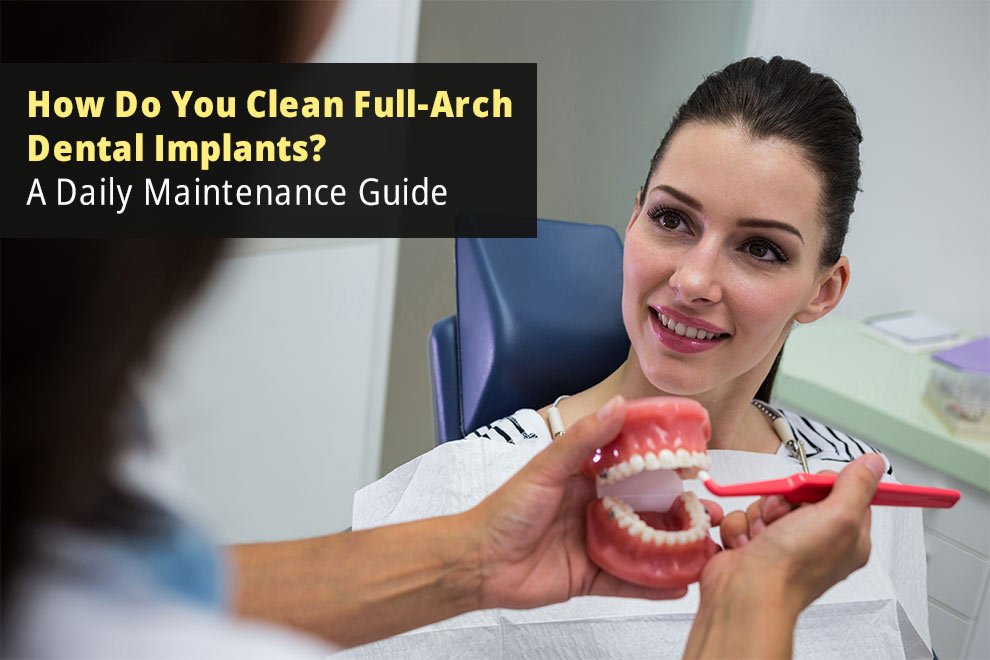
Most people spend weeks researching full arch dental implants near me, comparing prices, reading reviews, picking a surgeon. Almost nobody reads up on the daily cleaning part. That’s the part that decides how long your implants last. So here’s how to clean full-arch dental implants, day by day, without making it complicated.
Why Cleaning Matters So Much
Implants can’t get cavities. That’s true. Titanium doesn’t decay.
But gums can still get infected. Plaque builds up on the bridge, it slips under the gumline, and the tissue turns red and puffy. Ignore it long enough and it can turn into peri-implantitis. That’s an infection that eats away the bone holding your implants in place.
Bone loss is the real risk here. Not decay.
So the goal is plain. Keep plaque off the bridge and keep the gums calm. Everything below is just a way to do that.
Your Daily Routine, Step by Step
- Brush Twice a Day
- Use a soft toothbrush. Medium or hard bristles can scratch the surface of your new teeth, and scratches hold plaque.
- Pick a toothpaste that isn’t gritty. Check the label for “low abrasion.” Whitening pastes with harsh grit are a no.
- Spend two minutes. Angle the bristles toward the gumline and go slowly. Don’t scrub. Small, gentle circles work better than sawing back and forth.
- And don’t skip the underside of the bridge. It’s hard to see, so use a mirror. A small angled brush helps a lot here.
Use a Water Flosser Every Day
This is the tool most people with full arch implants end up loving. The water flosser shoots water around the gum line and underneath the bridge because this is where food is found.
Use the low or medium settings. Over the sink, place the tip of the machine to the gum line. Pause for a second between each implant post. Then do the inside surface too.
One pass takes about two minutes. Most people do it at night.
Add Interdental Brushes or Floss Threaders
Flossing with water is great, but not always effective. Using a small interdental brush (it resembles a small bottle brush) would be able to get underneath the bridge and clean out all the spaces around the posts.
Too tight for a brush? Give a shot to a dental floss threader or extra thick and flexible floss for bridges. Use it under, then move it back and forth gently. Once a day is fine.
Rinse and Protect at Night
An alcohol-free rinse can help calm the gums. Swish for 30 seconds and you’re done.
Do you grind your teeth? A lot of people do and don’t know it. If you do, ask about a night guard. Grinding puts heavy pressure on implants, and that adds up over years.
Things to Skip
Some habits cause trouble. Here are the main ones.
Hard bristle brushes. Metal picks or scrapers. Sharp tools used to “scrape off” buildup at home. Chewing ice, hard candy, or popcorn kernels. Using your teeth to open packages.
And smoking. It slows healing and raises the risk of gum problems around implants. If you smoke and you’re thinking about quitting, your implants are one more reason to try.
Don’t Skip the Professional Cleanings
Home care does most of the work. It can’t do all of it.
Tartar, which is a hard deposit, cannot be brushed off. Your dental professional will use specific tools that are specially designed for implants, generally plastic or titanium ones so that nothing gets scratched. They will also examine the screws, inspect the bridge, and take X-ray images from time to time to keep track of bone condition.
For most patients, appointments are scheduled every three to six months. However, this interval will be determined by your dentist individually based on your specific situation, as a smoker or a patient with the history of gum disease may require more frequent visits.
If you had your work done at RB Dentistry, or you’re thinking about it, ask the team what schedule makes sense for you. And if you’re comparing dentists Chesapeake has nearby, ask them the same thing. A good office will have a clear answer about long-term care, not just the surgery.
Warning Signs to Watch For
Call your dentist if you notice any of these. Bleeding at the time of brush or floss. Swollen or tender gums. A bad taste that won’t go away. Bad breath even after cleaning. Pus. Pain when you bite. A feeling that something is loose.
Don’t wait on these. Early problems are much easier to fix than late ones.
Frequently Asked Question
Is it okay to use a regular toothbrush for implants?
Sure, just make sure that it’s a soft one and use low-abrasive toothpaste with it. Harsh brushes and pastes may damage the bridge by scratching it, which can accumulate more plaque.
How often do I need to use a water flosser?
Daily, typically. Night-time application suits most patients well. Some use a water flosser two times a day. Discuss with your dentist whether you have lots of deposits underneath the bridge.
Do full-arch implants need cleaning if they’re fixed in place?
Yes. Fixed doesn’t mean maintenance free. Food and plaque collect under and around the bridge every day, and that’s where gum infections start.
How often do I need to see a dentist after full arch dental implant surgery?
Every 3 to 6 months is what most people do. This can vary depending on how well your gums are doing as well as your overall oral hygiene practices.
My gums seem to be bleeding when I am cleaning my implants.
Some minor bleeding can happen in the first few days while the mouth is healing. If this continues or there is some swelling and bad breath then contact your dentist.
Final Thoughts
Maintaining full-arch dental implants is easy. It’s only daily. Brush your teeth gently, use a water flosser, get beneath the bridge with a mini brush, and maintain your cleaning appointments. This is the regimen. You will do all this for years, and you’ll have good chances of success.