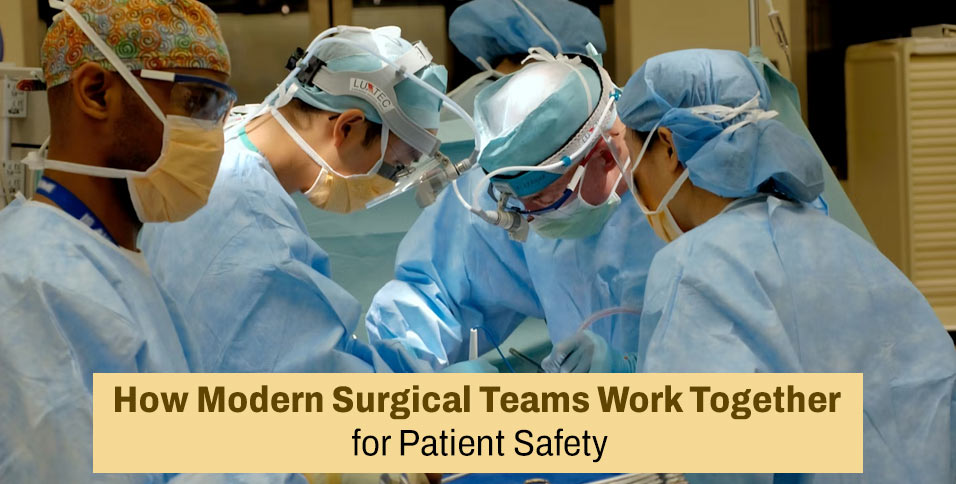
Modern surgery depends on coordinated teamwork rather than individual effort. Every procedure involves a group of highly trained professionals who understand how their responsibilities connect to patient safety and clinical outcomes. Surgeons focus on the technical aspects of the operation, anesthesiologists manage pain control and vital functions, and nurses and technologists maintain organization and sterility.
Each role supports the others in real time. Constant communication, shared awareness, and structured systems allow the team to move with precision. Patient safety remains the common objective guiding every action inside the operating room.
Clear Roles and Defined Responsibilities
A successful surgical team begins with clearly defined responsibilities. Each member enters the operating room with a distinct scope of practice and a clear understanding of expectations. The surgeon directs the procedure and makes clinical decisions based on training and experience. The anesthesiologist monitors breathing, heart function, and overall stability throughout the operation.
Clarity reduces confusion during complex procedures. Everyone knows who is responsible for specific tasks, which prevents overlap and hesitation. Predictable role boundaries allow the team to respond quickly when unexpected situations arise. Trust grows when professionals rely on one another’s expertise.
Education, Training, and Credentialing Standards
Strong teamwork rests on a foundation of rigorous education. Surgical professionals complete extensive academic programs and clinical training before entering the operating room. Surgeons attend medical school, complete residency, and often pursue fellowships. Anesthesiologists follow a similarly demanding path with specialized training in anesthesia and perioperative care. Nurses and technologists complete accredited programs that emphasize both theory and hands-on experience.
Hospitals also hire individuals who have a surgical technologist degree to ensure that sterile technique, instrument handling, and procedural preparation meet strict safety standards. This specialized training equips them to anticipate surgeons’ needs, maintain an organized sterile field, and respond efficiently during complex procedures.
Communication Protocols in the Operating Room
Clear communication shapes every phase of a surgical procedure. Teams begin with a preoperative briefing that reviews the patient’s condition, the planned intervention, and any anticipated challenges. This discussion aligns expectations and confirms that the required equipment and supplies are available.
During surgery, professionals rely on concise and direct exchanges. Closed-loop communication allows one person to confirm instructions and another to acknowledge completion. This simple practice reduces misunderstandings and strengthens accountability. Surgical time-outs provide another layer of protection. The team pauses to verify patient identity, procedure type, and surgical site before making an incision.
Preoperative Planning and Risk Assessment
Preparation begins well before the patient enters the operating room. Surgeons review medical histories, imaging studies, and laboratory results to evaluate potential risks. Anesthesiologists assess airway status, allergies, and underlying health conditions. Nurses verify documentation and ensure that consent forms are complete.
Risk assessment tools help categorize patients based on health status and procedural complexity. Anticipating complications allows the team to prepare blood products, specialized instruments, or additional support staff if needed. Checklists confirm patient identity and correct the surgical site, reducing preventable errors.
Technology and Data-Driven Decision Making
Modern operating rooms integrate advanced technology to support clinical judgment. High-resolution imaging systems guide surgical precision. Electronic health records provide immediate access to patient data, allowing informed decisions without delay. Anesthesia monitoring systems track vital signs continuously and alert the team to subtle changes.
Digital documentation improves accuracy and transparency. Teams can review prior procedures, analyze complication rates, and identify patterns that inform future practice. Robotic systems enhance dexterity and control in certain specialties, expanding what surgeons can accomplish with minimal invasiveness.
Maintaining Sterility and Infection Control
A sterile environment forms the backbone of safe surgical care. Every person who enters the operating room follows strict protocols designed to prevent contamination. Surgical technologists prepare the sterile field with precision, arranging instruments and supplies in a way that supports efficiency while protecting patient safety. Careful attention to detail ensures that every item used during the procedure meets cleanliness standards.
Nurses monitor the room continuously to confirm that sterile boundaries remain intact. Hand hygiene, proper gowning, and correct glove use receive constant reinforcement. Small lapses can create serious risks, so vigilance remains steady throughout the operation. Surgeons and assistants rely on this shared awareness to maintain focus on the procedure itself.
Crisis Management and Rapid Response
Even with thorough preparation, unexpected complications can arise. Surgical teams train extensively to respond to sudden changes such as heavy bleeding, allergic reactions, or cardiac instability. Simulation exercises create realistic scenarios that sharpen decision-making skills under pressure. Rehearsed responses allow professionals to act with confidence rather than hesitation.
Clear leadership guides the team during emergencies. The surgeon often directs the response while anesthesiologists adjust medications and stabilize vital functions. Nurses and technologists anticipate equipment needs and prepare additional supplies without waiting for repeated instructions. Coordinated action reduces confusion and keeps communication focused.
Postoperative Care and Continuous Improvement
Care does not end once the final suture is placed. Safe recovery depends on smooth transitions from the operating room to the post-anesthesia care unit. Nurses provide detailed handoff reports that outline the procedure, medications given, and any intraoperative concerns. Thorough communication ensures continuity and supports close monitoring during the early recovery phase.
Pain management, vital sign assessment, and wound evaluation guide the next stage of care. Early detection of complications such as bleeding or respiratory distress allows timely intervention. Physicians and nurses collaborate to adjust treatment plans based on patient response. Family members receive updates that clarify expectations and reinforce trust.
Modern surgical teams function as integrated units shaped by preparation, discipline, and shared responsibility. Sterile technique protects patients from preventable harm. Crisis readiness ensures that complications receive swift and coordinated responses. Postoperative care extends the team’s commitment beyond the operating room and into recovery.
Each stage connects through clear communication and mutual respect. Professionals rely on defined roles and rigorous training while remaining adaptable to changing circumstances. Patient safety guides every decision, every checklist, and every review process. Strong collaboration and steady improvement continue to elevate surgical care, reinforcing trust in a system built to protect and heal.