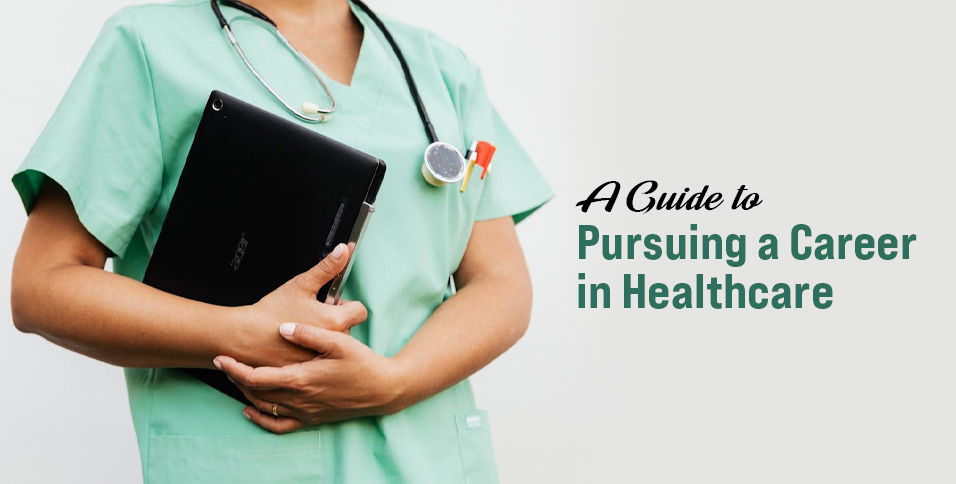
Ever wondered why hospitals never seem to slow down, even during holidays? The answer lies in the simple, uncomfortable truth: people don’t stop needing care. Illness, injury, aging — none of it pauses for convenience. The world keeps turning, and healthcare professionals keep showing up. In this blog, we will share what it really looks like to step into that world and build a career in healthcare today.
Why Healthcare Still Holds Strong
Despite burnout headlines and staffing shortages making the rounds, healthcare remains one of the most stable career paths around. When tech layoffs hit in waves or AI starts replacing customer support teams, nurses, EMTs, lab techs, and doctors aren’t sitting idle. No algorithm can give a vaccine, check vitals, or deliver a baby. The human element in healthcare can’t be automated — not without very uncomfortable outcomes.
But it’s not just job security pulling people in. COVID-19 changed how the country talks about health. It exposed weak points, from rural hospital access to racial health disparities. In response, funding expanded, public health jobs got more visibility, and many professionals found new purpose. Suddenly, a field that once felt narrow and clinical now includes community health, mental wellness, health tech, patient advocacy, and even policy work.
Gen Z, growing up in a pandemic, started taking mental health more seriously than any prior generation. That shift alone has fueled demand for therapists, psychiatric nurse practitioners, and trauma-informed care providers. Meanwhile, the aging U.S. population is only getting older. As more people live longer with chronic conditions, the need for long-term care, home health aides, geriatric nurses, and specialists rises. And all of this growth isn’t hypothetical — it’s happening now, in real time.
Finding Your Footing: Education Paths That Work
Choosing the right path into healthcare used to feel more rigid. Medical school or bust. These days, there’s more flexibility. People can move laterally, shift careers midlife, or blend clinical work with tech, policy, or business. It’s opened doors for many who wouldn’t have considered healthcare in a traditional sense.
Take nurse practitioners. With the growing demand for primary care, they’re now taking on responsibilities that used to fall squarely on physicians. For those who already have a nursing background, enrolling in a post masters FNP program online offers a way to level up without stepping out of the workforce. It’s a practical option — one that matches the pace of modern life, where quitting your job to attend school full-time isn’t always possible or smart.
These programs are tailored for people already in the trenches. They combine clinical requirements with online coursework, allowing students to keep working, care for families, and still meet academic benchmarks. The flexibility is key. It’s what lets working nurses expand their scope of practice, qualify for better-paying roles, and serve underserved communities, all without hitting pause on life.
More broadly, the rise in online certifications, hybrid degrees, and accelerated tracks has made healthcare more accessible to people from all walks of life. Whether you’re coming from a biology degree or a business background, there’s often a pathway that fits. Community colleges are also offering affordable entry points through associate degrees in radiology, surgical tech, and medical assisting — fields with quick entry and strong hiring outlooks.
The Not-So-Glamorous Side (And Why It Matters)
For every Instagram-worthy white coat ceremony, there’s a night shift spent on your feet, a code blue you can’t forget, or a patient who refuses care because they don’t trust the system. These moments define the job just as much as the victories do. And while healthcare is often seen as noble — sometimes even romanticized — the daily grind can be anything but.
Yet, that grit is part of what makes the field meaningful. You’re not pushing pixels or optimizing ad clicks. You’re helping people when they’re vulnerable, confused, or scared. And that can be exhausting, yes, but it’s also deeply grounding. Most days, the impact is immediate and visible. That’s a kind of job satisfaction many other fields struggle to offer.
Healthcare workers also carry a weight that’s hard to describe. Burnout isn’t just a buzzword. It’s real, and it’s worsened by understaffing, administrative overload, and emotional fatigue. Still, many stay because the tradeoff — stepping away from patients — feels worse. They stay because they care. They stay because they’re needed.
Humor becomes a coping mechanism. Inside jokes in hospital breakrooms are a survival tool. Dark humor isn’t uncommon, not because anyone is insensitive, but because sometimes laughter is the only thing that keeps the weight from crushing you. That balance — between intensity and absurdity — is part of the culture, and you either learn to ride it or you burn out fast.
Where the Jobs Are Going
The Bureau of Labor Statistics isn’t being subtle about it — healthcare is projected to grow faster than almost any other sector in the next decade. Roles like home health aides, nurse practitioners, medical lab technologists, and physical therapists are expected to see sharp increases in demand. And it’s not just hospitals hiring. Urgent care centers, private practices, outpatient clinics, telehealth platforms, and even schools are part of the equation now.
Telehealth, in particular, exploded during the pandemic and hasn’t shrunk back to its old size. People liked the convenience, especially in rural or underserved areas. This shift has created new roles for virtual care coordinators, tech support in health systems, and remote therapists. It’s changed how healthcare is delivered — sometimes for the better, sometimes with growing pains — but definitely in lasting ways.
How to Make it a Career, Not Just a Job
Getting in is one thing. Staying in is another. Sustainability matters. The most successful healthcare professionals don’t just build skills — they build networks, routines, and boundaries. They know when to pick up that extra shift and when to say no. They seek mentorship, keep learning, and stay connected to their purpose, even when the system makes that hard.
One of the smartest things you can do early on is choose a specialty or environment that fits your energy. Do you thrive on urgency? Emergency rooms or trauma centers might be for you. Prefer steady routines and long-term relationships? Primary care or pediatrics could work. Love puzzles and pattern recognition? Diagnostic imaging or pathology might surprise you.
There’s no one-size-fits-all. And yes, trial and error will be part of the journey. You’ll mess up. Everyone does. A needle might miss. A chart might get misfiled. A patient might snap at you. What matters is not perfection, but presence. Keep showing up, keep adjusting, and keep learning.
At its best, a healthcare career offers purpose, stability, and a front-row seat to the human condition. At its worst, it can feel like you’re plugging leaks with your bare hands. But most days fall somewhere in between — busy, flawed, unpredictable, and strangely fulfilling.
And if that sounds like the kind of chaos you’d be proud to manage, then you might just belong here.