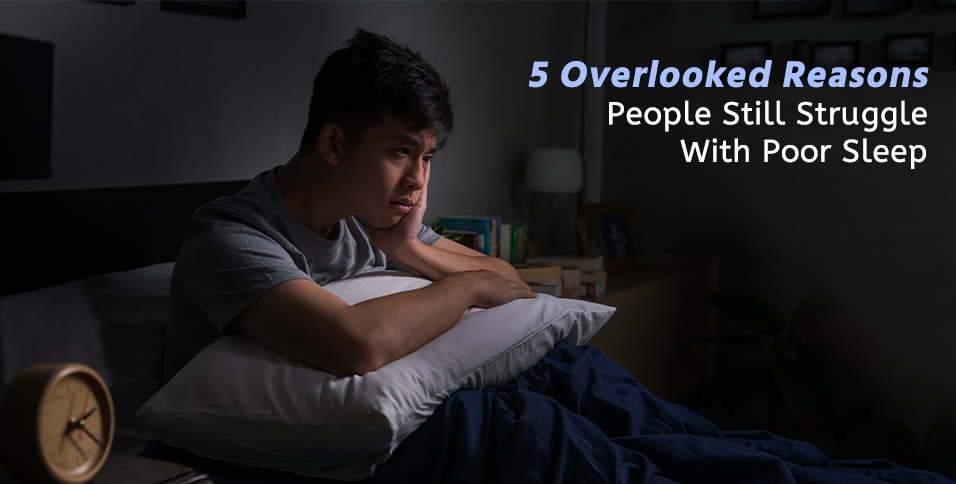
Sleep advice is kind of stuck in a loop at this point, isn’t it? You hear the same stuff everywhere. Caffeine bad, screens bad, keep a schedule. Fine, sure. But a third of US adults still aren’t sleeping well, and at some point you have to wonder whether the advice itself has some blind spots.
Probably a bit of both, if we’re being fair. Here are a few things that don’t seem to come up enough.
The Temperature Thing Goes Deeper Than “Just Open a Window”
Okay so most people get that sleeping in a hot room is uncomfortable. Obviously. The part that trips people up is that it’s not just a comfort thing. It’s more like a hardware problem.
The body’s core temperature has to drop by roughly one to two degrees before sleep onset can even happen. The hypothalamus manages that, and it treats thermoregulation and sleep cycles as basically one system. So when the room fights against that cooldown? The whole thing stalls. Someone put together a really solid explanation of why hot environments disrupt your sleep and honestly it reframes the whole conversation. It’s not about being cozy. It’s about whether your brain can do its job.
The CDC mentions keeping bedrooms cool and relaxing, which, okay, not exactly groundbreaking. Most researchers put the target at around 65°F. For a lot of households thats way colder than the thermostat ever gets, especially when there’s a partner involved who wants it warmer. That fight never ends, by the way.
Easiest fix on this whole list though. Just turn it down a few degrees and give it a week. Low effort, potentially high reward.
Mood and Sleep Are Basically the Same Problem
This one doesn’t get talked about the right way.
The standard framing is: sleep badly, feel bad the next day. Straightforward enough. Except no, not really. It goes in both directions. Anxiety keeps you awake. Not sleeping ramps the anxiety up. Depression messes with sleep architecture in ways that are hard to detect from the inside. And then the wrecked sleep makes the depression worse. It just spirals.
Stanford Medicine researchers have been looking into this and call it a bidirectional relationship, which is a clinical way of saying it’s a mess. Apparently people with insomnia are around ten times more likely to have depression. Seventeen times for anxiety. Those numbers are kind of staggering, even factoring in diagnostic overlap.
Most people just file it under “stress” and don’t think about it again. Which is fair, because who has time to untangle whether their insomnia is a symptom or a cause? It can take years to figure that out. And the fix here isn’t a new pillow. It’s probably therapy. Which, yeah. Harder sell.
Eating Late Wrecks More Than Your Stomach
Less discussed. Probably because it’s boring.
But digestion generates heat internally. So if someone eats a big meal at 10pm and then tries to sleep at midnight, the body is simultaneously trying to cool itself down AND producing heat to process food. Pick a lane, basically. Spicy stuff and anything heavy with fat makes this worse.
The general recommendation is to leave a decent gap between dinner and bed. If a late snack is unavoidable, something light. Bananas, a few nuts, that kind of thing. Not revolutionary advice but the reasoning holds up. Although honestly some people seem totally unaffected by eating late. No idea why. Human biology is inconsistent like that.
The Phone Problem Is Real but the Advice Around It Is Useless
Everyone knows about blue light and screens by now. The information is out there. People just don’t act on it, and the way the advice gets delivered is probably part of the reason.
Saying “avoid screens before bed” is about as useful as saying “avoid being stressed.” Thanks. Very helpful. Here’s what’s actually going on though: blue light messes with melatonin production. Melatonin is the thing that tells your body to start cooling down for sleep. Suppress it and the whole pre-sleep sequence just… doesn’t kick in on time. Not a discipline problem. A chemistry problem.
Thirty minutes of screen-free time is the standard recommendation. Some sleep researchers push for an hour. Night mode filters? Maybe they help somewhat. The evidence is honestly all over the place on that. It’s one of those areas where the science hasn’t caught up to the marketing.
Realistically nobody is giving up their phone at 9pm. But understanding what’s actually happening in the brain at least turns it from a moral failing into a tradeoff. That reframe matters.
Sleep Tracking Without Behavior Change Is Just Expensive Journaling
Here’s a weird one. Digital health tools have gotten genuinely impressive. A decent wearable now picks up heart rate variability, respiratory stuff, how long you spent in deep sleep versus light, even micro-awakenings you don’t remember. All from your wrist. Thats clinic-level data, more or less.
And people love collecting it. Sleep scores, readiness scores, recovery metrics. The dashboards are slick. The data is interesting.
But then nothing changes. The score says 62 out of 100 on Monday, and Monday’s routine is identical to Sunday’s. It’s the health data equivalent of checking the weather forecast and then going outside in the wrong clothes anyway. Fascinating pattern, honestly. Humans seem wired to gather information without necessarily being wired to respond to it.
So Yeah
No tidy bow on this one. These five things overlap in annoying ways and what matters most depends entirely on the individual. The temperature fix costs nothing and takes no willpower. The mental health piece is probably the most consequential but it’s also the one people are least likely to address unprompted.
If the usual sleep tips aren’t working, it might just be that the usual tips are incomplete. Not wrong exactly. Just not the whole picture.