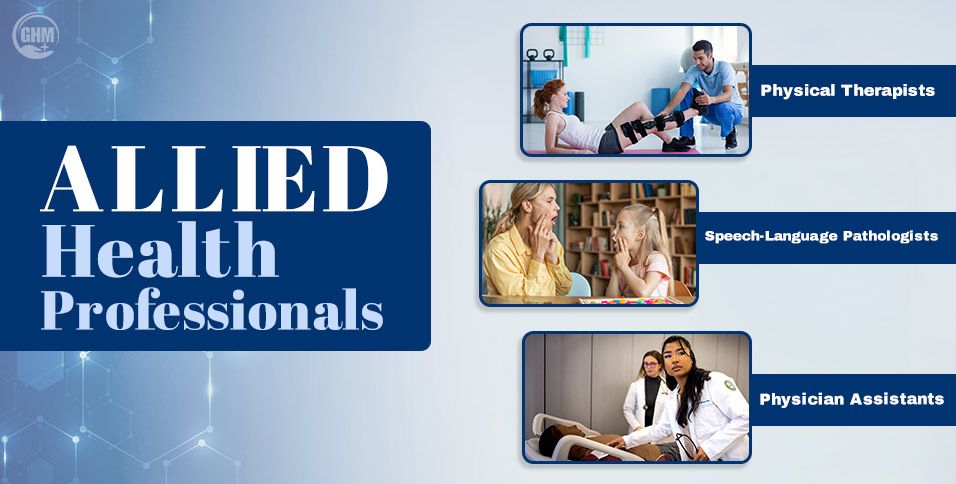
Most people visualize a hospital and see only doctors and nurses. However, relying solely on those two roles ignores the experts who actually perform your blood tests, operate your MRIs, and manage your recovery. These experts are referred to as allied health professionals who occupy nearly 60% of the healthcare workforce.
Without these specialists, the modern healthcare system would grind to a halt. They improve patient outcomes by providing specialized expertise that physicians may not possess. For example, while a doctor diagnoses a heart condition, a cardiovascular technologist performs the complex imaging required to see the blockage.
Healthcare is evolving rapidly due to an aging population and the rise of chronic diseases; consequently, the demand for these roles is skyrocketing. The Bureau of Labor Statistics (BLS) indicates that healthcare occupations will grow much faster than average through 2033.
Therefore, understanding the allied health workforce is essential for navigating the future of wellness.
This guide will reveal the top 10 specialists in allied healthcare who are the true backbone of medicine, their educational requirements, and why they are more critical than ever in 2026.
What Are Allied Health Professionals?
Allied Professionals represent a broad group of healthcare providers distinct from medicine and nursing. They use scientific principles and evidence-based practice to diagnose, evaluate, and treat various diseases. Furthermore, their scope is massive, covering everything from emergency medical services to long-term rehabilitation.
Core Functions and Scope
Allied professionals operate across various settings, including hospitals, private clinics, and community health centers.
The primary responsibilities of Allied Health workers include:
- Diagnostic Support: Performing tests that help physicians identify illnesses.
- Rehabilitation: Helping patients regain movement or speech after an injury.
- Preventive Care: Educating the public to prevent chronic conditions.
- System Management: Managing health information and operating medical technology.
10 Most In-Demand Allied Health Professionals For 2026
The healthcare landscape in 2026 is defined by a growing aging population and a rise in chronic conditions, making this list of allied health professionals the backbone of modern patient care.
1. Physician Assistants (PAs)
Physician Assistants act as versatile medical practitioners who conduct exams, diagnose illnesses, and prescribe medications.
Their impact is profound, as they expand access to care by supporting primary physicians and specializing in diverse medical fields.
To enter this profession, one must complete a graduate-level PA program and obtain state licensure.
Essential skills include clinical expertise, critical thinking in high-stakes situations, and strong interpersonal communication to collaborate effectively with nurses and doctors.
2. Physical Therapists
Physical Therapists significantly impact a patient’s quality of life by restoring independence after surgery or injury.
They are movement experts who diagnose functional problems and develop personalized plans to improve patients’ mobility and reduce pain.
This role in allied health professionals requires a Doctor of Physical Therapy (DPT) degree and proper licensure. Success in this field demands physical stamina, empathy, and the ability to educate patients on complex exercise techniques to prevent future disability.
3. Speech-Language Pathologists
SLPs are experts who diagnose and treat communication, voice, and swallowing disorders. They impact everyone from children with speech delays to adults recovering from strokes.
In the field of allied health professionals, ‘Speech-Language Pathologists’ have a projected growth rate of 18%, making them vital for long-term rehabilitation.
Candidates must earn at least a master’s degree and obtain relevant state licensure. This role demands patience, active listening, and the analytical ability to create individualized therapy plans that enhance social interaction.
4. Medical Laboratory Technologists
These “medical detectives” analyze blood, tissue, and fluid samples to detect life-threatening diseases like cancer and diabetes. Their work is the foundation of accurate medical decisions.
Most employers require a bachelor’s degree in clinical laboratory science and proper certification.
Beyond technical proficiency with sophisticated equipment, these allied health professionals must possess close attention to detail and strong organizational skills to manage high testing volumes accurately.
5. Diagnostic Medical Sonographers
Sonographers provide non-invasive diagnostic data by using ultrasound technology to visualize internal organs and guide biopsies. They play a central role in prenatal care and internal disease management.
One generally needs an associate degree or a postsecondary certificate to practice. This career requires technical precision in operating imaging equipment, combined with the ability to analyze complex data and summarize findings for physicians.
6. Respiratory Therapists
Respiratory therapists treat patients with breathing disorders, providing life-saving care in ICUs and emergency departments. Their impact is most visible during seasonal respiratory spikes and in managing chronic lung diseases.
To enter this field, one usually requires an associate or bachelor’s degree in respiratory care.
These allied health professionals need vital skills like mechanical aptitude for managing ventilators and strong teamwork skills within acute care settings.
7. Occupational Therapists
Occupational Therapists help individuals with disabilities or illnesses master the “activities of daily living,” such as independent working or self-care. They design environments and use adaptive equipment to ensure patient independence.
A master’s degree is the minimum requirement, though many OTs now hold doctorates. The role of occupational therapists demands creative problem-solving, empathy, and the communication skills necessary to instruct families on using wheelchairs or leg braces.
8. Radiologic & MRI Technologists
Imaging is now central to nearly every area of patient care, making radiologic techs indispensable. These professionals operate X-ray and MRI machines to create images to help physicians treat injuries and diseases. As imaging becomes central to patient care, their expertise ensures diagnostic accuracy.
Most technologists hold an associate degree and must pass a certification exam. They must be adept at using advanced technology, maintaining detailed records, and ensuring patient safety during radiation exposure.
9. Surgical Technologists
As surgical backlogs grow, skilled techs are needed to assist in busy operating rooms. Surgical techs prepare sterile environments and assist surgeons during operating procedures. They are critical for clearing surgical backlogs and ensuring theater efficiency.
Most complete a postsecondary certificate or associate degree program. This role requires intense focus, knowledge of surgical instruments, and the stamina to work in fast-paced, high-pressure environments.
10. Dental Hygienists
Dental hygienists focus on oral health and disease prevention by providing services like cleaning teeth, taking X-rays, and applying sealants. They prevent systemic health issues by educating patients on proper oral hygiene.
Most complete a three-year associate degree and must obtain mandatory state licensure. Key skills include manual dexterity, interpersonal communication for patient education, and a firm understanding of dental health terminology.
The Role of Technology In Allied Health
Technology has revolutionized the field of allied health professionals, enhancing their ability to provide precise and timely care.
As we move through 2026, the integration of advanced digital tools is no longer optional but foundational to the modern healthcare system.
Key technological drivers of allied health include:
- Telehealth Expansion:
Virtual platforms allow professions like speech-language pathologists and dietitians to reach patients in rural or underserved areas, ensuring continuity of care without travel barriers.
- AI and Diagnostic Tools:
Artificial intelligence assists medical laboratory technologists and sonographers by flagging abnormalities in scans and samples with superhuman speed, reducing human error and accelerating diagnosis.
- Electronic Health Records (EHRs):
Centralized digital records enable seamless collaboration. A physical therapist can instantly access a surgeon’s notes, ensuring the rehabilitation plan aligns perfectly with the medical procedure.
- Wearable Health Tech:
Healthcare devices that monitor vitals in real-time provide allied health workers with continuous data, allowing for proactive adjustments to treatment plans rather than reactive care.
These innovations improve clinical outcomes and significantly reduce the administrative burden on the allied health workforce, allowing them to focus more on patient interaction and empathy.
Challenges & Future Scope Of Allied Health Professionals
The allied healthcare sector faces hurdles such as significant workforce shortages and burnout. In fact, many rural areas struggle with access disparities, leaving patients without essential allied health services. Consequently, there is an urgent need for continuous upskilling to keep pace with rapid technological shifts.
The future of allied health careers is incredibly bright. Because of the aging global population, the demand for rehabilitative and diagnostic services is at an all-time high. Salaries are competitive; for instance, the median pay for PAs and PTs often exceeds $90,000–$120,000 annually.
Furthermore, these roles offer immense flexibility, allowing healthcare workers to work in hospitals, schools, or even as traveling professionals.
End Note
Allied health professionals truly are the backbone of modern medicine. From the lab to the rehab center, their specialized skills improve outcomes and save lives. Whether you are a patient or an aspiring professional, recognizing the value of these diverse roles that keep society healthy and provide promising patient care.
As we look toward 2026, these roles will only become more integrated and tech-driven.
If you are looking for a healthcare career that combines science, technology, and human compassion, look no further than the allied health field.
Enjoyed this guide? Share this article with others, and let them discover the rewarding world of allied health!
Sanskruti Jadhav
Frequently Asked Questions
- What is the difference between an allied health professional and a nurse?
While traditional nurses focus on direct clinical care and patient management, allied health professionals provide specialized diagnostic, technical, and therapeutic services that complement that care.
- Do all allied health roles require a license?
Most roles require state-specific licensure or national certification to ensure practitioners meet professional standards of competence.
- What is the highest-paying allied health job?
According to 2023 data, Physician Assistants and Anesthesiologist Assistants often command some of the highest salaries in the sector, with medians exceeding $110,000.