Have you ever been mid-bath or dressing your little one when you suddenly spot something new? You see a few pearly spots on their skin that weren’t there yesterday. These can be the colourless bumps on toddler skin. You are definitely not alone. These little spots, these small bumps on your baby’s skin, are a rite of passage for almost every parent and can be unsettling.
These bumps often appear suddenly, feel unfamiliar, and raise understandable concerns about infections, allergies, or underlying health issues. The good news is that most colourless bumps on toddler skin are common, harmless, and temporary. But if you know what they are and when they may need medical attention can bring clarity and peace of mind.
Let’s walk through the most common toddler skin conditions together and help you figure out what’s going on with your kiddo’s skin.
Let’s Dig Into These Colourless Bumps on Toddler Skin
What Do These Bumps Look Like?
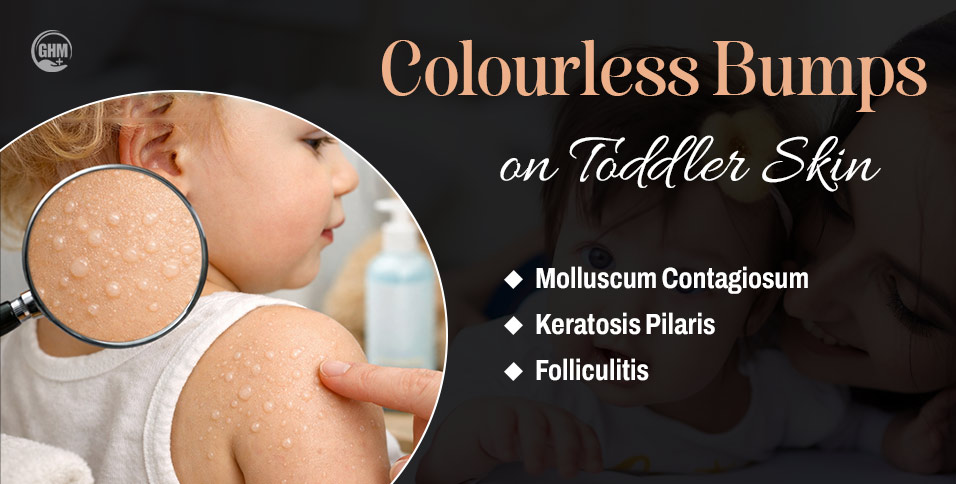
When parents describe colourless bumps on toddler skin, they usually mean small raised spots that match the child’s skin tone or appear white, pearly, or translucent.
These bumps may be:
- Translucent or Pearly: They look like they’re filled with a tiny bit of wax or water.
- Flesh-Toned: They blend right into your child’s natural skin colour.
- White or Creamy: Often seen as white bumps on babies, looking like tiny grains of sand.
- Rough to the Touch: They might feel like a patch of “chicken skin.”
Most of these are non-itchy bumps, meaning your toddler probably doesn’t even know they’re there. Their appearance alone does not confirm a diagnosis, but patterns help doctors determine the cause.
What Causes The Colourless Bumps on Toddler Skin
1. Molluscum Contagiosum
If the bumps on toddler skin look like tiny, shiny domes with a little “dent” or dimple in the middle, you’re likely looking at molluscum contagiosum in toddlers.
This is one of the most common viral skin infections in toddlers. It sounds a bit scary, but it’s actually a very surface-level virus. It loves to hang out in daycares and playgroups because it spreads through skin-to-skin contact or shared items like towels and toys.
How to spot it:
- They are usually skin-coloured bumps on toddlers or slightly pink/pearly.
- The “center dimple” is the giveaway.
- They often show up in “families” (clusters) on the tummy, arms, or even the diaper area.
What should you do?
While these raised bumps on a child’s skin look concerning, they usually don’t need aggressive treatment. They will eventually go away on their own, but it can take 6 to 18 months.
2. Milia
If you’re seeing tiny, firm white bumps on your toddler’s skin, specifically around the nose, eyes, or cheeks, it might be milia in children.
Milia happen when tiny flakes of skin get trapped in small pockets near the surface of the skin. While we often associate these with newborns, toddlers get them too.
How to spot it:
- They look like tiny white pearls or seeds.
- They are completely non-itchy bumps on child’s skin.
- They feel quite firm if you (gently) run your finger over them.
What should you do?
The most important rule for milia is to keep our hands away from it. Do not squeeze them, as it can lead to scarring or infection. These are classic harmless skin bumps in children that will clear up as the skin naturally exfoliates itself.
3. Keratosis Pilaris
If your toddler has patches of skin that feel like a cheese grater, or is sometimes described as “chicken skin,” This is likely a keratosis pilaris situation in kids.
This is one of those common pediatric skin problems that is often genetic. It happens when a protein called keratin builds up and plugs the hair follicles. It’s not an infection, and it’s not contagious.
How to spot it:
- Usually found on the backs of the upper arms, thighs, or cheeks.
- The bumps are tiny and can be skin-coloured, white, or slightly pink.
- The skin feels very dry and rough.
What should you do?
While it cannot be cured, it’s manageable. Use a thick, fragrance-free moisturizer after bath time. Gentle exfoliation with a washcloth can also help keep those clear keratosis pilaris in toddlers.
4. Folliculitis and Minor Skin Irritation
Sometimes, colourless bumps on toddler skin aren’t caused by a virus or genetics, but they’re just a reaction to a busy day of play.
These skin irritations are caused by inflamed hair follicles, known as folliculitis. They can appear on your kid’s skin after sweating, friction from tight clothing, or prolonged diaper use.
How to spot it:
- Tiny, white bumps or little flesh-colored pimples.
- A tiny hair is visible right in the center of the bump.
- Skin-coloured or sometimes red bumps on toddlers that just feel a bit raised.
What should you do?
Switch to looser, breathable cotton clothes and give the area a gentle clean with mild soap. If the bumps don’t appear harsh or filled with yellow pus, they are usually harmless and will clear up once the irritation subsides.
How Parents Can Manage The Child’s Skin at Home
When dealing with the colourless bumps on children, your goal is to be gentle. Here is a simple routine to follow:
- Keeping the skin clean and dry
- Avoiding scratching or picking
- Using fragrance-free soaps and moisturizers
- Preventing sharing towels or clothing if bumps appear contagious
- Pat the skin gently with a soft towel when drying the skin
- Stick to breathable cotton clothing.
Never apply over-the-counter medicated creams without consulting a pediatrician.
When A Parent Should See The Doctor
While having small bumps on toddler skin is perfectly fine, you should book an appointment with your pediatrician or a dermatologist if:
- If the bumps are spreading across the body rapidly.
- Any signs of infection, like redness, warmth, pus, or crusting.
- If the baby’s skin bumps suddenly become painful or very itchy.
- If the bumps appear at the same time as a fever or general “crankiness” and illness.
- Bumps on palms, soles, or inside the mouth should always be checked out, as they could indicate things like Hand, Foot, and Mouth Disease.
Early diagnosis will help you understand common viral skin conditions before they develop into serious issues, and will ensure proper care and prevent unnecessary complications.
End Note
At the end of the day, colourless bumps on toddler skin are usually more of a cosmetic nuisance than a medical emergency. Your little one’s skin is constantly growing, changing, and learning how to protect itself.
Most of these common skin problems will resolve on their own with a little bit of time and a lot of moisturizer. But when doubt occurs, your pediatrician is there to help you out. If you’re losing sleep over a new spot, a quick check-up is always worth the peace of mind.
Is your child going through something similar, and did this article help you? Then share it with other parents and caregivers who may be searching for some reliable answers.
Sanskruti Jadhav
Frequently Asked Questions
- Can I use adult acne cream on my toddler’s bumps?
No! Toddler skin is much thinner and more sensitive than adult skin. Many adult products contain harsh acids or alcohols that can cause chemical burns on a child. Always consult a doctor before using medicated creams.
- Is molluscum contagiosum dangerous?
Not at all. While it is one of the viral skin infections in toddlers, it stays on the surface of the skin. It doesn’t affect their internal health; it’s just a bit of an eyesore.
- Why does my child only have bumps on their arms?
If the bumps are mostly on the backs of the arms and feel rough, it is almost certainly keratosis pilaris toddler skin. It’s very common in that specific location.
- Do bumps on the skin mean my child has an allergy?
Usually, no. Allergy-related bumps (like hives) are typically red, flat, and very itchy. Colourless bumps on a baby’s skin are more likely related to skin proteins or common viruses.
- Do colourless bumps on a toddler’s skin need treatment?
Most do not. Many resolve on their own without medical intervention.