In this busy daily life, we barely get any time for ourselves. It gets even harder when you have to wait to schedule a simple doctor’s appointment. We feel overwhelmed while managing prescriptions, test results, and follow-ups that come with our health. Yes, it is a universal experience. These everyday frustrations are common across healthcare systems worldwide.
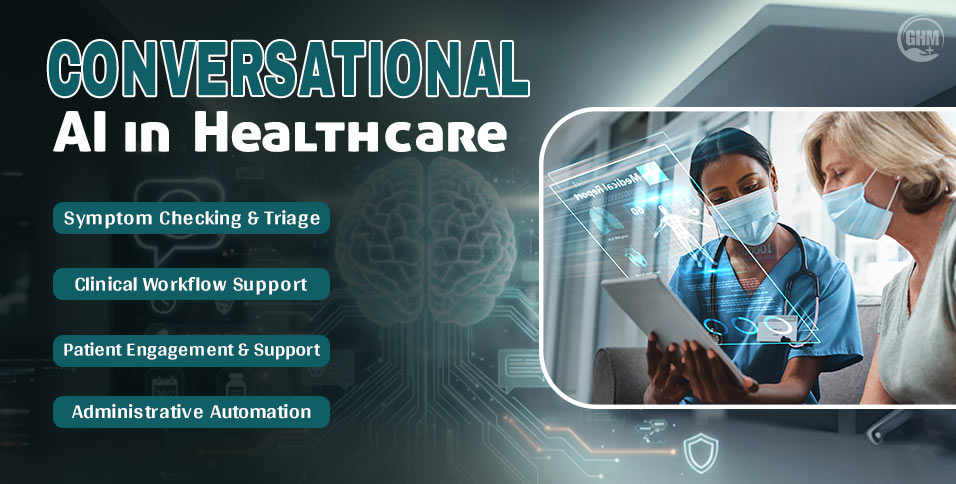
This is exactly where conversational AI in healthcare is making a meaningful difference. The conversational AI industry, valued at $17.2B in 2025, features intelligent chatbots to voice-enabled virtual assistants, transforming how patients and providers communicate. Instead of long wait times and paperwork, patients get instant answers, personalized reminders, and round-the-clock support. Healthcare teams, in turn, gain time back to focus on what truly matters — patient care.
In this article, you’ll learn what using conversational AI for healthcare really is, how it’s being used today, the real benefits and challenges, and why it’s becoming a foundational technology for the future of patient-centered care.
What Is Conversational AI in Healthcare?
Conversational AI refers to technologies like chatbots and voice assistants that use Natural Language Processing (NLP) and machine learning. Unlike the simple, “press 1 for billing” menus of the past, these systems understand context. They can engage in complex, multi-turn dialogues that feel remarkably human.
In the medical world, conversational AI acts as a digital front door. It utilizes generative AI models to interpret patient intent. This allows the system to provide accurate answers instead of just pre-written scripts. It differs from traditional digital tools because it learns from every interaction. This adaptability makes conversational AI in healthcare a powerhouse for engagement.
Recently, Utah launched a pilot program that allows for AI-written medical prescriptions. This landmark move permits AI to renew routine prescriptions for patients with chronic conditions, where the AI reviews a patient’s history and confirms eligibility. It then issues routine refills for medications like blood pressure drugs or antidepressants.
This healthcare automation ensures that patients do not experience dangerous gaps in treatment while waiting for a doctor’s signature. While physicians still provide oversight, this shift marks a significant evolution for AI and healthcare.
How Is Conversational AI Used In Healthcare Today?
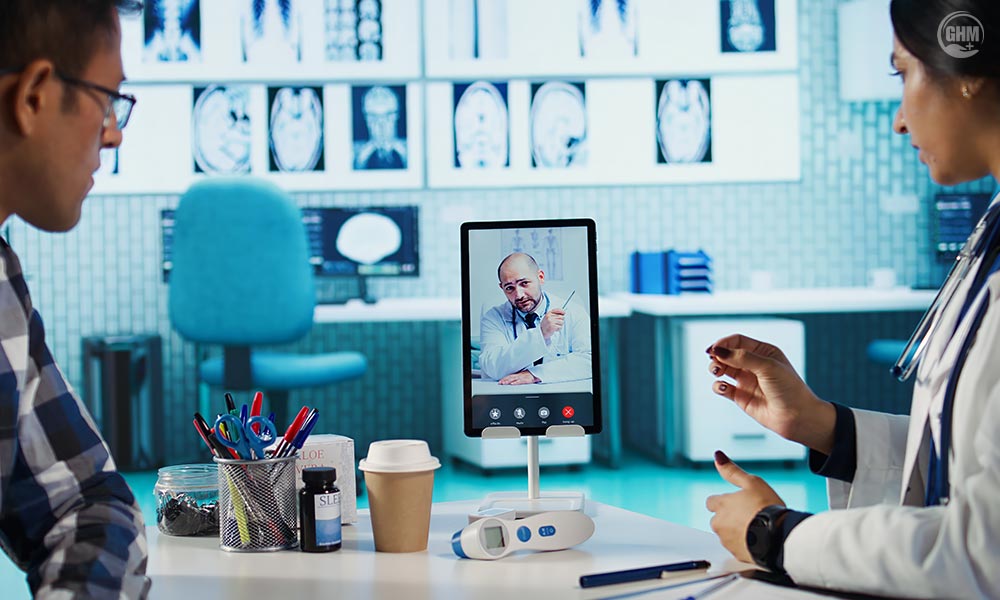
The adoption of conversational AI in healthcare isn’t just a trend; it is a necessity. Here are the primary ways it is being used today:
1. Patient Engagement & Support
- 24/7 Availability: AI agents answer FAQs and provide after-visit instructions at any hour. Multilingual AI boosts screening opt-ins 2.6x for Spanish-speakers.
- Care Reminders: Automated systems send personalized alerts for medication and follow-up appointments.
- Multilingual Support: Conversational AI bridges language gaps, offering help in dozens of dialects.
2. Administrative Automation
Healthcare staff often face massive labor constraints. The conversational AI in healthcare automates appointment booking and rescheduling, and increases online bookings by 46%.
It also handles prescription refills and basic paperwork. This reduces the manual workload on human receptionists significantly. To further streamline operations, many facilities are pairing this technology with pharmacy digital signage to keep patients informed and reduce wait times.
3. Symptom Checking & Triage
Modern symptom checkers use AI to assess a patient’s condition. The system then routes the patient to the appropriate level of care. This prevents ER from overcrowding by directing non-emergency cases to primary care or telehealth.
4. Clinical Workflow Support
- Ambient Documentation: AI listens to doctor-patient visits and drafts notes automatically.
- EHR Integration: Providers feature, such as using voice commands to retrieve data from Electronic Health Records.
Benefits of Conversational AI In Health Systems
The shift toward using AI for patient communication offers measurable advantages for everyone involved.
| Benefit | Description |
| Cost Savings | Reduces staffing costs by automating repetitive administrative tasks. |
| Reduced Burnout | Frees clinicians from hours of documentation and manual data entry. |
| Better Outcomes | Improves medication adherence through consistent, personalized reminders. |
| Scalability | Allows systems to serve thousands of patients simultaneously without delays. |
Studies show that, by using AI in patient care, providers can see up to 40% more patients weekly and even a 30-70% improvements.
Additionally, AI-powered medical scribes can save doctors nearly two hours of paperwork every day. AI scribes saved physicians 15,700 hours in one year; top users saved double per note.
Challenges & Considerations of Using Conversational AI in Healthcare
While the potential is vast, we must implement conversational AI for the purpose of healthcare responsibly.
1. Data Privacy and Compliance
Handling sensitive medical data requires strict adherence to HIPAA and GDPR standards. Developers must ensure that every interaction is encrypted and secure.
2. Accuracy and Trust
AI “hallucinations” or misinformation can be dangerous in medicine. Therefore, human involvement remains essential. This ensures that a qualified professional always reviews any clinical advice generated by conversational AI.
3. Technical Complexity
Integrating new AI with old legacy systems is often difficult. Organizations must focus on data exchange from various systems to ensure data flows smoothly between the AI and the hospital’s core software.
Best Practices To Implement AI For Health Communication
To succeed with conversational AI in healthcare, organizations should follow a structured roadmap:
- Prioritize Impact: Start with simple use cases like scheduling before moving to clinical triage.
- Govern Data: Build strong audit trails to monitor how the AI uses patient information.
- Iterate Constantly: Use patient satisfaction scores to refine the AI’s tone and accuracy.
- Maintain Oversight: Ensure that clinicians always have the final say in patient care decisions.
The Future of Conversational AI In Healthcare
The next few years will bring even deeper integration. Right now, 66% of physicians are already using conversational AI daily, but we expect to see conversational AI in healthcare connecting with wearable IoT devices. Imagine your smartwatch detecting a heart rhythm change and your AI assistant automatically scheduling a telemedicine visit. These proactive capabilities will move medicine from a reactive model to a preventive one.
Furthermore, artificial intelligence in healthcare will soon provide even more advanced diagnostics and behavioral health support.
Final Thoughts
Conversational AI in healthcare is no longer a futuristic concept—it’s already reshaping how care is delivered and experienced. Conversational AI is a vital tool for modern medicine. It addresses labor shortages, reduces provider burnout, and gives patients the 24/7 access they deserve. While privacy and accuracy challenges remain, the benefits of streamlined workflows and better engagement are undeniable. As AI and healthcare continue to merge, the focus will remain on human-first care powered by intelligent automation.
While challenges like data privacy, system integration, and clinical accuracy must be handled carefully, the long-term benefits are clear. Patients gain faster access to care, and clearer guidance as providers reduces burnout and reclaim valuable time. Healthcare organizations improve outcomes while controlling costs.
As conversational AI continues to evolve, integrating with wearables, telehealth platforms, and predictive analytics, it will play a central role in shifting healthcare from reactive treatment to proactive, preventive care. The future of healthcare isn’t about replacing humans with machines; it’s about empowering people with intelligent tools that make care more accessible, personal, and effective.
If you liked this insight on AI in Healthcare, share this article with your friends and family to spread the word!
Sanskruti Jadhav
Frequently Asked Questions
- Is conversational AI in healthcare safe for patients?
Yes, when built with clinical oversight and HIPAA-compliant security, it is very safe. However, it should supplement, not replace, professional medical advice.
- Can AI really understand complex medical terms?
Modern conversational AI technology uses advanced NLP trained on millions of medical documents. This allows it to understand jargon and context quite effectively.
- Does using AI mean I won’t talk to a real doctor?
Not at all. The goal of conversational AI in healthcare is to handle the “busy work.” This actually gives your doctor more time to focus on you during your visit.
- Will AI make healthcare more expensive?
Initially, there is an investment cost. However, in the long run, it reduces expenses by preventing unnecessary ER visits and streamlining hospital operations.