Many people feel overwhelmed by intense emotions and struggle to control them. They try to find the balance but lack the practical tools for it. Well there are many ways to help our mental struggles, with different therapy options. One of them is Dialectical Behavior Therapy (DBT).
DBT is a scientific technique that focuses on living in the moment and developing healthy ways to cope with unpleasant emotions. This teaches how to be flexible with our feelings and improve our relationships with ourselves and others. The DBT works with the philosophical perspective of dialectics.
In this guide, you will discover how dialectical behavior therapy techniques help achieve emotional regulation. You will also understand the core pillars of DBT and how to apply these skills to control your life today.
What Is Dialectical Behavior Therapy (DBT)?
Dialectical Behavior Therapy (DBT) is a structured, evidence-based form of psychotherapy designed to help people manage intense emotions, cope with stress, and improve relationships.
Dr. Marsha Linehan developed Dialectical Behavior Therapy (DBT) in the late 1980s. Originally, she designed it to treat Borderline Personality Disorder (BPD). However, clinicians now use it for various mental health challenges. DBT evolved from cognitive behavioral therapy and adult disorders.
The word “dialectical” refers to the balance between two opposing ideas. In DBT, these ideas are acceptance and change. You learn to accept your current experience while simultaneously working to change harmful behaviors. Unlike some types of psychotherapy, DBT follows a highly structured approach. It usually includes individual sessions and skills training groups.
Why Are Dialectical Behavior Therapy Techniques Important?
Modern life brings unprecedented levels of stress and digital burnout. Consequently, many individuals need to learn to detox their brains and manage internal chaos. Dialectical behavior therapy techniques offer a bridge between feeling out of control and achieving mastery over your mind.
Research shows that DBT significantly reduces self-harm and hospitalization rates. Apart from that, the evidence-based practices like dialectical behavior therapy improve long-term recovery outcomes by 40% in high-risk patients.
These Dialectical Behavior Therapy techniques help you:
- Reduce impulsive reactions during crises.
- Build stronger, healthier interpersonal connections.
- Increase your window of tolerance for physical and emotional pain.
What Are The Core Dialectical Behavior Therapy Techniques?
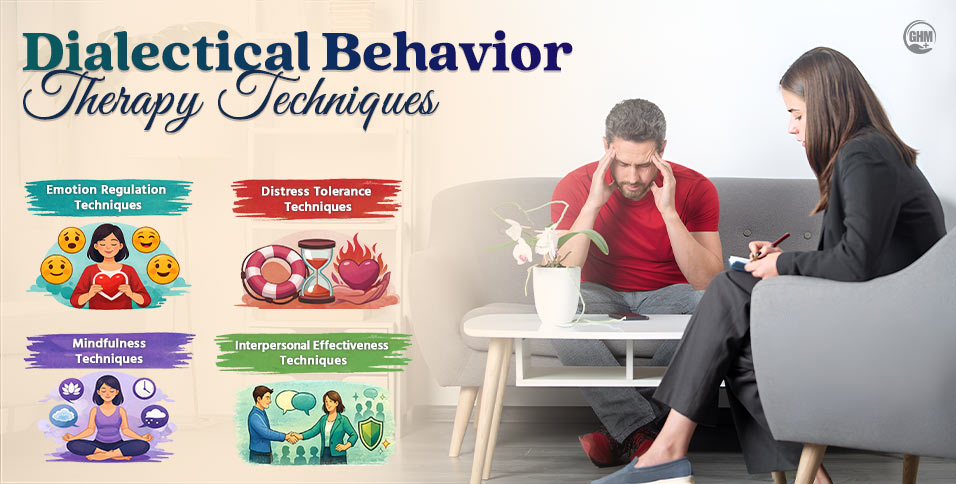
There are four primary therapy techniques in the DBT framework. Each module targets a specific area of emotional or social functioning.
1. Mindfulness Techniques In DBT
Mindfulness serves as the foundation for all other dialectical behavior therapy techniques. It involves staying present in the moment without judging yourself.
- Observe: Notice your thoughts and feelings like clouds passing in the sky.
- Describe: Put words to your experience with adding more than “good” or “bad” labels.
- Participate: Throw yourself fully into the current activity.
Example Exercise: Spend three minutes focusing solely on your breath. When your mind wanders, gently bring it back without criticism. This practice reduces the “autopilot” mode that fuels anxiety.
2. Distress Tolerance Techniques
The distress tolerance skills help you survive immediate crises without making the situation worse. You use such DBT coping skills when you cannot immediately change a situation.
- STOP Technique: Stop, Take a step back, Observe, and Proceed mindfully.
- TIP Skills: Change your body chemistry by using Temperature (cold water), Intense exercise, or Paced breathing.
- Radical Acceptance: Fully accepting reality as it is, even when it is painful.
3. Emotion Regulation Techniques
These emotion regulation strategies in DBT help you navigate intense feelings before they lead to destructive actions.
- Check the Facts: Does your emotion match the actual reality of the situation?
- Opposite Action: If you feel like isolating due to sadness, force yourself to socialize.
- PLEASE Skill: Treat Physical illness, Eat healthy, Avoid drugs, Sleep well, and Exercise.
4. Interpersonal Effectiveness Techniques
Social health is vital for mental stability. These skills mirror some concepts found in interpersonal therapy.
The DEAR MAN technique is a staple for assertive communication:
- Describe the facts.
- Express your feelings.
- Assert your wishes.
- Reinforce the benefits.
- Mindful of your goal.
- Appear confident.
- Negotiate a solution.
Additional DBT Techniques and Tools
Beyond the four pillars, practitioners use several logistical tools to ensure progress.
DBT diary cards allow patients to track daily urges and skill usage. Additionally, the group therapy technique provides a safe space for difficult conversations. Another key aspect is phone coaching, which offers real-time support when you face a crisis outside of the therapist’s office.
Conditions Treated Using DBT Techniques
While DBT began as a BPD treatment, it now helps diverse populations.
DBT Techniques are effective for:
- Borderline Personality Disorder (BPD): DBT serves BPD patients by helping individuals manage intense mood swings, unstable relationships, and self-harming urges.
- Depression and Chronic Anxiety: These techniques help patients break the cycle of ruminating thoughts and avoidant behaviors by fostering present-moment awareness and emotional resilience.
- Post-Traumatic Stress Disorder (PTSD): DBT provides trauma survivors with the distress tolerance skills necessary to process painful memories without becoming emotionally overwhelmed or dissociated.
- Eating Disorders and Substance Use: By teaching impulse control and self-soothing strategies, DBT reduces the reliance on binging, purging, or chemical substances to numb emotional pain.
- ADHD: Individuals with ADHD use DBT to improve executive functioning and manage the sudden, intense “emotional bursts” that often accompany the disorder.
- Neurodiversity (Autism): DBT offers structured social and emotional frameworks that help neurodivergent individuals navigate sensory overload and complex interpersonal communication.
Benefits of Dialectical Behavior Therapy Techniques
The primary benefit of dialectical behavior therapy is emotional resilience. You learn that emotions are temporary waves rather than permanent states. Data suggest that DBT participants experience a 50% reduction in suicidal behaviors compared to those receiving general therapy. The benefits of Dialectical Behavior Therapy extend from mental to physical health by lowering chronic stress hormones like cortisol.
Limitations of DBT
The standard dialectical behavior therapy program often lasts six months to a year, which requires significant commitment. Furthermore, the early stages of therapy can feel emotionally draining. You must confront painful memories and patterns. Therefore, you should always seek guidance from a certified DBT therapist to ensure safety.
Can You Practice DBT Techniques on Your Own?
You can certainly practice the DBT exercises for beginners independently. Mindfulness and basic breathing exercises are excellent starting points for daily life. However, treating complex trauma or severe personality disorders requires a professional. A therapist provides the “dialectical” perspective that is hard to find when you are alone.
How to Get Started With DBT Techniques
- Search for Specialists: Look for therapists specifically trained by the Behavioral Tech Institute.
- Use Online Platforms: Many digital clinics now offer structured DBT skills training.
- Start Small: Pick one skill, like the STOP technique, and practice it once a day.
- Buy a Workbook: The DBT Skills Training Handouts and Worksheets by Marsha Linehan is the gold standard resource.
Final Words
Mastering dialectical behavior therapy techniques empowers you to take control of your emotional life. We explored how mindfulness, distress tolerance, and interpersonal skills create a foundation for mental wellness. While these skills require dedicated practice, the result is a life worth living.
As mental healthcare evolves, DBT remains a beacon of hope for those seeking stability in a chaotic world.
Start your journey today by practicing one mindful breath.
If you found this guide helpful, please share it with someone who might need these tools today!
Frequently Asked Questions
- How does DBT differ from traditional CBT?
CBT focuses mainly on changing thoughts. DBT adds the element of “acceptance” and focuses heavily on emotional and social skills.
- Are there any age limits for learning DBT skills?
No. There are specific adaptations for adolescents (DBT-A) and even programs modified for children and older adults.
- Can dialectical behavior therapy help with anger management?
Yes. The “Opposite Action” and “Distress Tolerance” skills are highly effective for reducing aggressive impulses.