Understanding autism can feel overwhelming because it is not a single, uniform condition. Instead, Autism Spectrum Disorder (ASD) represents a wide range of experiences, abilities, and support needs.
Some individuals live independently with minimal assistance, while others require lifelong, intensive care. Globally, autism affects millions. WHO estimates that 1 in every 100 children is diagnosed with autism worldwide.
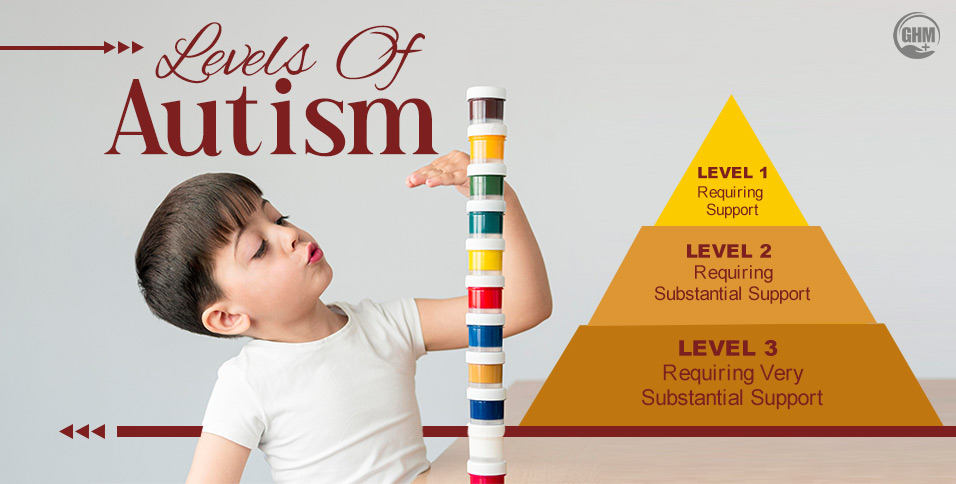
To bring clarity to this complexity, clinicians use the concept of levels of autism, which classifies the condition based on how much support a person needs in daily life. The levels of autism are an essential part of this condition, with a wide range of aspects to understand.
Autism Awareness Day is a good occasion to dive into this condition, which is very little explored. This article explains these levels of autism, the diagnostic framework behind them, and the support systems that help individuals thrive.
What Is Autism Spectrum Disorder (ASD)?
Autism Spectrum Disorder (ASD) is a complex neurodevelopmental condition. It primarily impacts how people communicate, interact with others, and experience the world.
Experts identify ASD through two core characteristics:
- Challenges in social communication and interaction
- Restricted or repetitive behaviors and interests
- Differences in sensory processing
The term “spectrum” highlights that every autistic person possesses a unique combination of strengths and challenges. While some individuals may have intellectual or language impairments, others do not.
Why Are There Levels of Autism?
Because autism varies so widely, healthcare professionals need a standardized way to describe its severity and support needs.
This led to the introduction of “autism spectrum disorder levels”in the DSM-5-TR, Fifth Edition (DSM-5) Diagnostic and Statistical Manual of Mental Disorders, published by the American Psychiatric Association.
Before 2013, autism was divided into separate conditions, such as:
- Asperger’s syndrome
- Autistic disorder
- Pervasive developmental disorder (PDD-NOS)
However, these categories were inconsistent in clinical practice. The DSM-5 unified them under one diagnosis: Autism Spectrum Disorder, while introducing three levels of severity.
By unifying these under one “umbrella,” the levels of autism help professionals:
- Standardize the diagnostic process across different clinics.
- Clearly communicate the amount of support an individual requires.
- Create tailored treatment and educational plans.
The 3 Levels of Autism Explained
The levels of autism categorize how much support a person needs rather than measuring their intelligence. The symptoms of autism in a person are key indicators.
Level 1 Autism: Requiring Support (Mild Autism)
Level 1 of Autism is often considered the mildest form of the disorder. While these individuals can often live independently, they still face clinically significant challenges.
- Symptoms: They may struggle to initiate social interactions and often provide atypical responses to others.
- Behavioral Traits: Rigid behavior can interfere with organization and planning.
- Support Strategies: Many benefit from speech-language therapy or social skills training to navigate complex social rules.
Level 2 Autism: Requiring Substantial Support (Moderate Autism)
Individuals at Autism Level 2 have more obvious impairments that require regular, consistent assistance.
- Symptoms: They often have marked deficits in verbal and nonverbal communication. For example, they might only speak in simple sentences or focus solely on narrow interests.
- Behavioral Traits: Repetitive behaviors are frequent enough to be obvious to others and interfere with daily functioning.
- Support Strategies: (Applied Behavior Analysis) ABA therapy techniques are frequently central to helping these individuals build functional skills.
Level 3 Autism: Requiring Very Substantial Support (Severe Autism)
Level 3 of Autism Spectrum Disorder represents the most significant degree of impairment.
- Symptoms: Many individuals are nonverbal or use only a few intelligible words. They respond only to very direct social approaches.
- Behavioral Traits: Extreme distress occurs when routines change, and intense repetitive behaviors may interfere with safety.
- Support Strategies: They often require 24/7 supervision and assistive communication tools like picture exchange systems.
Key Differences Between Autism Levels (Comparison Table)
| Feature | Level 1 | Level 2 | Level 3 |
| Support Needed | Minimal/Outpatient | Moderate/Substantial | Intensive/Very Substantial |
| Communication | Functional but atypical | Limited/Simple sentences | Very limited or nonverbal |
| Independence | Often independent | Requires regular help | Requires 24/7 care |
| Behavior | Noticeable but manageable | Obvious and frequent | Interferes with all areas |
Can Autism Levels Change Over Time?
Autism levels are not a life sentence; they are a snapshot of a person’s current needs.
- Early Intervention: Intensive therapy can help a child gain skills, potentially moving them from a Level 2 to a Level 1 of autism.
- Environmental Factors: A person might require more support during stressful transitions, such as starting a new job or entering puberty.
- Fluidity: Support needs can even fluctuate from day to day, depending on the environment.
How Are Autism Levels Diagnosed?
A formal diagnosis of autism usually involves a team of specialists, including pediatricians, psychiatrists, and clinical psychologists. They use developmental histories and behavioral assessments to determine the appropriate level.
The prevalence of autism has increased significantly over the last two decades. This rise is largely attributed to better efforts to diagnose the condition and changes to the clinical definition.
Early diagnosis is vital, as it allows families to access resources during critical developmental windows.
DSM-5 Criteria For Autism Diagnosis
To receive an ASD diagnosis, an individual must meet specific criteria across two main domains.
- Social Communication Deficits
Diagnosis requires evidence of challenges in all three of these areas:
- Social-emotional reciprocity: Difficulty engaging in back-and-forth conversation or sharing interests.
- Nonverbal communication: Problems with eye contact, body language, or facial expressions.
- Relationship building: Struggles with making friends or adjusting behavior to social contexts.
- Restricted and Repetitive Behaviors
An individual must also show at least two of the following patterns:
- Repetitive motor movements or speech (like hand-flapping or echoing words).
- Inflexible adherence to routines or ritualized behavior patterns.
- Highly restricted, fixated interests that are intense in focus.
- Hyper- or hypo-reactivity to sensory input, such as adverse reactions to specific textures or sounds.
Additionally:
- Symptoms must appear in early development
- They must significantly affect daily functioning
- They cannot be better explained by another condition
Treatment and Support Options for Autism
Effective treatment focuses on the individual’s specific needs rather than just their level.
- Therapies: ABA therapy, speech therapy, and occupational therapy are evidence-based standards to build communication and life skills.
- Stimming Support: Implementing the stimming behaviors in autism (like rocking or humming) is a natural coping mechanism, where the brain is under-stimulated and blocks out overwhelming input in loud or bright environments.
- Medical Oversight: For those with severe needs, autism centers provide inpatient programs that manage co-occurring medical issues like seizures or aggression.
Conclusion
Understanding the three levels of autism is the first step toward providing meaningful support. While Level 1 requires some assistance, Level 2 needs substantial help, and Level 3 requires very substantial care. However, every individual’s journey is unique, and their needs can change as they grow and learn.
With early diagnosis, appropriate therapies, and inclusive policies, individuals with autism can lead meaningful and fulfilling lives.
On this autism awareness Day, the focus should not be on “fixing” autism, but on supporting individuals and embracing neurodiversity as a natural part of humanity.
Did you find this guide helpful? Share it with your friends and family to spread autism awareness!