Do you ever feel overwhelmed by the endless advice on raising children? You want the best for your kids, yet finding the right balance often feels impossible. Many parents struggle with guilt, self-doubt, or confusion while navigating the complexities of child-rearing.
The good news is that understanding your parenting style can bring clarity. Rather than following conflicting opinions, you can rely on proven psychological frameworks that help you create a nurturing, structured, and emotionally healthy environment for your child.
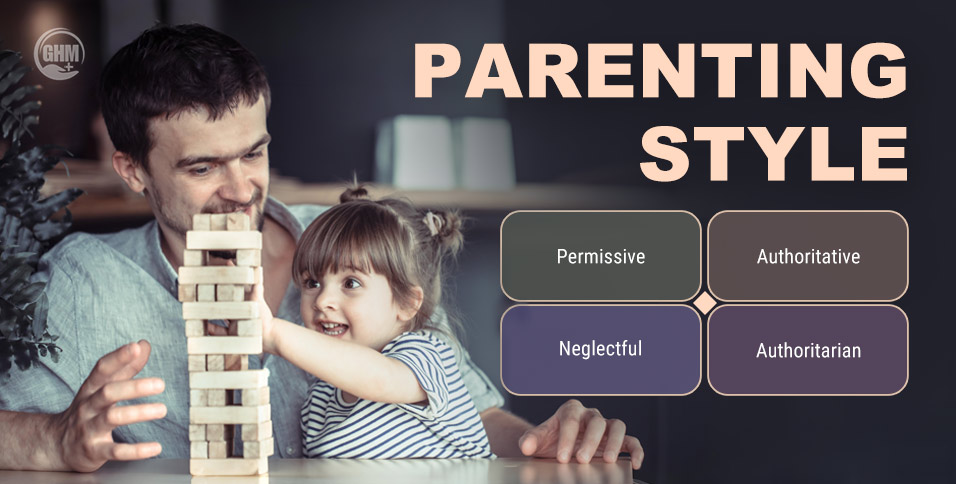
This guide breaks down the science behind the four styles of parenting and shows how you can apply it in real life. It will surely help you foster a healthy, thriving environment for your little ones.
What is a Parenting Style?
A parenting style is a standard technique parents use to raise their children. The consistent patterns of behavior, discipline, communication, and emotional support that every parent uses while raising their children — those are parenting styles.
Psychologists define parenting styles using two core dimensions:
- Demandingness: The level of rules, expectations, and discipline that parents set.
- Responsiveness: The degree of warmth, emotional support, and sensitivity to a child’s needs.
Each approach creates a unique ripple effect on a child’s social, emotional, and cognitive growth. By identifying where you fall, you can make intentional shifts to improve your family dynamics.
Learn Which Parenting Style You Should Use
1. Authoritative Parenting Style
Experts widely consider the authoritative parenting style the “gold standard.” These parents set clear rules but also offer high levels of emotional support.
They explain the reasons behind the rules and value open communication.
They explain rules, listen to their child’s perspective, and encourage independence while maintaining boundaries. Discipline is consistent but fair, and mistakes are treated as learning opportunities.
Common outcomes for children:
- Higher self-esteem and emotional intelligence
- Strong problem-solving and social skills
- Better academic performance
- Improved stress management
This balanced approach supports strong mental health for both the parent and the child.
2. Authoritarian Parenting Style
The authoritarian parenting style focuses heavily on obedience and discipline. These parents often use a “because I said so” approach to guidance.
In this relation, the rules are non-negotiable, and communication tends to be one-directional. They establish strict rules with little room for negotiation or warmth.
Common outcomes for children:
- Strong rule-following behavior
- Lower self-confidence
- Difficulty expressing emotions
- Higher anxiety or fear of failure
While structure is important, excessive rigidity can strain the relationship between parent and child, which increases parental stress over time.
3. Permissive Parenting Style
The permissive parenting style prioritizes friendship over discipline. These parents are nurturing, accepting, and very warm, but rarely enforce consistent rules and boundaries.
They act more like peers than authority figures and avoid conflict at all costs.
Common outcomes for children:
- Difficulty with self-discipline
- Challenges following rules at school
- Struggles with authority and responsibility
- Emotional impulsivity
While the home feels relaxed, the lack of structure can eventually cause chaos and burnout.
4. Neglectful Parenting Style
Also known as uninvolved parenting, the neglectful parenting style lacks both warmth and rules. These parents provide for basic needs but remain emotionally distant and are minimally involved in their child’s daily life.
They offer little guidance, nurturing, or supervision to their children.
Common outcomes for children:
- Emotional withdrawal
- Poor academic performance
- Difficulty forming secure relationships
- Increased risk of mental health concerns
If you feel parenting feels overwhelming to this degree, professional support can be a critical step toward restoring balance and connection.
Why Your Parenting Style Matters
The style of parenting you use acts as the blueprint for your child’s future. It influences how they handle stress, interact with peers, and view themselves. For instance, children raised with warmth and boundaries tend to excel academically. Furthermore, they develop higher levels of emotional intelligence compared to those in highly restrictive environments.
Experts emphasize that consistency is the cornerstone of effective parenting. When parents fluctuate wildly between being strict and being lax, children feel insecure. Therefore, choosing a steady parenting style helps your child feel safe and understood.
How To Balance Your Parental Stress & Mental Health
Raising humans is exhausting work that often impacts parents’ mental health. High expectations can lead to chronic parental stress, which inadvertently changes your parenting style. When you are stressed, you might become more authoritarian or completely uninvolved.
To maintain a healthy parenting style, you must prioritize your own well-being.
Parents’ Mental Health Can Improve By:
- Setting realistic expectations
- Seeking social or professional support
- Practicing regular self-care
- Taking breaks without guilt
Consequently, a calmer parent is better equipped to utilize the authoritative parenting style. Remember, you cannot pour from an empty cup.
How to Shift Your Parenting Style
Changing how you parent is entirely possible with time and effort. First, observe your natural reactions during moments of conflict. Do you shut down, or do you yell? Recognizing these patterns is the first step toward growth.
Second, try to incorporate more “Authoritative” elements into your daily routine. Start by explaining the “why” behind a specific household rule. Additionally, spend ten minutes of undivided positive time with your child each day.
These small changes gradually reshape your overall parenting style for the better.
How To Create Balance Between Parenting Styles
While bringing Authority in the relations as a parent is the goal, in reality, most parents do not fit neatly into one category. They tend to lean toward one extreme or the other naturally.
Life stress, cultural expectations, and a child’s temperament can all influence how you respond in different situations.
The goal is not perfection, but intentional balance.
- If you are too strict: Focus on building the relationship. Practice active listening and validate your child’s feelings, even when they are in trouble.
- If you are too lenient: Focus on boundaries. Understand that saying “no” is a form of love that helps your child feel secure and learn self-control.
- The Hybrid Approach: Most parents aren’t 100% one style. The goal is to ensure that, regardless of the situation, your child knows the boundaries are firm, but the love is unconditional.
By creating a healthy middle ground, you can integrate the best of all types of parenting and make parenting easier.
End Note
Your parenting style is a powerful tool in shaping your child’s life. While the authoritative type of parenting remains the most recommended, modern approaches emphasize responsive parenting, which means adapting your style to a child’s temperament and emotional needs.
The goal is progress, not perfection. Evaluate your methods, manage your parental stress, and stay attuned to your child’s needs. This personalized approach ensures every child receives the specific support they need to thrive.
By doing so, you create a foundation of love and respect that lasts a lifetime.
If you found this guide helpful, please share it with other parents in your community! Together, we can build healthier families.
Sanskruti Jadhav
Frequently Asked Questions
- Can parents have different parenting styles?
Yes, it is very common for partners to have different approaches. One may be more permissive while the other is authoritarian. The key is to communicate privately and present a united front to the child.
- Does birth order affect which parenting style I use?
Research suggests parents are often stricter with firstborn children. By the time the second or third child arrives, parents often lean toward a more permissive parenting style due to experience and fatigue.
- Is it possible to be “too authoritative”?
The authoritative style is defined by balance. If the rules become too rigid and the warmth disappears, you have moved into the authoritarian category. Always check in on the emotional connection with your child.
- How does culture influence my parenting style?
Culture plays a massive role in defining what “good parenting” looks like. Some cultures value high obedience as a form of protection, while others prioritize individual expression. Neither is “wrong,” but the authoritative balance generally yields the best mental health outcomes globally.
- Can my child’s temperament change my style?
Absolutely. A child who is naturally defiant may push a parent toward a more authoritarian parenting style. Conversely, an easy-going child may lead a parent to become more permissive. Being mindful of this “bidirectional” influence helps you stay consistent.