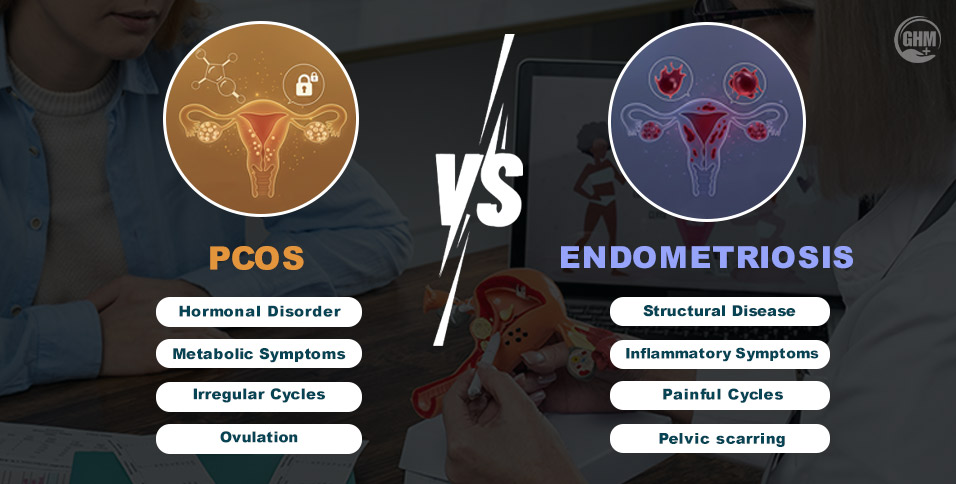
When it comes to women’s hormonal health, few comparisons cause as much confusion as PCOS vs. Endometriosis. Also, when things feel “off” with your reproductive system, the internet often throws two big terms at you: polycystic ovarian syndrome (PCOS) and endometriosis.
Both conditions affect the reproductive system, both can disrupt menstruation, and both are leading causes of infertility worldwide. Yet they are not the same disease, and treating one like the other can delay relief, worsen symptoms, and affect long-term health.
Globally, polycystic ovarian syndrome (PCOS) affects an estimated 8–13% of women of reproductive age. Endometriosis, on the other hand, impacts about 1 in 10 women worldwide, or nearly 190 million women.
This article will solve all your doubts about PCOS and Endometriosis, so you can understand your body and its symptoms to start your path towards healthy life. Understanding the PCOS vs. Endometriosis divide is the first step if you want to stop guessing and start feeling better.
PCOS vs. Endometriosis: A Quick Comparison
| Feature | PCOS | Endometriosis |
| Primary Issue | Hormonal imbalance | Structural inflammation |
| Menstruation | Irregular or absent | Regular but painful |
| Pain Level | Rare | Common |
| Fertility Issue | Ovulation | Pelvic scarring |
| Diagnosis | Clinical & labs | Laparoscopic Surgery confirmation |
8 Differences In PCOS vs. Endometriosis To Resolve Your Confusion
1. Primary Cause: Hormonal Disorder vs. Structural Disease
The most important difference in PCOS and Endometriosis lies at the root of the condition.
PCOS is a disorder of hormonal health, where the ovaries produce excess androgens (often called “male hormones”), disrupting ovulation and menstrual cycles. It also commonly involves insulin resistance, which links PCOS to thyroid disorders, diabetes, and heart disease.
Endometriosis is an inflammatory condition which is not driven by hormone imbalance alone. Instead, it occurs when tissue similar to the uterine lining grows outside the uterus. This leads to inflammation, scarring, and pain. These growths react to your cycle but have no way to leave the body, causing intense inflammation.
This single difference explains why PCOS and Endometriosis require entirely different treatment approaches.
2. Period Patterns: Irregular Cycles vs. Painful Cycles
Menstruation offers one of the clearest clues if you want to compare PCOS vs. Endometriosis.
In PCOS: periods are often irregular, infrequent, or absent.You might go months without one, or they might show up whenever they feel like it, which directly affects fertility. This happens because the hormonal imbalance stops you from ovulating regularly.
In endometriosis: menstruation is usually regular but extremely painful. Heavy bleeding, severe cramps, and pain that begins before menstruation are classic signs. According to research, menstrual pain that interferes with daily life is far more indicator of endometriosis than PCOS.
3. Pain Levels: Why Pain in Endometriosis Matters More
Pain is one of the most overlooked differences in Endometriosis and PCOS. While neither is fun, the type of discomfort varies:
PCOS Pain: Most women with PCOS don’t deal with chronic, daily pelvic pain. You might feel heavy or bloated, but sharp pain isn’t the main symptom.
Endometriosis Pain: Pain is the hallmark of this condition. This can include:
- Chronic pelvic pain
- Pain during intercourse
- Constant Lower back pain
- Pain during bowel movements
Depending on the stages of endometriosis, this pain can range from a dull roar to an agonizing sharp sensation.
4. Physical Changes: Metabolic Symptoms vs. Inflammatory Symptoms
Another major distinction in PCOS & Endometriosis lies in how the body reacts systemically.
PCOS symptoms are metabolic such as:
- Weight gain
- Acne and oily skin
- Excess facial or body hair
- Insulin resistance
- Thyroid irregularities
Endometriosis symptoms are inflammatory, including:
- Chronic fatigue
- Abdominal bloating
- Gastrointestinal discomfort
- Pain that worsens over time
These patterns help clinicians differentiate between PCOS and endometriosis when symptoms overlap.
5. Hormonal Environment: Androgens vs. Estrogen Dependence
Hormonal activity further separates PCOS and Endometriosis.
PCOS involves excess androgens and disrupted insulin signaling, which affects the entire body.
Endometriosis is estrogen-dependent, meaning symptoms may improve after menopause when estrogen levels naturally decline.
6. PCOS vs. Endometriosis Diagnosis: Difference in Detection Time
This is where the journey can get frustrating.
Diagnosing PCOS: Doctors can usually Diagnose PCOS through a combination of your symptoms, blood tests to check hormone levels, and a standard ultrasound.
Diagnosing Endometriosis: This is much trickier. Endometriosis often doesn’t show up on blood tests or even some ultrasounds. The only way to 100% confirm it is through a minor surgery called a laparoscopy, where a doctor looks inside with a tiny camera.
Due to this invasive detection technique women hesitate to get tested, leading to many years to get an answer. Endometriosis takes an average of 7–10 years to diagnose globally.
7. Impact on Fertility: Different Problems, Different Solutions
If you’re trying to start a family, both conditions can be obstacles, but for different reasons.
- PCOS Fertility Issues: The problem is usually irregular ovulation. Treatment often involves lifestyle changes or medication to help you ovulate.
- Endometriosis Fertility Issues: The problem is often physical. Inflammation or scar tissue might be blocking the path for fertility. This sometimes requires surgery or IVF.
This makes an accurate contrast in PCOS and Endometriosis essential for family planning.
8. Ovarian “Cysts”: A Commonly Misunderstood Difference
Both involve the ovaries, but the cysts are not the same.
In PCOS: The “cysts” are actually tiny, underdeveloped follicles (egg sacs) that failed to release an egg. They look like a “string of pearls” on an ultrasound.
In Endometriosis: The ovarian cysts, called endometriomas, contain old blood and tissue. These are structurally different and can damage ovarian tissue, impacting fertility.
In endometriosis, this misunderstanding often fuels confusion in PCOS vs. Endometriosis diagnoses based solely on ultrasound findings.
Can PCOS and Endometriosis Coexist?
Yes. It’s estimated that about 5–10% of women may deal with PCOS and endometriosis at the same time. If you have irregular periods and debilitating pain, it is vital to see a specialist who understands both. Treating only the hormones won’t fix the inflammatory growth, and vice versa.
Final Thoughts
Understanding the difference between PCOS and Endometriosis empowers women to advocate for accurate diagnosis and personalized treatment.
Whether it’s PCOS or Endometriosis, the most important thing is that you don’t dismiss your symptoms as “just being a woman.”
Pain that stops your life or cycles that never show up are signals from your body that it needs help. These conditions may share symptoms, but they demand very different medical strategies.
The sooner the distinction is made, the better the outcome. Precise treatment starts with a precise diagnosis.
If this guide on PCOS vs. Endometriosis helped clarify your questions, share it with someone who may be struggling with unexplained symptoms. Getting tested as soon as possible and being aware is the first step.
Sanskruti Jadhav
Frequently Asked Questions
1. Can menopause cure endometriosis or PCOS?
Menopause may reduce endometriosis symptoms due to lower estrogen but does not cure it. PCOS symptoms may improve but metabolic risks can persist.
2. Is PCOS linked to mental health issues?
Yes. PCOS is associated with higher rates of anxiety and depression due to hormonal imbalance.
3. Can endometriosis spread to other organs?
Endometriosis can affect organs near the uterus, including the bowel and bladder, though it is not cancer.
4. Does thyroid disease worsen PCOS or endometriosis?
Thyroid disorders can worsen hormonal imbalance in PCOS and exacerbate fatigue in endometriosis.
5. Does weight loss cure PCOS?
Weight management can improve PCOS symptoms but does not cure the condition.