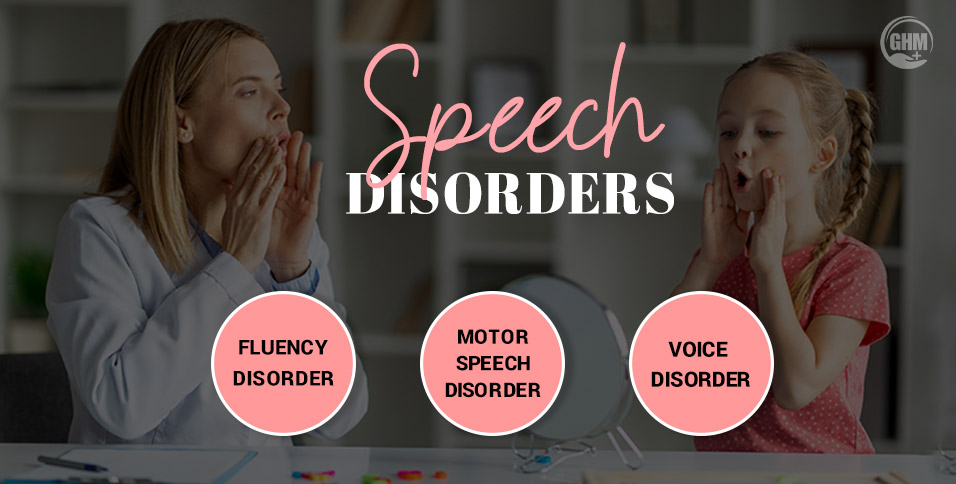
Nothing is more heart-rending than watching a child struggle to express themselves. A speech disorder refers to any difficulty in producing sounds, using voice, or achieving fluent speech.
Speech disorders in children can range from mild articulation issues to a serious inability to speak, impacting their social life, academic growth, and self-esteem.
Speech disorder in children is much more common than many realise. According to data from the U.S., roughly 5% of children aged 3–17 experienced a speech problem in 12 months.
Yet, many parents, healthcare professionals, and decision makers underestimate their prevalence and long-term consequences.
In this article, we break down the different speech disorders in children, drawing on expert sources and real-world prevalence, so we can all better support young voices in finding theirs.
Speech Disorders in Children That You Should Know As a Parent
1. Articulation & Phonological Disorder
This is one of the most common speech disorders in children. This is when a child struggles to make particular sounds (articulation) or uses sound patterns inappropriate for their age (phonological). These children may sound unclear or omit sounds, which can affect intelligibility and confidence.
A study found that articulation disorders made up around 7.6% of children in a community sample, and phonological delay was about 5.8%.
Therapy often involves play-based techniques, repetition, and modelling, approaches also used in child-development centres.
2. Fluency Disorder
Also known as childhood-onset fluency disorder, stuttering affects the flow of speech: the child may repeat sounds, prolong sounds, or experience blocks.
Approximately 5–10% of children go through a phase of stuttering. Many children do improve and outgrow stuttering by adulthood.
Importantly, stuttering often co-occurs with other communication issues, as children who stutter may also have phonological or language disorders.
Therapy can involve fluency strategies, parent coaching, and supportive techniques to reduce anxiety around speaking.
3. Motor Speech Disorder
A speech disorder in which children have difficulty planning and coordinating the movements required for speech. It’s called childhood apraxia of speech, which is not about muscle weakness, but it’s about the brain sending the right signals.
Intervention for motor speech disorder often requires specialised speech-language pathologists and a tailored, intensive therapy plan.
4. Voice Disorders
These are disorders of voice quality where children may speak with hoarseness, breathiness, or inefficient vocal production. Its prevalence varies widely. In some school-aged populations, 2–23% of children have voice disorders like dysphonia.
Common underlying issues include vocal nodules, poor vocal hygiene, or misuse of the voice. Speech-language pathologists use voice therapy to improve pitch, loudness, and quality and to teach healthy voice practices.
5. Language Delay or Mixed Receptive-Expressive Disorder
Though slightly different from purely “speech” disorders, language disorders are often grouped in discussions because they profoundly affect communication. Studies estimate suggest 2–16% of children have speech and/or language disorders, depending on age and diagnostic criteria.
In a subtype known as mixed receptive-expressive language disorder, children struggle both to understand (receptive) and to express (expressive) language.
Risk factors for language delay include family history, lower parental education, a multilingual environment, and neurological issues.
Speech therapy for these children may focus on vocabulary building, sentence structure, and comprehension through structured play and interaction.
6. Orofacial Myofunctional Disorders
These disorders involve the muscles of the face, tongue, and mouth, affecting speech, chewing, or swallowing.
Up to 38% of some populations exhibit signs of OMD. In children with speech or articulation problems, the incidence can be even higher.
Therapy often involves both speech-language pathologists and orofacial myofunctional therapists to retrain muscle posture and function.
Importance of Early Intervention
- Between ages 2–8, a child’s brain is highly plastic, so early therapy yields better outcomes.
- An untreated speech disorder can lead to emotional frustration, behavioural problems, and social isolation.
- With modern models like online speech therapy, therapy is more accessible and scalable.
- Consistent therapy and home-based support help children overcome speech impediments and significantly improve functionality and confidence.
Conclusion
Speech disorders in children, whether articulation issues, stuttering, apraxia, or voice problems, are not rare and can significantly impact social, emotional, and academic life.
With timely diagnosis and evidence-based speech therapy, many children can improve their speech clarity, confidence, and communication skills. Listening to children early and supporting them with the right interventions helps them find their voice.
If you found this article helpful, please share it with parents, educators, or policymakers who might benefit. Understanding the types of speech disorders helps build a more inclusive, supportive society for children who struggle to speak and for everyone who cares about children’s health.
Sanskruti Jadhav
Frequently Asked Questions
1. What causes speech disorders in children?
Speech disorders can arise from a variety of factors, including genetics, neurological issues, motor planning challenges (as in apraxia), or environmental factors such as lack of stimulation or multilingual stress.
2. Can children outgrow speech problems on their own?
Some children do outgrow certain issues, like stuttering, but relying on “waiting it out” is risky. Early speech therapy tends to yield the best outcomes, especially for persistent or more complex disorders.
3. How does speech therapy help children with speech disorders?
Speech therapy (by qualified speech-language pathologists) provides targeted exercises, modelling, repetition, and age-appropriate techniques (like play-based therapy) to improve speech, clarity, and confidence.
4. How common are speech disorders in children globally?
While exact global rates vary, in the U.S., about 5% of children have speech problems. Studies elsewhere also report that between 3–16% of children may have speech or language disorders depending on diagnostic criteria.
5. When should I seek help if I suspect my child has a speech disorder?
If your child isn’t hitting basic speech milestones, struggles to be understood, or exhibits signs like stuttering, unusual voice quality, or difficulty forming words, consider getting a professional evaluation early. Early intervention is often the most effective.