Did you know that migraines, the complex neurological disorders, affect roughly 12% of the population? They feel a sudden wave of fatigue or a strange craving for chocolate before a headache strikes. Even the flickering lights become painful.
While many mistake them for simple headaches, the unbearable pain is actually far more complex, and it follows a predictable pattern. There are stages of migraine that increase their severity after every phase.
If you understand these migraine stages, you can unlock the ability to treat symptoms before they escalate. This guide might help you, as it explores the predictable patterns of a migraine attack to help you regain control of your life.
Let’s Explore The 4 Stages of Migraine
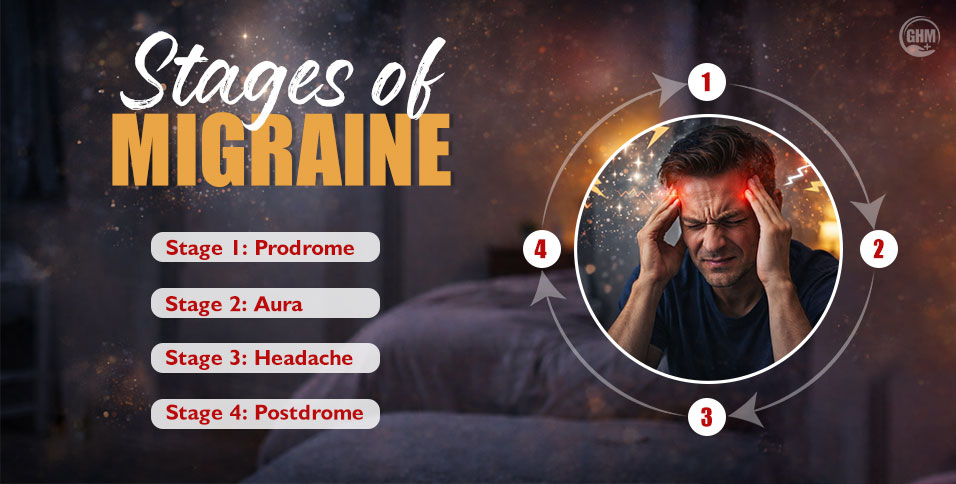
While there are many types of migraines a person suffers from, a typical migraine attack moves through four primary phases: prodrome, aura, headache, and postdrome.
However, migraine is a highly individual experience. Consequently, not every person experiences every stage during every attack.
Recognizing this progression helps clinicians provide an accurate diagnosis as per migraine stage.
Stage 1: Prodrome
The prodrome stage acts as your body’s internal alarm system. It signals that a migraine is looming on the horizon. This initial phase usually begins hours or even up to two days before the migraine headache arrives. It involves abnormal activation in the hypothalamus, the brain’s regulatory center.
Common Prodrome Symptoms
- Fatigue and yawning: Unexplained tiredness or frequent yawning often occur early.
- Mood changes: You might feel suddenly depressed, irritable, or hyperactive.
- Physical stiffness: Many people report neck pain or shoulder stiffness.
- Cravings: Intense desires for sweet foods, like chocolate, are common.
- Sensory sensitivity: Increased sensitivity to light or sound may begin here.
Identifying these early warning signs of migraine empowers you to take action. Practicing natural remedies for migraines, such as hydrating, improving sleep, and avoiding known food triggers during this period, can sometimes prevent the headache phase entirely.
Stage 2: Aura
Aura represents a temporary disturbance in the nervous system. Aura is also a type of migraine that typically serves as a bridge between the warning signs and the physical pain.
Who Experiences Migraine Aura?
Roughly 25% to 30% of migraine patients experience this stage. Interestingly, some people experience “silent migraines,” where they have the aura but never develop a headache.
Symptoms of Aura Migraine
- Visual disturbances: You might see flashing lights, zigzag lines, or blind spots.
- Sensory changes: Numbness or “pins and needles” often travel up the arm or affect the face.
- Speech issues: Some people struggle to find words or speak clearly.
- Vertigo: Dizziness or a spinning sensation can occur.
Aura symptoms generally develop over five minutes and last between 5 to 60 minutes. While they can be frightening, these changes are fully reversible and do not cause long-term damage.
Stage 3: Headache
The attack phase is the most intense part of the stages of migraine. This is when the migraine attacks us, and physical pain reaches its peak.
Pain Levels of the Migraine Attack
The pain is typically moderate to severe and feels like a throbbing or pulsating sensation. While it often starts on one side of the head, it can shift or involve both sides.
Without effective treatment, this stage usually lasts between 4 and 72 hours. Physical activity almost always makes this pain worse.
Symptoms During Migraine Attack
- Nausea and vomiting: Many people cannot keep food or fluids down.
- Extreme sensitivity: Bright lights, loud noises, and strong odors become unbearable.
- Cognitive fog: Dizziness and blurred vision may persist.
Immediate Management Tips
- Retreat: Find a dark, quiet, and cool room to rest.
- Medicate: Take prescribed acute medications as soon as pain starts for the best results.
- Soothe: Apply a cold or warm compress to your forehead or neck.
Stage 4: Postdrome
The end of the headache does not mean the attack is over. The postdrome stage occurs once the headache fades. The postdrome phase is the recovery period where the brain resets.
Often called a “migraine hangover,” this postdrome stage is experienced by up to 80% of sufferers. This phase can be just as draining as the pain itself, which usually lasts for 24 to 48 hours.
Common Postdrome Symptoms
- Exhaustion: You may feel completely drained or fatigued.
- Mental fogginess: Difficulty concentrating and poor focus are very common.
- Lingering sensitivity: Light and sound may still feel slightly unpleasant.
- Neck Pain: Persistent neck stiffness or light head pressure.
Recovery From Postdrome Migraine
Treat this phase with respect. Prioritize hydration and gentle movement. Avoid jumping back into high-stress activities too quickly, as pushing yourself may trigger overlapping attacks.
Does Every Migraine Patient Experience All Stages of Migraine?
No two migraines are identical. You might skip the aura stage entirely or find that your symptoms overlap so quickly that the stages are hard to identify.
Some migraine attacks are silent, featuring only the prodrome, aura, and postdrome phases without the actual head pain. Because frequency varies, like migraine can trigger from once a year to once a week, tracking your personal patterns is vital.
When to See a Doctor
Migraines can disturb your everyday life. You can use solutions like migraine apps track your triggers and natural remedies to make living a little easier, but they can still keep appearing.
Therefore, you should seek immediate medical help if you ever experience “the worst headache of your life”. Also seek emergency care if you experience new neurological symptoms you’ve never had before, such as confusion or seizures.
Final Note
These four stages of migraine, prodrome, aura, attack, and postdrome, reveal that this condition is a marathon, not a sprint. By learning to “read” your body’s signals, you can prepare for and potentially shorten the duration of each phase. Migraines are manageable with the right partnership between you and your neurologist.
Remember, you don’t have to suffer in silence.
Was this guide helpful? Share it with someone who might be struggling with migraines today!
Sanskruti Jadhav
Frequently Asked Questions
- Can I have a migraine without a headache?
Yes. This is known as a “silent migraine” or acephalgic migraine. You experience aura symptoms like vision changes or numbness, but the pain phase never occurs.
- Why do I feel so thirsty during a migraine?
Increased thirst and frequent urination are common symptoms of the prodrome phase. This is likely due to changes in the hypothalamus before the attack begins.
- Can weather changes trigger these migraine stages?
Absolutely. Changes in barometric pressure, humidity, or temperature are well-documented triggers that can initiate the prodrome phase of migraine.
- Are migraines linked to hormone changes?
Absolutely. Many women experience migraines triggered by estrogen fluctuations during menstruation, pregnancy, or menopause.
- Is there a cure for migraine?
Currently, there is no cure, but various treatments can manage symptoms and reduce the frequency of attacks.