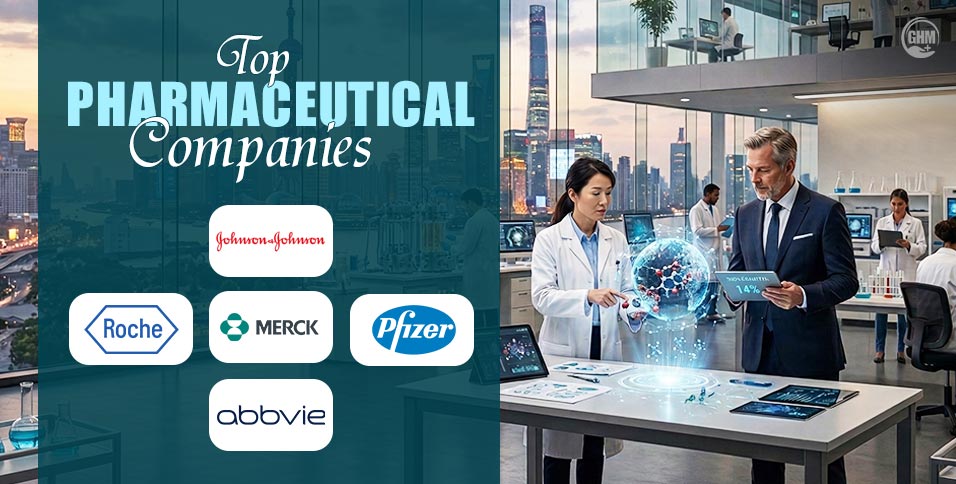
You might have noticed that modern medicine is evolving faster than ever before. This rapid change stems from the relentless innovation of the top pharmaceutical companies all around the world. These industry leaders do more than just manufacture pills; they are the architects of a healthier future.
The growing number of aging populations and the rising prevalence of chronic diseases are also contributing to the market growth. As the global healthcare landscape undergoes a rapid transformation, staying informed about the industry’s major players is more critical than ever.
By analyzing the top pharmaceutical companies, we can identify which giants are leading this charge toward life-saving innovation and which are successfully navigating the challenges of patent expiries.
In this article, we explore the titans driving the $1.6 trillion global pharma market and how their breakthroughs impact your life and the future of medicine.
How We Define the Top Pharmaceutical Companies
Ranking the world’s leading biopharma firms requires a multi-dimensional approach.
Identifying the top pharmaceutical companies requires a balanced evaluation of several critical factors.
While revenue is a primary indicator of market strength, true leadership is also defined by research depth and global impact. We evaluated the top pharmaceutical companies based on these key pillars:
- Annual Revenue: Total yearly sales from prescription drugs, vaccines, and biologics.
- Market Capitalization: The total value of a company’s shares, reflecting investor confidence.
- R&D Investment: The billions spent annually on clinical trials and discovering new molecules.
- Pipeline Strength: The number of promising new drugs currently in development.
Additional Evaluation Factors
Beyond financial metrics, we consider how these companies influence global health:
- Regulatory Approvals: The frequency of new drug clearances from regulatory agencies like the US FDA and EMA.
- Patent Portfolios: The strength and exclusivity of their intellectual property.
- Global Presence: Operations across major hubs in North America, Europe, and Asia-Pacific.
Top 10 Pharmaceutical Companies At A Glance (2026)
The following table summarizes the market leaders that dominated the industry through a combination of massive sales and groundbreaking research.
| Rank | Company Name | Location | 2025 Revenue (USD) | Key Focus Areas |
| 1 | Johnson & Johnson | USA | $94.2 Billion | Oncology, Immunology, MedTech |
| 2 | Roche | Switzerland | ~$67.7 Billion | Oncology, Diagnostics, Personalized Medicine |
| 3 | Merck & Co. (MSD) | USA | $65.0 Billion | Immuno-oncology (Keytruda), Vaccines |
| 4 | Pfizer | USA | $62.6 Billion | Oncology, mRNA Platforms, Rare Diseases |
| 5 | AbbVie | USA | $61.2 Billion | Immunology, Neuroscience, Aesthetics |
| 6 | AstraZeneca | UK | ~$58–59 Billion | Oncology, Rare Diseases, Cardiovascular |
| 7 | Novartis | Switzerland | $54.5 Billion | Innovative Medicines, Gene Therapy |
| 8 | Sanofi | France | ~$47.1 Billion | Immunology (Dupixent), Vaccines |
| 9 | Novo Nordisk | Denmark | ~$46.4 Billion | Diabetes, Obesity (GLP-1 blockbusters) |
| 10 | Eli Lilly | USA | ~$44–45 Billion | Metabolic Health, Oncology, Neuroscience |
Deep Dive Into World’s Top Pharmaceutical Companies In 2026
The list of top pharmaceutical companies in 2026 includes global giants that dominate the healthcare landscape.
Each company listed below is recognized for its specialized therapeutic contributions and commitment to quality.
1. Johnson & Johnson
Johnson & Johnson maintains its status as the world’s largest healthcare company. Its pharmaceutical division remains robust, particularly with the success of Darzalex, which recently surpassed $10 billion in sales.
Despite facing biosimilar competition for legacy drugs like Stelara, the company’s diversified portfolio across MedTech and innovative medicine ensures steady growth. J&J’s sheer scale and consistent financial performance allow it to drive breakthrough research across numerous therapeutic areas.
2. Roche
As a pioneer in personalized medicine, Roche excels by integrating diagnostics with pharmaceuticals. This Swiss leader remains a dominant force in oncology and immunology.
Its focus on advanced diagnostic tools alongside targeted therapies ensures a more accurate approach to patient care worldwide.
3. Merck & Co.
Merck & Co., known internationally as MSD, is a dominant player in immuno-oncology and vaccines. Its cancer therapy Keytruda has become one of the most successful drugs in pharmaceutical history.
Merck is one of the world’s highest spenders on R&D, focusing on breakthroughs for infectious diseases and life-threatening conditions.
4. Pfizer Inc.
Pfizer is currently navigating a post-pandemic landscape by aggressively expanding its oncology footprint. Through strategic acquisitions like Seagen, it continues to invest heavily in its pipeline, particularly in oncology and new therapeutic platforms, to maintain its status as a revenue giant.
5. AbbVie
Following the patent expiry of its blockbuster drug, Humira, AbbVie successfully diversified into neurology, aesthetics, and specialty pharmaceuticals. New immunology treatments like Skyrizi and Rinvoq are also driving significant growth.
It remains a global leader in immunology and oncology, investing billions in R&D to develop next-generation therapies. AbbVie alone invested $17.03 billion in research and development in 2024. Its pivot toward antibody-drug conjugates highlights its forward-looking strategy.
6. AstraZeneca
AstraZeneca has solidified its place among the top pharmaceutical companies by executing an aggressive innovation strategy. They are a powerhouse in oncology, particularly with treatments for lung and breast cancer.
After the acquisition of Alexion, they have expanded their footprint in rare diseases and secured a diversified revenue stream. These achievements make it one of the most dynamic and fastest-growing players in the sector, with new drug launches to look forward to.
7. Novartis
Novartis focuses heavily on “pure-play” innovative medicines after spinning off its generics division, Sandoz. As one of the world’s largest drug companies, they are pioneers in radioligand therapy, a cutting-edge way to treat cancer with radioactive particles.
Its commitment to advanced biologics and cell-based therapies positions it as a key innovator for the future.
8. Sanofi
Sanofi’s growth is driven by the massive success of Dupixent, a leading biologic treatment for asthma and eczema. They are currently one of the leading biopharma companies in the vaccine sector, providing critical influenza and pediatric immunizations worldwide.
The company plays a critical role in global public health programs and pandemic preparedness.
9. Novo Nordisk
Novo Nordisk is perhaps the most talked-about name among the top pharmaceutical companies today. Their market capitalization recently surpassed the GDP of their home country, Denmark.
They are the primary architects of the current GLP-1 revolution. Driven by the global demand for Ozempic and Wegovy, their revenue has skyrocketed.
10. Eli Lilly and Company
Eli Lilly is the fastest-growing entity among the pharma giants with a market cap of $1002B. Their drug, Mounjaro (and its weight-loss counterpart Zepbound), is locked in a head-to-head battle for dominance with Novo Nordisk in the obesity market.
With a massive pipeline in neuroscience, specifically Alzheimer’s treatments, many analysts predict they will climb several spots in the pharmaceutical industry rankings by 2030.
Regional Dynamics Of the Leading Pharmaceutical Companies
1. North America: Market Leadership
North America remains the dominant regional market, accounting for roughly 40% of global pharmaceutical sales. The region benefits from high healthcare spending and an innovation-friendly capital environment.
2. Europe: Established Research Hubs
Europe holds a significant market share of 25% to 30%. Key hubs include Switzerland, Germany, the UK, and France. However, these companies often face challenges from strict price regulations and cost pressures.
3. Asia-Pacific: The Growth Engine
The Asia-Pacific region is the most dynamic growth area in 2026. Countries like India and China are rapidly expanding their manufacturing and research infrastructures. India-based Biomorph Lifesciences has gained significant recognition for its high-quality, WHO and GMP-certified formulations and vast distribution network.
Key Trends In Global Pharmaceuticals Market
The top pharmaceutical companies are currently adopting several transformative trends:
- AI-Driven Discovery: Artificial intelligence is shortening development times and reducing R&D costs.
- Precision Medicine: Treatments are becoming more personalized, moving away from a “one-size-fits-all” approach.
- Strategic M&A: Large firms are acquiring smaller biotech companies to close pipeline gaps and secure new technologies.
- The GLP-1 Boom: Led by Novo Nordisk and Eli Lilly, drugs for obesity and diabetes have triggered the largest structural shift in pharma sales in decades.
- Advanced Therapeutics: There is a definitive shift away from traditional small molecules toward biologics, cell therapies, and gene editing.
Challenges Faced by Leading Pharma Giants
Despite their success, even the largest giants face significant hurdles:
- Patent Cliffs: Expiries on major drugs lead to intense competition from biosimilars.
- Pricing Pressures: Government healthcare systems are pushing for lower drug prices even though the development costs are going up.
- Supply Chain Risks: Global vulnerabilities continue to force companies to realign their logistics.
Future Outlook of the Pharmaceutical Industry
The future of the top pharmaceutical companies lies in specialization and data-driven research.
- Top pharmaceutical companies like Novo Nordisk and Eli Lilly will likely maintain their lead as they expand these drugs into treatments for sleep apnea, kidney disease, and cardiovascular health.
- Artificial Intelligence will transition from a buzzword to a core infrastructure, allowing leading biopharma companies to bring life-saving therapies to market faster.
- With aging global populations and increasing access to healthcare in emerging markets, the global pharma market is on a trajectory to surpass $2.1 trillion by 2034.
Future rankings will favor companies that embrace digital health. By using wearable technology and remote monitoring, global pharmaceutical industry leaders will recruit more diverse patient populations, improving the efficacy and safety of new treatments.
End Note
The top pharmaceutical companies are the backbone of modern healthcare innovation. By investing billions into research & development and expanding their global reach. These pharmaceutical giants are defined by their ability to adapt.
They ensure that life-saving treatments reach those in need. As we look beyond 2030, these leaders will continue to redefine patient care through AI and precision medicine.
Did you find this overview helpful? If yes, then share this article with your network to spread the word about the future of healthcare!
Frequently Asked Questions
- What is the fastest-growing sector in the pharma industry?
The GLP-1 drug sector for obesity and diabetes is currently driving the most significant growth, benefiting companies like Novo Nordisk and Eli Lilly.
- Why are R&D investments so important for pharmaceutical companies?
R&D is the backbone of the industry. It allows companies to discover new treatments, conduct clinical trials, and stay ahead of competitors as patents expire.
- Which country is known as the “Pharmacy of the World”?
India is known as the “Pharmacy of the World” due to its massive production of affordable generic drugs and vaccines, fulfilling over 70% of global demand, making it the world’s third-largest pharmaceutical producer by volume.