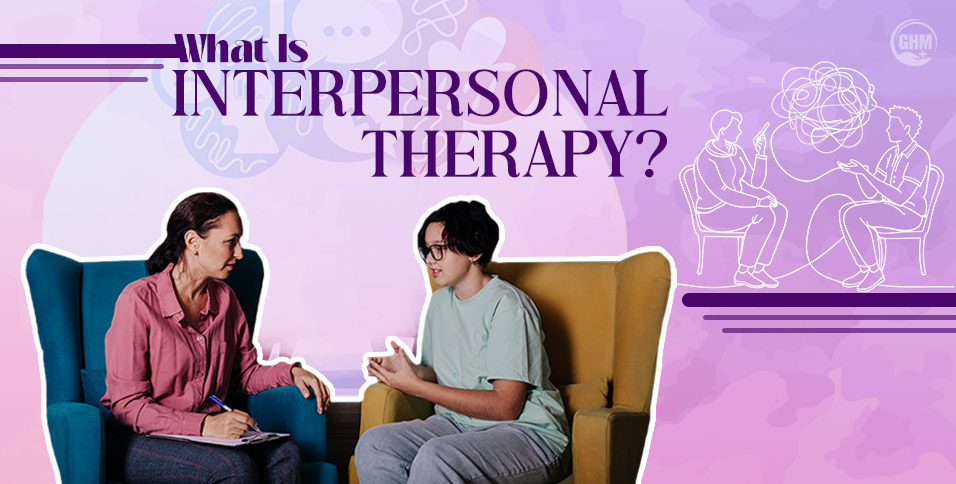
Human relationships are an essential part of life. Our emotions often shift based on our interactions—sometimes even a single conversation can affect our mood. For many people, mental well-being is deeply connected to the quality of their relationships.
But the modern lifestyle has become increasingly digital and isolated, and we are losing the human connection. As a result, mental health is a growing concern in modern healthcare, making clinical recovery has never been more relevant. Psychotherapy offers various approaches to address emotional challenges, and among them, interpersonal therapy (IPT) stands out for its strong focus on relationships.
But what is interpersonal therapy? Interpersonal therapy (IPT) is a structured, short-term form of psychotherapy that improves mental health symptoms by addressing relationship patterns and communication issues. It typically lasts 12 to 16 weeks and focuses on current life events rather than childhood experiences.
If you are struggling with emotional distress and wondering how to break the cycle. This guide is for you.
The following article explores what is interpersonal therapy and how it works for you. It also explains how interpersonal psychotherapy can be a treatment option for your emotional well-being.
What Is Interpersonal Therapy?
Interpersonal therapy is a time-limited, evidence-based psychotherapy designed to treat mental health conditions by improving interpersonal functioning. Developed in the 1970s by Gerald Klerman and Myrna Weissman, IPT was originally a research intervention for major depression.
The core principle of interpersonal therapy is that mental health symptoms are often a response to difficulties in everyday relationships. When your relationships flourish, your mental health often follows.
Unlike traditional psychoanalysis, IPT is present-focused. It does not dwell on your distant past or inner conflicts. Instead, it targets the mental struggles in your current life to help you regain control over your mood and social life. A monthly maintenance session of this therapy can significantly reduce the risk of depression returning over a three-year period.
How Does Interpersonal Therapy Work?
IPT works by breaking the cycle where poor relationships trigger low moods, which then further damage those relationships. By intervening in your social world, the therapy provides immediate tools to stabilize your emotions. When you learn better ways to handle relationship problems, your symptoms often improve.
Core Principles of IPT
- Mood and Life Events are Linked: Your current mood is directly influenced by life events and your interpersonal environment.
- Depression is a Medical Illness: Using IPT for depression is an effective technique. IPT uses depression as a treatable condition, not a personal defect or the patient’s fault.
- Social Support is Key: Strengthening your social circle provides a buffer against mental health challenges.
Structure of Interpersonal Therapy Treatment
The therapy typically follows a three-phase structure over 12 to 16 sessions:
- Initial Phase (Sessions 1–3): The therapist identifies your diagnosis and links it to one of four specific interpersonal problem areas.
- Middle Phase (Sessions 4–14): This is the phase where you implement strategies to resolve the identified problem.
- Final Phase (Sessions 15–16): You review your progress, address feelings about ending therapy, and create a relapse prevention plan.
Key Problem Areas Addressed In Interpersonal Therapy
A therapist will typically categorize your struggles into one of these four focal points to give the therapy a clear direction:
1. Grief and Loss
This focus area addresses “unresolved or complicated bereavement,” where a person has difficulty moving through the stages of grief after a death. IPT helps you process the loss and find ways to process emotions and to move forward.
2. Role Disputes
These are ongoing conflicts with a partner, family member, or coworker where expectations for the relationship don’t match. For instance, you might expect more emotional support from a spouse who remains distant.
3. Role Transitions
Major life changes, like starting a new job, becoming a parent, or getting a divorce, can be overwhelming. IPT helps you successfully navigate the demands of your new one.
4. Interpersonal Deficits
This area is for individuals who struggle to form or maintain relationships in general. The focus here is on building social skills and reducing isolation.
What Are The Types of Interpersonal Therapy?
While standard IPT is the most common, several adaptations exist for specific needs:
- Dynamic Interpersonal Therapy (DIT): A psychodynamic approach that aims to help patients understand their own and others’ mental states.
- Metacognitive Interpersonal Therapy (MIT): An integrative method specifically for personality disorders involving emotional avoidance.
- Interpersonal and Social Rhythm Therapy (IPSRT): Often used for bipolar disorder, this type combines IPT with behavioral techniques to stabilize daily routines.
- Group and Couples IPT: Adaptations that allow families or groups to work through interpersonal issues together.
What Are The Interpersonal Therapy Techniques?
Therapists use active and supportive techniques to help you navigate your social world.
- Communication Analysis: You will examine recent conversations to see where misunderstandings occurred and how to express needs more clearly.
- Role-Playing: Practicing difficult conversations with your therapist in a safe space allows you to build confidence before trying them in real life.
- Behavioral Activation: This involves identifying activities that improve your mood and social connection and scheduling them into your week.
- Interpersonal Inventory: Mapping out your social circle to identify which relationships provide support or cause stress.
- Decision Analysis: Brainstorming and evaluating different options for resolving a relationship conflict.
- The “Sick Role”: The therapist temporarily gives you the “sick role,” which acknowledges that your illness isn’t your fault and that you may need to reduce your current responsibilities while you recover.
What Conditions Does Interpersonal Therapy Treat?
Research confirms that IPT is a versatile tool for various mental health challenges:
- Perinatal and Postpartum Depression: Helping new mothers adjust to the massive role transition of parenthood.
- Anxiety Disorders: Particularly social anxiety, where relationship fears are central.
- Eating Disorders: Such as bulimia nervosa and binge eating disorder.
- Bipolar Disorder: Treated through a specialized version called Interpersonal and Social Rhythm Therapy (IPSRT). It is often used as an adjunct to medication.
- PTSD: Helping survivors rebuild trust and social safety after trauma.
Interpersonal Therapy vs. Other Therapies
| Therapy Type | Core Focus | Timeframe | Approach |
| IPT | Relationships & Communication | Short-term (12-16 weeks) | Present-focused |
| CBT | Thoughts & Behaviors | Short-term | Skill-based & structured |
| Psychodynamic | Past experiences & inner conflicts | Often Long-term | Insight-oriented |
Is Interpersonal Therapy Right for You?
Choosing a therapy depends on your specific goals. You might consider IPT if:
- You notice your depression or anxiety worsens after relationship conflicts.
- You have recently experienced a major life transition or loss.
- You are looking for a short-term, structured approach.
- You are motivated to analyze and change how you interact with others.
However, if your symptoms are unrelated to your social environment or if you prefer exploring childhood roots, other methods of therapy might be better.
How to Find An Interpersonal Therapist
If you feel your mood is heavily influenced by your social life, IPT might be the right choice for you.
You can find licensed professionals such as psychologists, psychiatrists, or counselors who have specific training in IPT. Many online therapy platforms now offer IPT-trained specialists.
Ask people you trust, such as your primary healthcare provider, friends, or family members, for recommendations. Use online directories from local or state psychological associations.
Ensure the therapist has experience with IPT and confirm that they specifically treat your area of concern.
What to Expect In An IPT Session?
An interpersonal therapy session will typically last for 12 to 16 weeks.
- Frequency: Sessions usually happen once a week.
- Structure: Your sessions are highly structured and involve regular assessments, therapist interviews, and homework assignments.
- Therapist Role: Expect your therapist to be active, supportive, and hopeful while offering practical options for change.
- Collaboration: You and your therapist act as partners, working together toward the goals you have set.
Final Thoughts
Understanding what is interpersonal therapy empowers you to take charge of your mental health through your relationships. By focusing on communication and social support, IPT offers a practical, time-limited path to feeling better.
Whether you are dealing with grief, life changes, or chronic depression, this therapy approach offers practical hope for a brighter, more connected future.
As research continues, IPT is being adapted for new cultures and delivery methods, including telephone and group interventions.
Your relationships are a vital part of your health—don’t hesitate to give them the professional attention they deserve.
If you found this guide helpful, please share it with someone who might need to read this!
Sanskruti Jadhav
Frequently Asked Questions
- Is IPT better than medication?
Research shows it is highly effective on its own, but many people see the best results when combining IPT with medication.
- Can I do IPT if I don’t have a specific relationship problem?
Yes. If you feel isolated or struggle to connect with others generally, you should consider getting help from IPT to build new social skills.
- How long until I see the results of Interpersonal Therapy?
Because it is a process, you shouldn’t expect immediate results. However, many people begin to feel a shift in their mood and communication confidence by the middle phase of IPT treatment (around week 6 or 8).