If you sit long enough in the lobby of any modern corporate office building, you’ll witness a peculiar kind of human theatre. People walk in carrying briefcases and coffees, bearing an invisible yet profound weight. We spend about one-third of our lives at work, pursuing a vague, elusive concept known as “happiness.” We discuss it during performance reviews, read about it in self-help books, and purchase items in hopes of capturing it in a bottle. Yet, for much of human history, happiness has been treated like the weather: it comes and goes, and we find ourselves subject to its unpredictable whims.
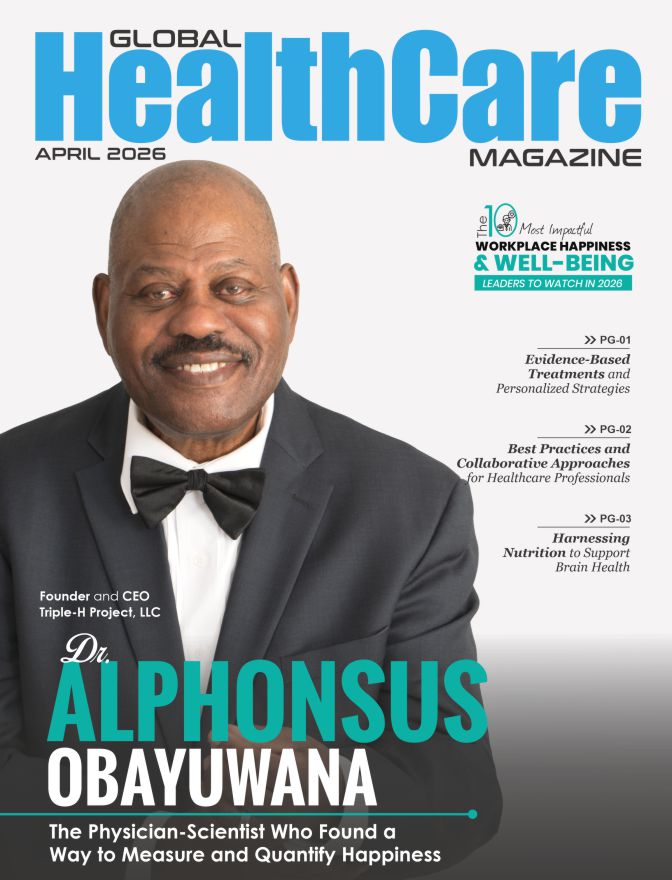
Dr. Alphonsus Obayuwana sees happiness differently. He is a physician-scientist, a semi-retired professor of Medicine, a contributor to Psychology Today, and an award-winning author. Rather than viewing happiness as an ethereal notion, he perceives it as a fraction, comprising a numerator, a denominator, and a calculable quotient. As the Founder and CEO of Triple-H Project, LLC, based in Perrysburg, Ohio, he has dedicated over thirty years to researching the granular mechanics of human hope and happiness.
His foundational belief, his “WHY,” is that joy is not a mere accident of circumstance but rather an optimizable science. If we can measure it, we can manage it; if we can manage it, we can fundamentally transform how individuals experience their lives and work. His efforts are fuelled by a deep sense of service, aiming to support those quietly languishing at their desks, the burnt-out healthcare workers, and the employees who feel entirely invisible within the machinery of industry.
Through his groundbreaking book, “The Happiness Formula,” which was named “One of The Five Must-Read Books” by Forbes, he introduces a mathematical approach to joy. But to truly understand the empire of well-being he has built, one must look back to the quiet, sterile corridors of a hospital psychiatric unit, where his lifelong calling first took root.
The Anatomy of a Calling
Long before he became a sought-after keynote speaker and workplace happiness coach, Dr. Obayuwana was a medical student. During his rotations, he spent time in the psychiatric unit, where he encountered patients who had been admitted following attempted suicides.
“Deeply moved and transformed by these poignant encounters, I began studying human hope,” Dr. Obayuwana recalls softly.
There is a distinct type of silence that envelops a person who has lost all desire to live. Dr. Obayuwana felt compelled to measure that silence. Upon being awarded a national research grant and a Smith-Kline Medical Perspective Fellowship, his objective became clear: to develop a tool for measuring human HOPE and detect hopelessness early enough in troubled individuals to provide assistance in time to prevent the tragedy of suicide.
He created the Hope Index Scale, also known as HIS. This tool became exceptionally popular, being adopted by Fortune 500 corporations such as Coca-Cola and General Motors, as well as the US Veterans Administration and several academic institutions.
Since hope is fundamentally defined as the feeling and belief that one’s desires are attainable, his curiosity naturally expanded. He became interested in discovering the origins of desires, questioning whether they are learned, acquired, or inherently inborn. Human hope and desire remained his primary research interests, as he considered them the very fulcrum of human life.
When the positive psychology movement began to rise, psychologists proclaimed happiness as the singular factor that makes life worth living, whereas historically and experientially, hope was viewed as what makes life worth living, since hopelessness makes people take their own lives. To clarify the difference between hope and happiness, Dr. Obayuwana shifted his analytical focus toward understanding happiness.
The Architecture of Joy
For a long time, hope, desire, and happiness were the academic interests for the physician-scientist. His motive initially had nothing to do with corporate productivity issues; he simply aimed to understand human nature. Then, he made an incidental discovery—an equation that most precisely defines the strong relationships between HOPE, HUNGER, and HAPPINESS. The equation: “HOPE / HUNGER = HAPPINESS”, which he eventually named the Triple-H Equation, asserts that when an individual’s hope score is divided by the hunger score, a happiness score results, where hunger is defined as any compelling desire.
To grasp the profound nature of this equation, one must understand its components. Throughout his decades of research, Dr. Obayuwana painstakingly defined and categorized human experiences into specific, measurable categories. He identified five essential human assets that constitute the sources of hope: Intrinsic Assets, Human Family Assets, Economic Assets, Educational Assets, and Spiritual Assets.
Conversely, he recognized five compelling human desires, or hungers, that are innate and drive every action we take in life. These are:
- hunger for inclusion and acknowledgment
- hunger for intimacy and trusted companionship
- hunger for food and comfort
- hunger for information and answers
- hunger for continuity and certainty.
His discovery of this equation made it possible for the first time in history for happiness to be measured and reported both nominally and numerically. It enabled him to create a five-minute tool called The Edo Questionnaire, also known as the PISA Scale. This twelve-item self-assessment tool can effectively differentiate and identify happy individuals, unhappy individuals, very happy individuals, very unhappy individuals, those who are languishing, and those who are flourishing, regardless of cultural diversity, ethnicity, occupation, income, gender, marital status, or religion.
Scores are reported using a universal measure termed the Personal Happiness Index (PHI). The calculations are remarkably precise: a PHI of 1.0 or above indicates a happy person, a PHI of 2.0 or above represents a very happy person, and a PHI of 4.0 or above signifies a flourishing individual. Conversely, a PHI of less than 1.0 indicates an unhappy person, a PHI of 0.5 or less represents a very unhappy person, and a score of 0.25 or less signifies a languishing individual.
Measuring the Intangible in the Workplace
Knowing that happy individuals are healthier, more innovative, and more productive, the commercial value of this equation became glaringly obvious. This realization led to the creation of Triple-H Project, LLC in 2019.
Directors of Human Resources and CEOs constantly face challenges such as diminished productivity, health-related absenteeism, and corporate apathy, which are the classic hallmarks of unhappy employees. For decades, organizations had to guess who was truly thriving. However, with the introduction of the Triple-H Equation and the Edo Questionnaire, organizations can now accurately assess the happiness levels of their employees.
Today, Dr. Obayuwana and his team consult with organizations to evaluate both individual and collective happiness scores for all employees. They then provide coaching to both management and staff aimed at increasing their happiness scores by actively enhancing hope and reducing hunger.
The business case for prioritizing happiness in the workplace is compelling. Happy employees tend to call in sick less often, cooperate more effectively, exhibit greater attentiveness and enthusiasm for their tasks, and are generally easier to work with.
“Happiness in the workplace increases productivity by 31 percent and innovation by 300 percent, according to Harvard Business Review,” Dr. Obayuwana points out. “It reduces turnover by 51 percent according to Gallup and lowers absenteeism by 66 percent according to Forbes.”
When happiness is pervasive in the community at large, it fosters group cohesion and builds common values.
One of the most pressing issues in modern workplaces, especially in healthcare and high-pressure industries, is burnout. Dr. Obayuwana addresses burnout using his mathematical framework.
“As the Triple-H Equation indicates, when hope is high, and hunger is low, happiness increases, but when hope is low, and hunger is high, happiness decreases,” he explains.
Hope generates positive emotions such as joy, exhilaration, enthusiasm, anticipation, excitement, interest, and inspiration. In contrast, hunger gives rise to negative emotions like anxiety, fear, anger, guilt, sadness, apathy, and despair. Consequently, a person’s PHI (Personal Happiness Index) essentially represents the ratio of that person’s positive emotions to his or her negative emotions.
“Burnout has many causes, but from our own experience at the Triple-H Project, burnout is often related to low PHI,” Dr. Obayuwana notes. “When PHI is 3.0 or above, resilience, rebound, and absence of burnout can always be counted upon.”
The Coach and the Culture
As a regular contributor to Psychology Today and an acclaimed author, Dr. Obayuwana has mastered the art of turning complex academic research into simple, practical advice that corporate leaders can apply immediately.
“During research as well as during writing, my primary motivation and intent is to educate myself and others, practically,” he says.
At the Triple-H Project, LLC, he trains and certifies happiness coaches, believing that a workplace happiness leader must possess a good understanding of the complex science behind happiness while also being well-versed in the nuanced art of coaching.
Building a truly positive and hopeful workplace culture requires a very specific set of leadership skills and behaviors.
“The most important leadership quality needed to build a truly positive and hopeful workplace culture is to know, demonstrate, and encourage a good understanding of the five sources of human hope, the five inborn human hungers, and the five triggers of happiness,” he advises.
The results of this framework are tangible. At the Triple-H Project, LLC, the process is uniquely systematic. First, they assess the happiness levels of all employees and managers by administering the Edo Questionnaire. Then, they offer targeted coaching sessions using the Triple-H Method of Coaching to intentionally enhance hope and alleviate hunger. This intervention is followed by post-testing to demonstrate a measurable increase in (individual and collective) PHI.
“As numbers do not lie, we have many satisfied individual clients and very grateful corporations,” Dr. Obayuwana states with quiet pride.
Trials, Balance, and the Road Ahead
The journey of a pioneer is rarely without friction. When asked about a major challenge in his leadership journey, Dr. Obayuwana does not mention logistical issues or funding problems. Instead, he reflects on the profound struggle to be heard.
“My challenge was getting an audience to listen to what I had to share with humanity,” he admits.
He handled it through sheer, unyielding persistence. He simply continued to try.
“What I learned was that ‘when you try, and you don’t succeed, try and try again, and again’. I did not give up because I couldn’t. I felt and believed that I had a CALLING,” he emphasizes.
Dr. Alphonsus Obayuwana was born in Edo State, Nigeria—the state after which the Edo Questionnaire is named. This deep sense of purpose, which he learned from his father while growing up in Benin City, fuels his empathy for others:
“My frequent lamentation is that there are many who will never soar, flourish, and find personal fulfilment because their true calling is unknown and their ability to dream is truncated.”
To sustain this level of output and empathy, Dr. Obayuwana maintains a highly intentional work-life balance. He has been married to his wife, Ann, for 49 years. They have two biological sons and three granddaughters. He practices five specific habits every day. First, he engages in activities that fulfil his calling. Second, he remains considerate of others, always mindful of the five inborn human hungers. Third, he expresses gratitude for the resources available to him. Fourth, he intentionally learns at least one new thing each day. Fifth, he reviews and reaffirms his spiritual beliefs each day to nourish his soul.
As a teenager, his favorite subjects were chemistry and psychology. His hobbies and interests outside of work are seamlessly woven into these five daily pillars. He finds joy in walking, writing, listening to music, and, somewhat unexpectedly for a rigorous scientist, playing on his drums.
Looking ahead to the future and the rapidly shifting landscape of remote work, artificial intelligence, and increasing performance demands, Dr. Obayuwana remains steadfast in his core thesis.
“Workplace happiness will continue to determine productivity, retention, and loyalty, despite AI, remote work, and increasing performance demands,” he predicts. “If employees feel secure and see themselves as part of the organizational priorities, they will remain productive and loyal.”
Ultimately, the mathematics of happiness point back to a deeply human truth. Dr. Obayuwana’s final message to team leaders, CEOs, and directors of human resources is a reminder of the fragile ecosystem of the human heart.
“Remain keenly aware that to build a happier, healthier, and more productive workplace, the employees must feel safe, wanted, valued, and convinced that they do matter and are of consequence in the success of the organization,” he urges.
“When employees sense that their hopes and hunger are being met, the success and productivity of the organization become their own priorities as well.”
In a world obsessed with optimizing machines and algorithms, Dr. Alphonsus Obayuwana has achieved something far more radical. He has figured out how to optimize the human spirit, armed with nothing but compassion and a very simple equation.
Quote