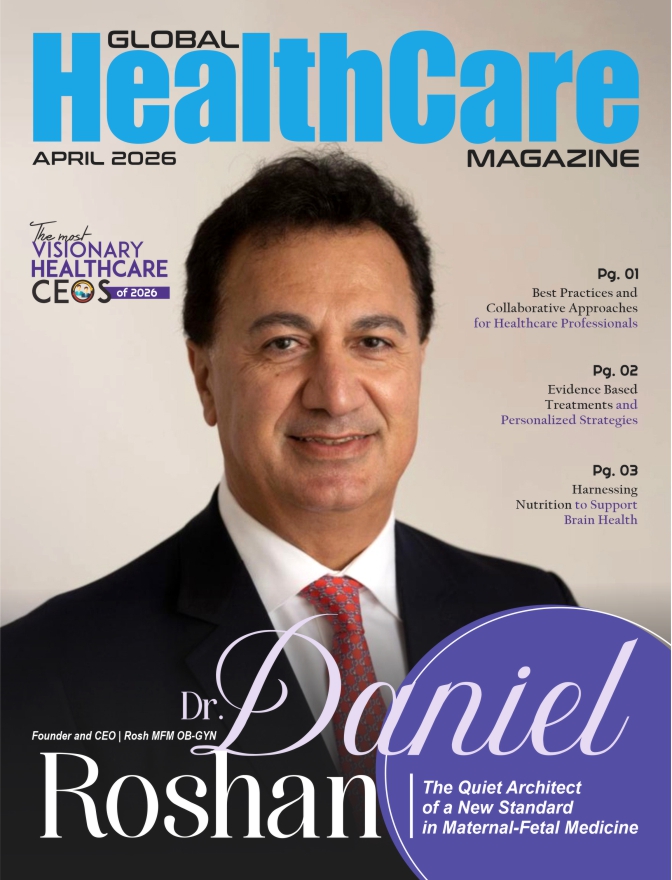
How one physician’s 27-year mission is reshaping what high-risk pregnancy care looks like in America
Walk into the offices of Rosh Maternal-Fetal Medicine in New York City, and the first thing you notice is not the diagnostic equipment. It is not the certifications on the wall, and it is not the measured calm of a well-run medical practice.
It is the photographs.
Hundreds of them. Babies and mothers, newborns swaddled in hospital blankets, toddlers grinning at cameras, families standing together in the particular posture of people who have come through something extraordinary. They cover the walls in a kind of living record, quiet and insistent, of what medicine at its most devoted can accomplish.
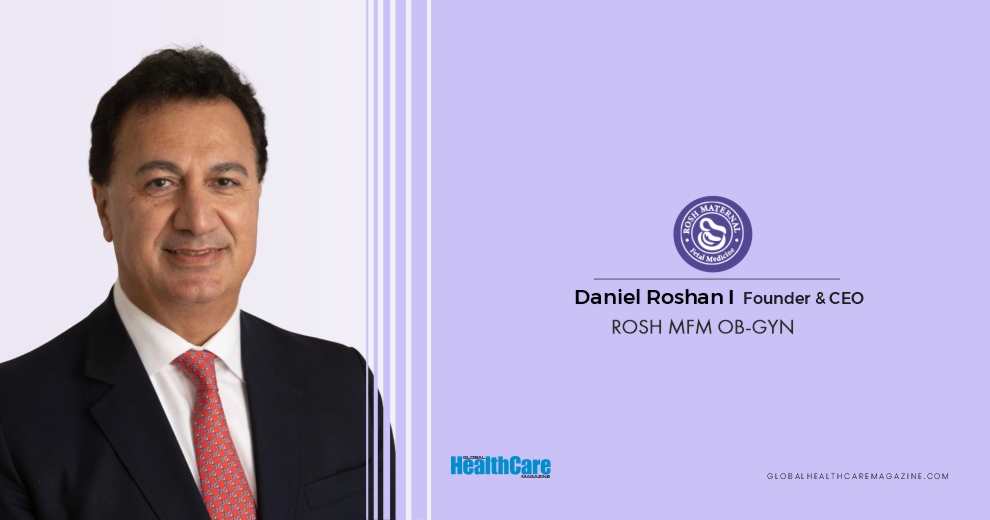
Dr. Daniel Roshan, MD, FACOG, FACS, the founder and CEO of Rosh MFM OB-GYN, keeps these photographs not as ornaments but as orientation. He looks at them. Every day. “Nothing makes us happier,” he said, “than to look at those pictures and show that we made a difference in the world.”
In a medical landscape where the words “high-risk pregnancy” can arrive like a verdict, Dr. Roshan has spent more than two decades building something deliberately different: a practice where complexity is not cause for despair, but an invitation for the highest order of expertise. A place where every patient, regardless of how complicated her situation, is treated not like a case number, but like family.
From Tel Aviv to Brooklyn to Baltimore: The Education of a Specialist
Dr. Daniel Roshan did not arrive at maternal-fetal medicine by accident. He was drawn to it, pulled by what he describes as the field’s particular and demanding complexity, and by something rarer still: the opportunity, in a single practice, to care for two patients at once.
Mother and baby, together, in the most consequential months of both their lives.
His medical education began at Tel Aviv University, where he earned his medical degree, and where a rigorous academic environment planted in him both clinical precision and a genuinely global understanding of medicine and its responsibilities.
From Tel Aviv, he crossed the Atlantic and entered his residency in obstetrics and gynecology at Maimonides Medical Center in Brooklyn, New York. Maimonides is one of the country’s largest and most ethnically diverse teaching hospitals, a place where medicine meets the full, complicated, and often underserved breadth of human life. It was an education not only in clinical technique, but in what medicine actually means to the people who depend on it most.
Then came Johns Hopkins University, and the fellowship in maternal-fetal medicine that would define everything that followed.
Hopkins, with its long and exacting tradition of clinical research and medical excellence, exposed him to pregnancy cases of extraordinary complexity. The cases he encountered there did not simply deepen his training. They clarified his purpose.
“My training and research experiences exposed me to some of the most complex pregnancy cases,” he reflects, “and solidified my commitment to this field.”
By July of 1998, he had taken on his first major leadership appointment, serving as Director of Maternal-Fetal Medicine at Saint Vincent Hospital, a position he held until August 2000. And in that same pivotal year of 1998, in August, he took the larger step: founding Rosh Maternal-Fetal Medicine, the practice that would become the defining work of his career.
In August 2000, he simultaneously assumed the role of Director of Perinatology Services at NYU Langone Medical Center, a position he would hold until May 2006. Those years were ones of extraordinary professional intensity. He was building a private practice from the ground up. He was leading the perinatology program of one of the country’s premier academic medical centers. He was earning his board certification as an Obstetrician-Gynecologist from the American Board of Obstetrics and Gynecology in November 1999, and then his subspecialty board certification in Maternal-Fetal Medicine in April 2001.
He was, in those years, constructing the architecture of a career, beam by deliberate beam.
The Practice That Patients Cross the Country For
Today, Rosh MFM OB-GYN is based in New York City. Its patients, however, come from far beyond it.
Women travel from across the country to be seen here. That fact is not lost on Dr. Roshan, and he does not receive it as flattery. He receives it as evidence of something worth addressing.
“When patients travel from across the country to seek care with us, it highlights the uneven access to specialized maternal-fetal medicine,” he says. “While large metropolitan areas often have advanced resources, many regions have limited access to high-risk pregnancy specialists and advanced prenatal diagnostics.”
The distances these women travel speak quietly but urgently to a deeper fault line in American healthcare: the geography of access. High-risk pregnancies demand detailed imaging, close and continuous monitoring, and subspecialty expertise that is not universally available. For women in smaller cities, rural communities, or medically underserved regions, those resources can be startlingly scarce.
The willingness of patients to cross state lines, rearrange their lives, and seek care at a single practice in Manhattan is, in Dr. Roshan’s reading of it, not a compliment. It is an indictment of a system that has not yet solved the problem of distance.
His response to that indictment is not philosophical. It is practical: expand access, build capacity, keep going.
The Full Scope of What Rosh MFM OB-GYN Does
The range of conditions managed at Rosh MFM OB-GYN is, by any measure, formidable.
The practice specializes in some of the most demanding and emotionally complex situations in all of obstetrics: recurrent pregnancy loss, preterm labor, multiple gestations ranging from twins to triplets, quadruplets, and quintuplets, and pregnancies complicated by significant medical, surgical, or obstetrical conditions. Women undergoing IVF who face complicated conceptions are also among those who find their way here.
The clinical services reflect that breadth. They include advanced prenatal ultrasound and fetal imaging, genetic screening consultations, fetal growth monitoring, and specialized procedures such as chorionic villus sampling (CVS), used for early genetic diagnosis, and cerclage, a surgical procedure that reinforces a weakened cervix to help prevent preterm birth.
But Rosh MFM OB-GYN does not limit itself to crisis intervention. The practice also offers preconception counseling, routine gynecologic care, and the management of chronic health conditions that can complicate or precede pregnancy. The philosophy embedded in all of it is one of continuity: a woman should not need to scatter her care across multiple providers and offices, reassembling the pieces of her own health story each time she changes rooms.
“By combining specialized diagnostics with a broader focus on women’s health,” Dr. Roshan explains, “we are able to support patients throughout the entire continuum, from gynecologic care and pregnancy planning to complex pregnancy management.”
That integration of MFM subspecialty depth with comprehensive women’s health services is, he believes, precisely what distinguishes Rosh MFM OB-GYN from a more narrowly defined specialty practice.
The Misconception That Costs the Most
Ask Dr. Roshan about the single biggest barrier his patients face, and his answer arrives without hesitation.
It is not the complexity of their conditions. It is the fear those conditions generate, and the misinformation that feeds that fear, before they ever reach his door.
The most damaging misconception, the one he encounters most often, is the belief that a high-risk pregnancy is, by its nature, a pregnancy destined for a bad outcome.
“In reality, many high-risk pregnancies result in healthy deliveries when they are carefully monitored and managed,” he says.
A second misconception troubles him nearly as much: the idea that maternal-fetal medicine only becomes relevant once something has already gone wrong. Preconception counseling, early genetic screening, routine gynecologic monitoring: these are not afterthoughts in his practice. They are, by his understanding, the very tools that can identify or prevent problems before they compound into crises.
His practice does not wait for emergencies. It anticipates them, and in doing so, often makes them unnecessary.
Treating Patients Like Family
There is a phrase that runs through every conversation about Rosh MFM OB-GYN, spoken by Dr. Roshan himself and carried through the culture of his practice: treating patients like family.
It would be easy to read this as the warm, generic language of any medical brochure. At Rosh MFM OB-GYN, it is something more specific and more demanding than that.
Women come to this practice at some of the most emotionally weighted moments of their lives. A diagnosis of recurrent pregnancy loss is not simply a medical notation; it arrives, for many women, as a form of grief. A high-order multiple gestation, whether twins, triplets, or more, carries with it both wonder and very real, very justified anxiety. High-risk does not mean hopeless. But it does mean uncertain, and uncertainty in pregnancy carries its own particular gravity.
Dr. Roshan’s response to that gravity is not clinical detachment. It is presence, patience, and the discipline of explanation.
“Our goal is to create an environment where patients feel comfortable, heard, and supported,” he says. “We take the time to explain findings carefully, answer questions, and ensure that patients understand their options.”
This commitment extends across every member of the Rosh MFM OB-GYN team: the highly skilled sonographers who conduct advanced imaging, the clinical staff who coordinate and manage care, and the administrative professionals who are, for many patients, the first face they encounter. Each person, Dr. Roshan insists, understands that they are not simply performing a function. They are part of a moment that will matter to a family for the rest of its life.
The Weight and the Work of Leadership
Dr. Roshan has now served as CEO of Rosh MFM OB-GYN for 27 years, a tenure that, in the volatile terrain of American healthcare, is remarkable by any standard. Since May 2000, he has also served as Medical Director, carrying both administrative and strategic leadership alongside the active demands of clinical practice.
His day is not the day of a man who has retreated to an executive office.
He continues to evaluate patients directly, review imaging studies, and manage complex pregnancy cases himself. Alongside that clinical work, he oversees the operations of the practice, maintains quality standards, and guides the ongoing growth of the organization.
Ask him what he is most passionate about in this dual role, and the answer is illuminating. He does not mention prestige, market share, or institutional ranking. He says he is most drawn to “building systems that improve access and quality for patients facing complicated pregnancies.”
Healthcare environments, he acknowledges, regularly demand rapid adaptation. Periods of operational pressure test not only strategy but character. In those moments, he returns to a principle that is simple to state and genuinely difficult to hold when things get hard: keep the mission visible.
“Staying focused on our mission,” he says, “providing the highest level of care to mothers and babies, helps guide every decision we make.”
Milestones Measured in the Right Currency
In a field that often measures its progress in metrics and outcome data, Dr. Roshan is refreshingly specific about what he considers a genuine milestone.
Practice growth matters. The ability to serve patients from a wide range of communities matters. The expansion of services and the broadening of access: these represent real capacity, and real lives changed because of it.
But the measure he returns to, the one that sits alongside those photographs on the wall, is simpler than any data point.
It is the moment a patient who once sat in his office, frightened and uncertain, navigating a pregnancy no one felt confident about, comes back to tell him that her baby arrived safely. That she is well. That her child is well.
The walls of his practice are covered in exactly those stories.
The Road Ahead
Dr. Roshan is not a man who is satisfied with what already exists. He is, by training and by temperament, a builder.
The future he describes for Rosh MFM OB-GYN is expansive but not vague. He wants to continue expanding access to specialized maternal-fetal medicine, making the expertise that patients currently travel hundreds of miles to receive available closer to the communities where they actually live. He wants to integrate MFM more fully into broader obstetric and gynecologic services, so that a woman’s care is not episodic and fragmented but continuous, coordinated, and sustained across the full arc of her reproductive life.
He watches closely as advances in prenatal diagnostics and imaging allow physicians to detect and manage complications earlier than ever before. These technologies, in his view, are not substitutes for the physician-patient relationship. They are instruments that make that relationship more powerful, and the care it produces more precise.
“The future of care,” he says, “lies in integrating maternal-fetal medicine with broader obstetric and gynecologic services so patients receive continuous, coordinated care throughout their lives.”
There is something quietly ambitious in that vision. Not merely a better clinic, but a better system. One in which high-risk does not mean underserved. One in which a woman facing one of the most complex experiences of her life does not have to face it scattered across offices, piecing together her own care from disconnected fragments.
One in which she is, from the very beginning, treated like family.
A Word for the Mothers Who Are Still Waiting
For all the strategy, all the clinical expertise, and all the institutional ambition, Dr. Roshan circles back, at the end of every conversation, to the women.
To the ones sitting in waiting rooms somewhere in America right now, holding a diagnosis they did not expect, trying to understand what it means for the pregnancy they are hoping to protect.
His message to them is the same message those photographs have been quietly delivering for more than 27 years.
“Advances in maternal-fetal medicine have significantly improved outcomes,” he says. “With expert monitoring and the right care team, many complex situations can be successfully managed. Our goal is always to combine medical expertise with compassionate care so that patients feel informed, supported, and confident throughout their pregnancy journey.”
Outside, New York moves at its usual relentless pace. Inside the offices of Rosh MFM OB-GYN, something slower and more deliberate is taking place. A physician who has spent 27 years learning the architecture of risk is sitting with a patient, taking his time, making sure she understands not only her situation, but her options, and the genuine possibility of a good outcome.
The photographs watch from the walls.
They have seen it happen before.
Quotes

Also Read: The Most Visionary Healthcare CEOs of 2026