In biotech, the distance between a promising molecule and a life saved can span years, millions of dollars, and countless failed experiments. It is a field defined as much by uncertainty as by ambition. The scientists who stay are the ones who accept the odds and keep going anyway.
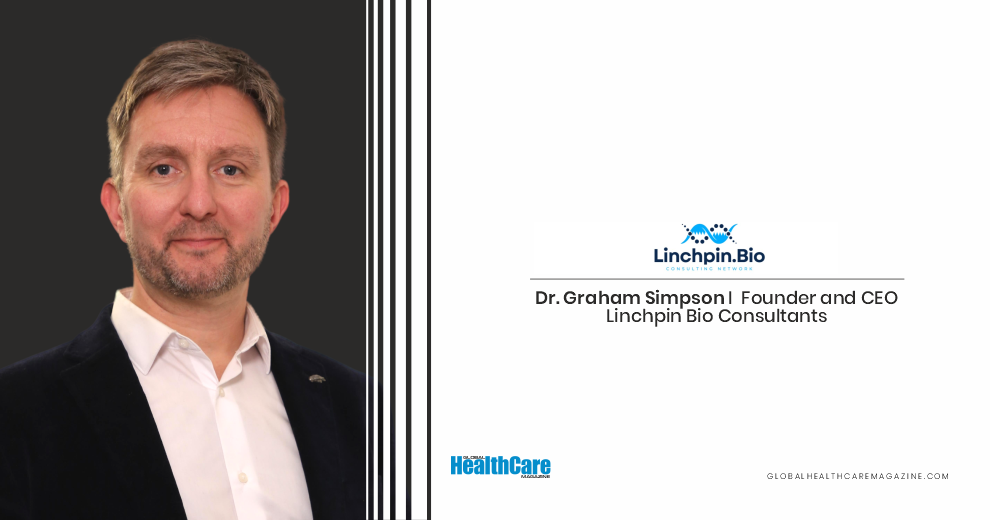
Graham Simpson, the Founder and CEO of Linchpin Bio Consultants, did not choose this path lightly. He chose it knowing how hard it is, how often it fails, and how much it demands from those who commit to it. A proud Scot, Simpson often reflects on the surge of pride that followed Scotland’s recent World Cup qualification. He recognized something deeper in that moment. Collective belief. Persistence against the odds. The refusal to accept limits. Those same traits have shaped his career.
His interest in chemistry and mathematics took root at the University of Strathclyde, where he began to see how the smallest structures in nature govern life itself. He pursued his PhD at the University of Bristol, sharpening his focus on medicinal chemistry, and later earned distinction as a Fulbright and 1851 Royal Commission Scholar at MIT. Each step brought him closer to the intersection that still defines his work: rigorous science applied to real human needs. “What drew me in,” he says, “was understanding medicine at the molecular level and being able to do something meaningful with it.”
A student placement at GlaxoWellcome clarified his direction. Working alongside experienced drug hunters, he saw what it meant to lead programs and build teams in pursuit of therapies that could change lives. He also saw reality. Drug discovery fails more than it succeeds. Progress requires resilience.
The mission became personal when his younger sister died from breast cancer at thirty-five. Watching the gap between cutting-edge research and frontline care hardened his resolve. Since then, through senior roles at GSK, GTN, Dunad, and now Linchpin Bio, Simpson has worked to close that gap and help more promising science reach the patients who need it most.
Building Linchpin Bio
By 2024, Dr. Simpson had seen enough promising science stalls for avoidable reasons. Early-stage biotech founders were raising capital on bold ideas, only to burn through it before they could properly test their core hypothesis. Some hired full-time teams too early. Others stitched together disconnected consultants and contract research organizations. The result was often the same. Money ran out. Momentum faded.
Dr. Simpson believed the industry did not need another consultant network or another CRO. It needed a bridge.
That conviction led to the launch of Linchpin Bio Consultants in 2024. The premise is simple: expertise and execution should not sit in separate silos. Linchpin Bio unites over sixty senior industry experts, each possessing more than 20 years of experience in biotech and pharmaceuticals. When the team designs an IND-enabling plan, they can also build the team, manage partners, and oversee quality, all with clear pricing.
For Dr. Simpson, the mission is urgent. Patients are waiting. Innovative therapies cannot afford unnecessary delays.
A Different Way to Advise and Deliver
Dr. Simpson is clear about one thing. Most consultants will tell you what to do. Most CROs will do what you tell them. Few take responsibility for both thinking and doing. Linchpin Bio was built to close that divide.
When a Series A biotech approached the firm to generate proof of concept data for a new degrader platform, the traditional path would have meant hiring a consultant, waiting for a strategy report, then separately sourcing and negotiating with a CRO. Instead, Linchpin Bio assembled medicinal and computational chemists from its senior network and paired them with a pre-negotiated CRO partner. Within six months, the client had validated tool molecules and data ready for fundraising.
His network includes former heads of discovery and senior pharma leaders who have advanced dozens of compounds to IND. Yet he insists the firm does not sell prestige. “We sell outcomes,” he says.
The approach is practical and disciplined. If Linchpin Bio cannot offer distinct value, it declines the work. That clarity, paired with the ability to assemble expert teams within days, has become its signature.
AI in Drug Discovery: Promise and Limits
Artificial intelligence is changing how drug discovery teams assess hits, triage targets, and plan IND strategies. Dr. Simpson has seen its potential firsthand. By training models on proprietary datasets, teams can predict properties that are expensive and slow to test in the lab, from blood-brain barrier penetration to early target validation using patient-derived data. Yet he remains measured in his optimism.
“The quality of public training data is still poor,” he says. “AI is only as good as what it learns from.” The most valuable information, human clinical efficacy and safety data, often sits locked inside companies. Chemical space is vast, and predictions that work in familiar territory can falter in novel areas.
He points to four persistent gaps: messy and siloed data, overreliance on algorithms without seasoned chemists to interpret them, tools that fail to integrate into real workflows, and a growing backlog of predictions waiting for experimental validation.
For him, AI is powerful but not autonomous. The real advantage lies in pairing advanced models with experienced scientists who know when to trust the data and when to challenge it.
The Network Behind the Model
Linchpin Bio’s model works because of the people who stand behind it. At its core is a curated network of more than sixty senior consultants across the United Kingdom, Europe, the United States, and Asia. These are not career advisers. They are former discovery heads, senior pharma leaders, and drug hunters with proven track records. Their willingness to operate within an integrated framework makes the model viable.
On the client side, the firm supports early to mid-stage biotech companies, venture capital groups conducting scientific due diligence, and pharmaceutical teams seeking specialized input. In one recent case, Linchpin Bio completed cross-functional due diligence on two companies within a single week for a major investor.
Pre-negotiated partnerships with select CROs, spanning medicinal chemistry and IND-enabling studies, allow the firm to pair advice with delivery. Its presence in Boston has further strengthened ties in North America. What unites these stakeholders is a shared belief that expertise and execution belong together.
Leading from the Front
As founder and managing director, Dr. Simpson keeps his role deliberately hands-on. His days revolve around three priorities, each tied closely to the firm’s promise of integrated delivery.
First, client relationships and project oversight. Simpson stays involved beyond the initial conversation. He works with clients throughout execution, ensuring that the strategy translates into results. This direct engagement keeps him close to shifts in the funding landscape, emerging scientific needs, and the practical challenges biotech teams face.
Second, strategic direction. He blocks time at the start and end of each week for focused planning. Those sessions shape decisions on geographic expansion, new offerings such as The Linchpin Review, and how to scale the business without diluting quality.
Third, network curation. Every consultant added to the platform is vetted carefully. Dr. Simpson is personally involved in assessing senior experts, protecting what he sees as the firm’s greatest asset.
What drives him most is solving scientific and commercial problems in tandem and helping teams move decisively when it matters.
The Team Behind the Work
Linchpin Bio operates through two interconnected layers. The core team provides structure and continuity. A Director of Finance and Operations oversees financial planning, consultant contracts, and project logistics, freeing Simpson to focus on clients and long-term direction. A US Managing Director based in Boston supports North American clients, builds local CRO partnerships, and navigates regulatory nuances. Principal Consultants lead specific disciplines or modalities, reinforcing a collaborative culture across projects.
The broader consultant network spans the full arc of drug discovery and development. It includes medicinal chemists experienced in emerging modalities such as PROTACs and molecular glues, biologists skilled in phenotypic screening and translational models, and specialists in DMPK and toxicology. Regulatory and clinical leaders with extensive IND and early clinical experience round out the bench.
Selectivity is strict. Technical excellence is not enough. Each member must be hands-on, team-oriented, and capable of delivering within an integrated model.
Leadership Under Pressure
Dr. Simpson began leading teams early in his career. In large pharmaceutical settings, he often managed scientists with far more experience than his own. He negotiated for resources in tight budgets and absorbed direct criticism from senior mentors. Those years shaped his style. Confidence, balanced with humility. Yet founding a company proved to be a different test.
Within the first six months of launching Linchpin Bio, the firm took on a complex project that quickly expanded in scope. As the client began to see what was possible, expectations grew. Simpson faced a difficult choice. Push back and risk the relationship, or stretch the team too thin and compromise quality.
He chose transparency. He brought in additional experts from the network and held a candid discussion with the client about timelines, budget, and trade-offs. The delivery model was adjusted. The project succeeded, and the client became a strong advocate.
For him, the lesson was clear. Precise scoping and open communication are not optional. They are the foundation of trust.
Measuring Impact
For Dr. Simpson, impact is measured in outcomes, not presentations. One early milestone came with a Series A biotech developing a degrader platform. Within six months, Linchpin Bio helped deliver validated tool molecules, allowing the company to move into lead optimization and strengthen its fundraising case.
In another instance, the team brought together a cross-functional integrated group of consultants to carry out a broad-ranging target and indication prioritization effort. By bridging expertise in bioinformatics, therapy area biology, and computational and medicinal chemistry, the team conducted deep-dive reviews and mapped out translational plans. These strategies were ultimately executed in direct collaboration with the internal biotech team, demonstrating a flexible way to resource high-level projects with deep practical experts rather than the overhead of full-time staff.
The firm’s growth tells its own story. Beyond expanding its global reach, Linchpin Bio established operations in Boston to serve North America’s biotech market and launched The Linchpin Review, a quarterly independent assessment service that provides steady engagement with clients. To date, the firm has supported more than twenty organizations, from biotech start-ups to investors and academic spin-outs.
Dr. Simpson views one result as most important. The company has stayed selective, taking on only projects where it can add genuine value. That consistency has earned trust.
Life Beyond the Build
Dr. Simpson smiles at the phrase “perfect work-life balance.” In his view, building a company from scratch rarely fits into neat categories. Instead, he focuses on being deliberate with his time.
Delegation has been essential. Trusting his Director of Finance and Operations and his US Managing Director allows him to concentrate on what only he can do. He invests his energy in key relationships, long-term strategy, and safeguarding quality. The rest, he empowers others to lead.
He also stays close to the work that excites him. By remaining directly involved with clients, he keeps a sense of purpose. When the work feels meaningful, it becomes part of a fulfilling life rather than something to escape from.
Outside the office, he runs, swims, mountain bikes, and plays padel tennis. He reads widely on global politics, history, and emerging technologies. Family dinners are non-negotiable, and he encourages his children’s early entrepreneurial ideas. In the kitchen, he experiments often, supported by an ever-growing collection of gadgets.
The Road Ahead
Over the next eighteen months, Dr. Simpson plans to scale with intent. Linchpin Bio already operates across the United Kingdom, Europe, and the US East Coast. The next step is strengthening its presence on the US West Coast and building deeper partnerships across the Asia Pacific. The aim is simple. Regional teams that understand local ecosystems, connected through a global bench of expertise.
Product development is another priority. Bespoke consulting will remain central, but Simpson is formalizing standardized offerings. These include fully supported discovery programs that integrate expert teams with aligned CRO partners, structured IND enabling packages designed for efficient clinical progression, and The Linchpin Review, a quarterly cross-functional assessment service for boards and leadership teams.
He also sees thought leadership as essential. By sharing practical insights from the network, Linchpin Bio aims to influence how the sector thinks about fractional expertise. The broader ambition is clear. Consultant-integrated execution should become the default model for early-stage biotech companies pursuing an IND, not the exception.
A Philosophy Rooted in Friction
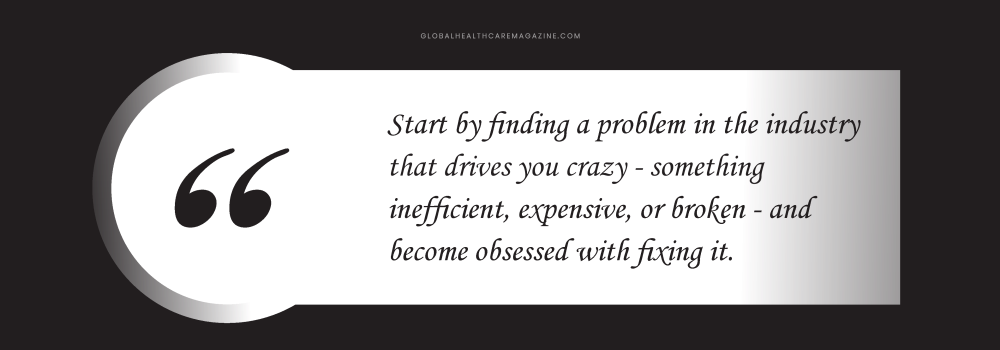
If Dr. Simpson had to distill his leadership philosophy into a single line, it would be this. Find the friction, then remove it.
He did not set out to build a consulting firm for the sake of it. The idea grew from frustration. He watched early-stage biotech companies exhaust their funding before they could properly test their scientific hypothesis. The gap between knowing what to do and actually doing it felt wasteful and avoidable. That tension became the foundation of Linchpin Bio.
His motivation also runs deeper. Like many in the field, he has seen friends and family lost to cancer and neurodegenerative disease. He speaks with pride about working alongside scientists who persist in the face of those realities. Progress may be incremental, but it matters.
To founders and consultants, his advice is practical. Spend time understanding the problem before designing a solution. Earn trust before chasing scale. Be willing to decline work that does not fit. And identify what you can offer that is truly difficult to replicate. For Dr. Simpson, leadership is less about titles and more about removing obstacles so meaningful work can move forward.
Quote
Also Read: Global Leaders in Innovative Drug Discovery & Biotech Consulting 2026