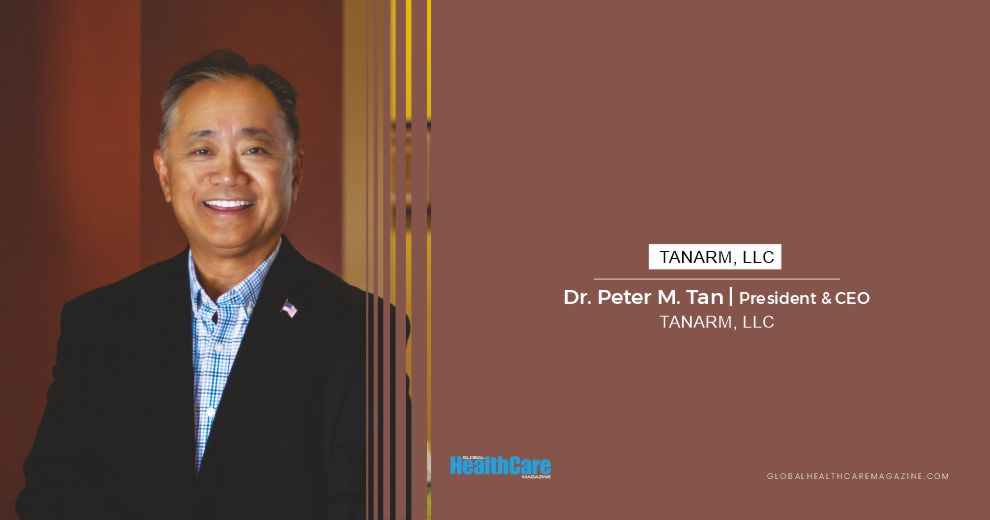
Leadership rarely appears fully formed. More often, it develops quietly through structure, responsibility, and repeated moments of service. In Dr. Peter M. Tan’s life, those moments began early, shaped by family, discipline, and a clear understanding that leadership exists to serve others.
Dr. Tan was raised by parents who served as Army veterans during World War II, so he grew up in a household where the concept of serving the country was tangible and real. As a young boy, his early involvement in the Cub Scouts taught him important lessons in teamwork, goal setting, and personal accountability. These experiences laid the groundwork for his leadership skills long before he officially took on a command role.
That foundation expanded at St. John’s College High School, a Christian Brothers college preparatory school with a distinguished Army Junior ROTC program. Within that environment, leadership became both visible and measurable. By age seventeen, Dr. Tan was appointed cadet battalion commander, entrusted with leading more than 325 cadets within the Cadet Regiment of 1100 students. The role required discipline, ethical judgment, and the ability to lead peers with clarity and respect. “That responsibility taught me that leadership is earned daily,” he reflects.
His trajectory continued at the University of Notre Dame, where he pursued pre-med studies while participating in Army ROTC. Receiving an early commission as a Field Artillery officer marked a defining transition from preparation to service. Each stage of this journey reinforced a belief that leadership grows through responsibility, humility, and commitment to something greater than oneself. That belief would come to define both his professional path and his enduring passion for selfless service to the nation.
The Weight of Accountability at the Top
Senior leadership often carries a quiet contradiction. Leaders are held responsible for outcomes across entire organizations, yet their direct control narrows as their influence expands. Dr. Tan sees this tension play out repeatedly, especially in high-stakes healthcare environments. “Leaders are exhausted, teams feel unseen, and turnover risk rises at the exact moment stability matters most,” he explains.
The consequences are not abstract. Executive turnover disrupts long-term strategy, fractures culture, and drains organizations of institutional knowledge. The financial cost alone can reach into the millions, but the human cost is often greater. Families feel the strain, teams lose trust, and momentum stalls when it is needed most.
Drawing from more than four decades of service in the United States Army as a senior healthcare leader, along with over thirty-five years as a civilian healthcare practitioner, Dr. Tan began to question traditional leadership models. His experience includes thirty years as a practicing private practice surgeon and extensive service as a local, state, and national professional organization president and CEO. Those roles gave him a front-row view of leadership under pressure.
The result is The Humble Command Method℠, a values-based, humility-centered leadership system. Designed to restore trust and protect families while accelerating growth, it reframes authority not as control, but as stewardship. In environments where lives, livelihoods, and legacies are on the line, Dr. Tan believes humility is not a weakness. It is the strategy.
The Leadership Gaps That Could No Longer Be Ignored
Over time, Dr. Tan began to notice the same patterns repeating themselves across healthcare organizations. Senior leaders were no longer leading with clarity; they were managing constant triage. Staffing shortages, operational volatility, and unending meetings had turned leadership into an always-on response role. Decision fatigue became the norm, not the exception, and burnout rates among healthcare executives remained significantly higher than pre-pandemic levels.
What concerned him most was not just exhaustion, but silence. Traditional hierarchies, designed to create order, were producing the opposite effect. Teams grew disengaged, and fear replaced honest dialogue. Research supports what Dr. Tan observed firsthand: rigid power structures widen communication gaps, discouraging people from speaking up even when patient safety or organizational health is at stake. “When leaders stop hearing the truth, risk increases,” he notes.
There was also a cultural cost. For decades, healthcare leadership rewarded self-sacrifice. Eighty-hour workweeks, missed family milestones, and constant availability were treated as proof of commitment. That model came at a personal price, often paid quietly at home.
The pandemic prompted a necessary reckoning. A generational divide became impossible to overlook. Leaders accustomed to a workaholic culture found themselves at odds with younger professionals, who rejected the notion that burnout is the price of excellence. These gaps in communication, sustainability, and values made it clear to Dr. Tan that leadership needed to evolve; otherwise, healthcare would continue to lose its most talented individuals.
Why Leadership Must Change to Scale
The Humble Command Method℠ emerged at the intersection of three growing pressures in healthcare leadership: burnout, eroding trust in hierarchy, and fracture at home. Dr. Tan describes this convergence as a breaking point, one where traditional command-and-control leadership no longer holds. “When people do not feel safe, systems do not scale,” he says.
Most leadership programs, particularly in healthcare, focus on performance tactics, positional authority, or recycled frameworks borrowed from other industries. These models may drive short-term results, but they fail under sustained pressure. Dr. Tan refers to this breakdown as The Command Crisis℠, where leaders are trained to manage outcomes while overlooking the human system that makes outcomes possible.
At the core of The Humble Command Method℠ is a values-anchored approach that restores psychological safety, clarity, and human connection. It centers humility not as passivity, but as disciplined leadership that listens, invites truth, and protects trust. The method addresses what traditional models ignore: moral injury, family strain, and the courage required to speak up in high-risk environments.
In modern healthcare systems, complexity demands more than control. It requires leaders who can create safety, sustain trust, and lead people, not just processes. Dr. Tan’s framework reframes authority as responsibility, offering a model built for the realities leaders face today.
Leadership as a Shared Responsibility
For Dr. Tan, meaningful leadership transformation does not happen in isolation. It unfolds within complex human systems, where decisions ripple across people, teams, and families. Collaboration, therefore, is not optional. It is central to the work.
His mission is advanced through a deliberate network of stakeholders spanning healthcare, governance, military service, education, and family systems. At the core are senior healthcare executives and boards who are navigating burnout, eroding authority, and workforce instability. These leaders are not passive recipients of a framework. They serve as active partners, shaping how The Humble Command Method℠ is applied in real-world, high-stakes clinical and operational environments.
Clinical and operational leaders play a critical role as well. Their proximity to the front lines allows them to identify trust gaps, communication breakdowns, and psychological safety challenges that often go unseen at the executive level. “If leadership change is not felt at the bedside, it has not happened,” Dr. Tan notes.
This collaborative approach ensures the work remains grounded and practical. By engaging those closest to the impact, Dr. Tan aligns leadership development with lived experience, reinforcing the idea that sustainable change is built together, not delivered from the top down.
A Disciplined Approach to Executive Advisory
Dr. Tan’s advisory work with Division Presidents and Regional CEOs follows a clear and disciplined sequence. Each engagement begins with a diagnosis. He moves quickly to identify leadership friction points such as decision fatigue, trust breakdowns, and gaps in authority. This early clarity ensures the work addresses root causes rather than surface-level symptoms.
From there, mentorship becomes the anchor. Ongoing guidance provides a confidential and steady forum where senior leaders can think clearly, test decisions, and regain perspective. “Leaders need space to tell the truth,” Dr. Tan explains. This phase strengthens resilience and supports ethical decision-making under sustained pressure.
Strategic guidance is applied with intention, not excess. Dr. Tan aligns human dynamics with operational and financial priorities, ensuring leadership behaviors support execution rather than slow it down. This balance allows strategy to move through people, not around them.
The result is practical and measurable. Engagement improves, retention risk decreases, and followership strengthens across healthcare delivery, insurance, pharmaceutical, and services organizations. By reducing leadership drag and restoring clarity, Dr. Tan helps senior leaders lead with confidence and effectiveness at scale.
Leading Under Pressure
Some leadership tests arrive quietly. Others unfold under sustained pressure, when exhaustion sets in, and trust in authority begins to erode. Dr. Tan faced those moments across both military service and healthcare governance, environments where the cost of missteps is high and the margin for error is thin.
“The easy response is always to push harder,” he says. Authority allows for it. Experience tempts it. Yet Dr. Tan chose a different path. Rather than escalating demands, he slowed the system. He listened more closely, clarified priorities, and removed unnecessary burdens that were draining already-strained teams.
Presence replaced rank as the primary leadership tool. Standards remained high, but they were paired with restored psychological safety and renewed focus. This shift created space for teams to regain confidence and re-engage with their work.
That period reshaped his understanding of leadership under stress. Force, he learned, often creates resistance. Steadiness does not. Humility, when practiced with discipline, becomes a stabilizing force. In moments that test leaders most, Dr. Tan believes trust is not commanded. It is rebuilt through consistency, clarity, and the willingness to lead alongside those carrying the load.
Measuring Impact through Service and Stewardship
The impact of Dr. Tan’s work is best seen in sustained leadership performance across healthcare and military service. Over four decades, he has advised senior healthcare executives through periods of workforce strain and operational volatility, helping leaders regain clarity, strengthen followership, and lead with steadiness under pressure. His experience includes four senior commands within the United States Army, service as the 14th DIMA Dental Corps Chief, and eleven terms as Chairman of the Board. He currently serves as Chairman of the Board of Trustees for a major regional hospital in the Tampa, Florida area.
These roles informed a practical, values-based leadership approach that is now formalized as The Humble Command Method℠. The results are durable improvements in leadership effectiveness without sacrificing trust, integrity, or family stability.
His service has been recognized through several prestigious appointments and awards. In 2021, he was appointed by the 25th Secretary of the Army, the Honorable Christine Wormuth, as a Civilian Aide to the Secretary of the Army (CASA), which granted him 3-star General status protocol to collaborate with senior leaders and legislative officials. In 2023, he received the Humanitarian Award from the American College of Oral and Maxillofacial Surgeons. Additionally, he was inducted into the Florida Veterans Hall of Fame and the U.S. Veterans Hall of Fame in 2025.
Building a More Human Model of Leadership
Looking ahead, Dr. Tan is focused on scaling The Humble Command Method℠ to support senior leaders operating under increasing complexity and strain. His aim is not expansion for its own sake, but deeper application across healthcare delivery, insurance, pharmaceutical, and services organizations where leadership decisions carry significant human and operational consequences.
The next phase of his work centers on executive advice, board engagement, and leadership development cohorts. Each is designed to strengthen psychological safety, sharpen ethical clarity, and sustain performance over time. “Leadership has to work for the people who carry it,” he notes, emphasizing durability over intensity.
At a broader level, Dr. Tan is committed to resetting how leadership is practiced in high-stakes systems. He envisions a shift away from authority-driven control toward humility-centered command. By developing leaders who protect trust, people, and families while still delivering results, he hopes to contribute to healthier organizations and stronger governance. The legacy he seeks to build is defined not by force or visibility, but by steadiness, service, and long-term impact.
Defining Balance Through Legacy
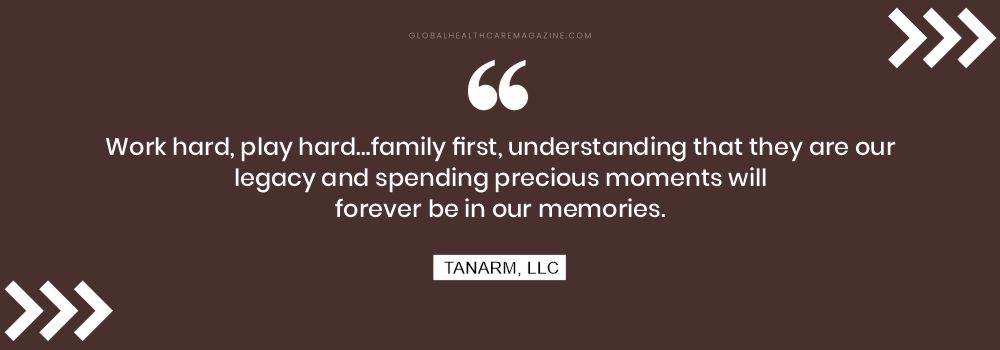
Dr. Tan does not describe work-life balance as a formula. He sees it as a set of choices grounded in values. “Work hard, play hard, family first,” he says, returning often to the belief that family is the true legacy. Time spent together, he notes, becomes memory, and memory endures far longer than professional milestones.
Outside of his advisory and leadership work, travel plays a central role in how he recharges. Exploring the world while maintaining healthy routines allows him to stay grounded and present, even amid demanding responsibilities. These experiences are not escapes from his work, but extensions of a life lived with intention.
What ultimately brings fulfillment is the alignment between service and family. Helping others lead better, while remaining anchored to those closest to him, is a balance he works to protect. Dr. Tan’s measure of success is simple and deeply personal. He hopes to be remembered not only for how he led, but for how fully he loved his family and paid forward the gifts entrusted to him.
A Message Rooted in Service
Dr. Tan has spent a lifetime in two service professions: the U.S. Army and healthcare. “Soldiers protect our nation. Clinicians and healthcare leaders protect our people,” he says, drawing a clear line between the two. Both communities give up time, certainty, and irreplaceable family moments in service to others.
His work is rooted in gratitude. The mission now is to repay that sacrifice by offering leaders a psychologically safe, time-efficient path to grow. In doing so, he honors the mentors who shaped him and the families who carried the unseen weight of every achievement. For Dr. Tan, leadership is ultimately an act of service, given forward.
Quote
Also Read: The 10 Most Impactful Healthcare Leadership Advisors to Watch in 2026