The news, when it came, felt like a verdict. The 60% majority shareholder of three radiation oncology centers in Rhode Island, vital arteries in the state’s cancer care ecosystem, was filing for bankruptcy. The two local health system partners, each owning 20%, had no experience in radiation oncology operations and were not interested in investing. The majority shareholder was planning to petition the bankruptcy court to close the three facilities, which were caring for 100 patients per day.
For the hundreds of patients in the middle of their treatment regimens, the news was catastrophic. Cancer care is a continuum, a relentless, precisely timed battle. An interruption is not an inconvenience; it is a potential defeat, a life-threatening disruption to a carefully laid plan. The situation was poised to become an “enormous negative impact,” a public health crisis unfolding in real-time.
In this moment of impending chaos, Gregory A. Mercurio Jr saw not just a problem to be solved, but a promise to be kept. This was his community. These were his neighbors. He moved quickly, not with panic, but with the focused calm of a man who has spent a lifetime understanding how the intricate gears of healthcare actually turn. “I compiled the best group of industry professionals to quickly remedy this,” he recalls, the simplicity of his statement belying the complexity of the task. After vetting many potential suitors, he selected American Shared Hospital Services (ASHS), a publicly traded company, to acquire the 60% interest. ASHS invested $2.7 million in the acquisition and another $2 million in technology and infrastructure improvements. He preserved the patients’ continuum of care, a feat of business acumen and sheer will that stands as one of the proudest moments of his career.
To understand how Gregory could steer such a crisis to a safe harbor, you have to understand the path that led him there—a path that began with a closed door.
The Fortuitous Pivot
Like many bright, ambitious young people, Gregory Mercurio’s initial ambitions were set on becoming a physician. But after not gaining admittance to medical school, he faced a crossroads. Instead of seeing it as an end, he saw it as a redirection. He made a deliberate choice to focus on the business of medicine, to find a different way to make an impact on patient care.
That decision, he reflects now, was “indeed fortuitous.” Gregory’s first role, beginning in 1983, was in the orthopedic industry, a field he remained in through 2000. This pivot away from a clinical track set him on a course through orthopedics, laser surgery, and eventually, radiation oncology. It was a journey that allowed him to touch the machinery of healthcare from a unique vantage point. “Through my career,” he says, “I have personally been able to impact patient care of many more individuals than if I had become a physician.”
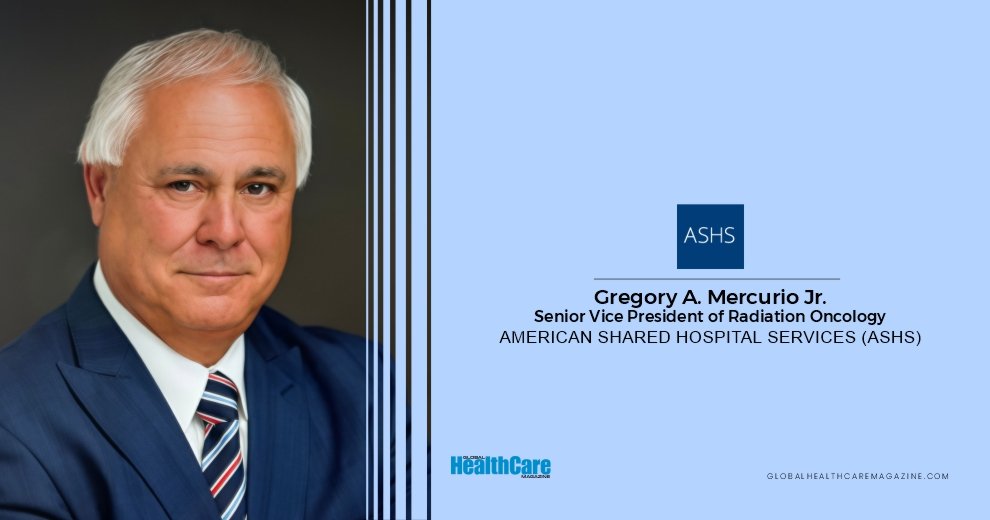
Today, that impact is wielded from multiple leadership positions. He is the Senior Vice President of Radiation Oncology at ASHS, the CEO of Precision Radiation Oncology of Rhode Island, and the CEO of Brachyclip. He is also the Chief Strategy Officer for Iylon Precision Oncology, a worldwide company providing custom chemotherapy prescriptions.
In his role at ASHS, he has oversight of three radiation therapy facilities in Rhode Island, drives local business partnership initiatives, and, as a member of the senior management and executive committee, is involved in every critical decision regarding business development and radiation facilities on a global scale. It is a long way from that initial closed door.
The Architect of Partnerships
At the heart of Gregory’s success is a nuanced and deeply personal approach to business. “While I am a highly competitive individual,” he admits, “my approach and style to negotiations is cooperative and collaborative to ensure the result works for all parties.” In an industry defined by high stakes and complex negotiations, he operates with a philosophy built on two pillars: deep expertise and long-standing relationships.
Gregory navigates the intricate world of healthcare partnerships by having an in-depth understanding of the goals and objectives of every stakeholder at the table. However, his true strategic advantage is something less tangible, a quality he calls “a nuance that is often overlooked but invaluable.” He explains, “Relationships matter and I have spent my entire life in the communities I have served and serve, professionally and personally, so it is obvious I have a vested interest in the outcomes.” He is not just a businessman flying in for a deal; he is a community member whose reputation is woven into the fabric of the region. This gives him a level of trust and credibility that cannot be manufactured.
He specifically chose ASHS as a partner because of their commitment to invest in Rhode Island cancer care, expand access in underserved communities (such as Bristol), and introduce cutting-edge technologies like Proton Therapy. Equally important, ASHS was not a short-term investor aiming to flip the equity in 4–5 years for quick profit, but a long-term partner genuinely focused on improving patient outcomes. Gregory acknowledges a deep sense of gratitude toward ASHS for believing in his vision and investing significantly in Rhode Island’s cancer care future.
The People Paradox
Even with successful partnerships, Gregory faces a pressing, industry-wide challenge that requires constant creativity. “Challenges with radiation oncology physician recruitment, as well as all the specialty clinical roles unique to radiation oncology are immense,” he states. It’s a stark reality of supply and demand where “the national demand for these roles far exceeds the current and future available pool of qualified individuals.”
This isn’t a fleeting issue; Gregory identifies it as “both a short-term and long-term challenge with no quick or easy solutions.” Success in this environment requires more than just a competitive offer. “We have to be creative,” he insists, “and utilize all our expertise, experience and resources to attract the most qualified and compassionate individuals to serve our patients’ needs.” It’s a constant, high-stakes search for the very people who make world-class care possible.
From Crisis to the Pinnacle of Care
Gregory’s ability to navigate both human and regulatory complexities is crucial in his field. Radiation therapy is a highly regulated industry precisely because it involves the use of radiation, a powerful and potentially dangerous tool. To ensure safety, about 50 percent of states mandate that providers obtain Certificates of Need (CONs) to acquire new technology. He sees this “government created safeguard” not as a bureaucratic obstacle, but as a necessary process to ensure only the most capable providers are approved. While some view the CON process as arduous, his collaborative style has made him exceptionally successful in securing these vital approvals.
This skill has been instrumental in pursuing what Gregory calls the “pinnacle of radiation therapy”: Proton Therapy. He identified that each year, approximately 400 patients in the region would be ideal candidates for this treatment but were forced to travel to Boston or New York to receive it. Securing the CON for a future Proton Center in Rhode Island is one of his proudest accomplishments, alongside obtaining a CON for the underserved community of Bristol, RI. The new proton facility will be a game-changer, allowing patients to be treated with a technology so precise that it avoids unnecessary radiation to healthy tissue, resulting in fewer side effects.
This is the ultimate expression of Gregory’s leadership philosophy: a patient-centric principle that demands “the right treatment, provided by the most highly qualified physicians, at the right time, with the right technology, in a compassionate manner.” He achieves this not by micromanaging, but by empowering. “By assembling the best team and truly empowering them to work together to best serve patients’ needs,” he says. Recently, due to these accomplishments, he was honored with a Health Care Heroes Award, a moment he celebrated with his family, friends, and colleagues.
A Legacy of Impact
For a man who admits to being “a highly driven individual,” the concept of a perfect work-life balance is elusive. Gregory’s workday often extends into evenings and weekends. He finds his balance in time spent with family, in philanthropic work with organizations like the Jeffrey Osborne Foundation, and on the golf course, though he “certainly do not claim to have the perfect work-life balance.” The drive to make an impact is too strong.
Looking ahead, Gregory is energized and excited about the day the first patient is treated at the new Proton Center. After that? “Perhaps retirement,” he muses, though it sounds less like a destination and more like a brief pause. “Of course, if something else comes across the horizon, that I feel I can positively contribute to providing or impacting patient care I will certainly find myself involved in those initiatives.”
It is this relentless focus on the patient that defines Gregory’s entire career. He believes all healthcare businesses must be operated in a patient centric, regulatory compliant, manner. For him, this means that in cancer care especially, “patients’ physical, psychological, social and economic needs must be tended to in a high quality, compassionate, cost-effective manner.” It’s a holistic view of care that he sees as the foundation of sustainable success.
“If this path is followed, with patients’ needs first, then business will grow, and profits will be realized,” Gregory concludes. It is a simple, powerful formula that has guided him from a closed door at the start of his career to the pinnacle of cancer care, building a legacy of healing in the community he has always called home.
Quotes
Also Read: The Most Influential Leaders Shaping the Biotech Industry in 2025